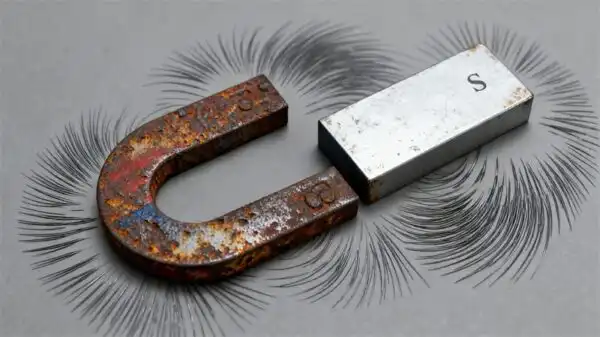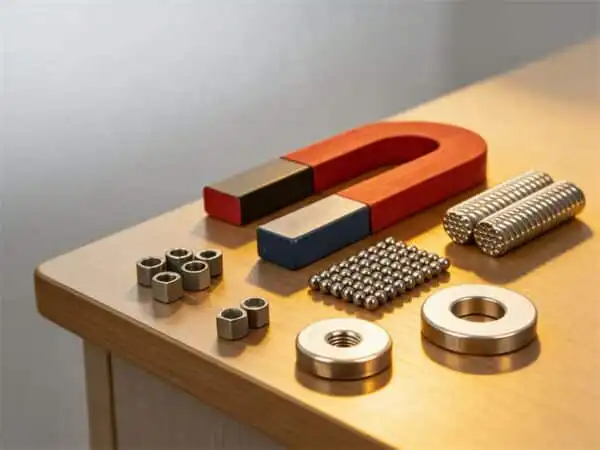
Properly selected neodymium (NdFeB) magnets can retain useful magnetic performance for decades, but there is no responsible universal lifespan such as “100 years” for every design. Calendar age alone is usually a weak predictor of when an NdFeB magnet stops meeting its application requirement.
Real service life depends on operating temperature, corrosion exposure, external demagnetizing fields, geometry, air gap and magnetic-circuit conditions, mechanical damage, and the minimum field or force the finished assembly must still deliver. This page focuses specifically on NdFeB lifespan; the broader question of whether permanent magnets weaken with use is covered in Do Magnets Wear Out?
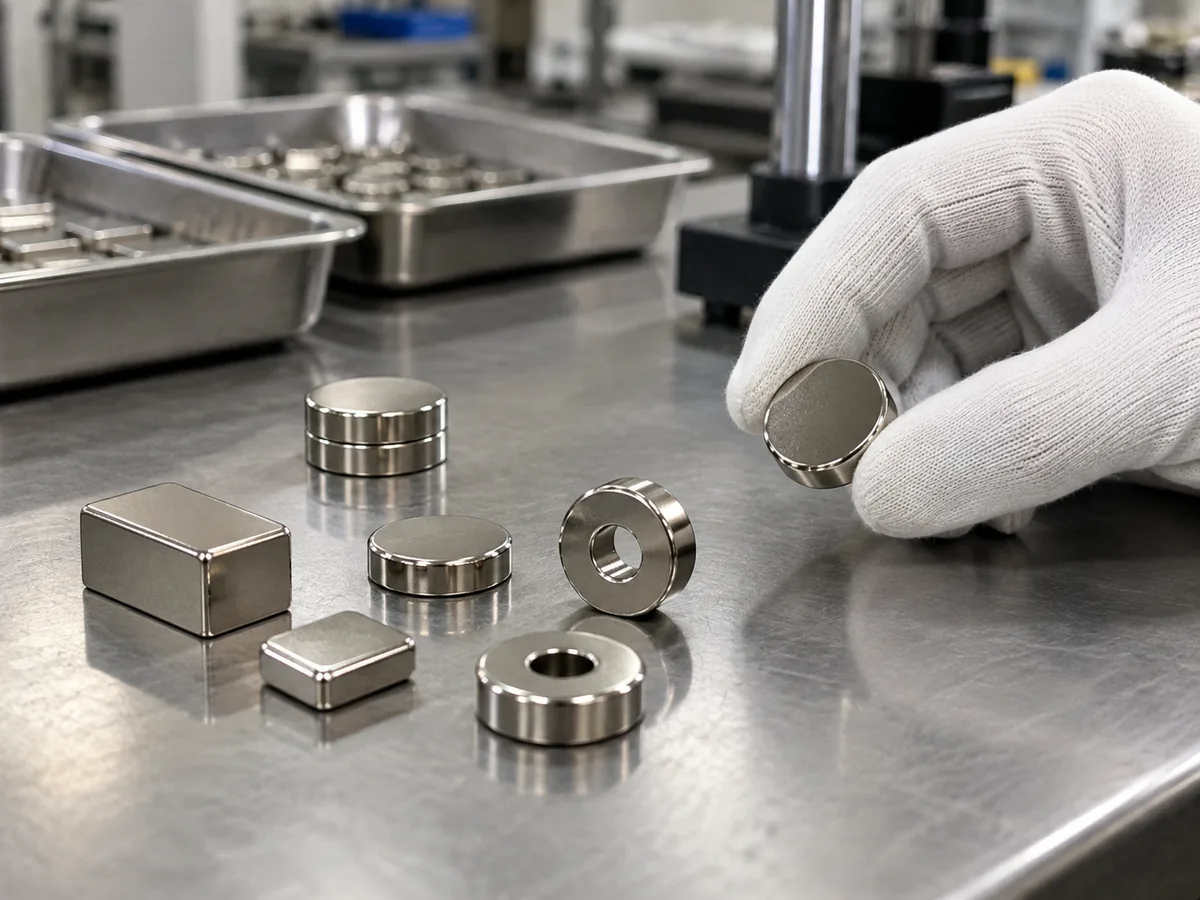
What Does “Neodymium Magnet Lifespan” Actually Mean?
Three different ideas are often mixed together: natural magnetic aging, physical service life, and usable system performance.
Natural magnetic aging is the slow time-dependent change that can occur even when the magnet is not visibly damaged. Physical service life ends when corrosion, cracking, coating failure, or assembly damage makes the magnet unreliable. Usable system performance ends when field or force falls below the acceptance requirement of the actual assembly.
For B2B design work, the third definition matters most. A motor, sensor, holding assembly, magnetic coupling, or fixture does not care whether a magnet is technically still “magnetic.” It cares whether the complete magnetic system still meets its required output under the specified temperature, gap, load, and test condition.
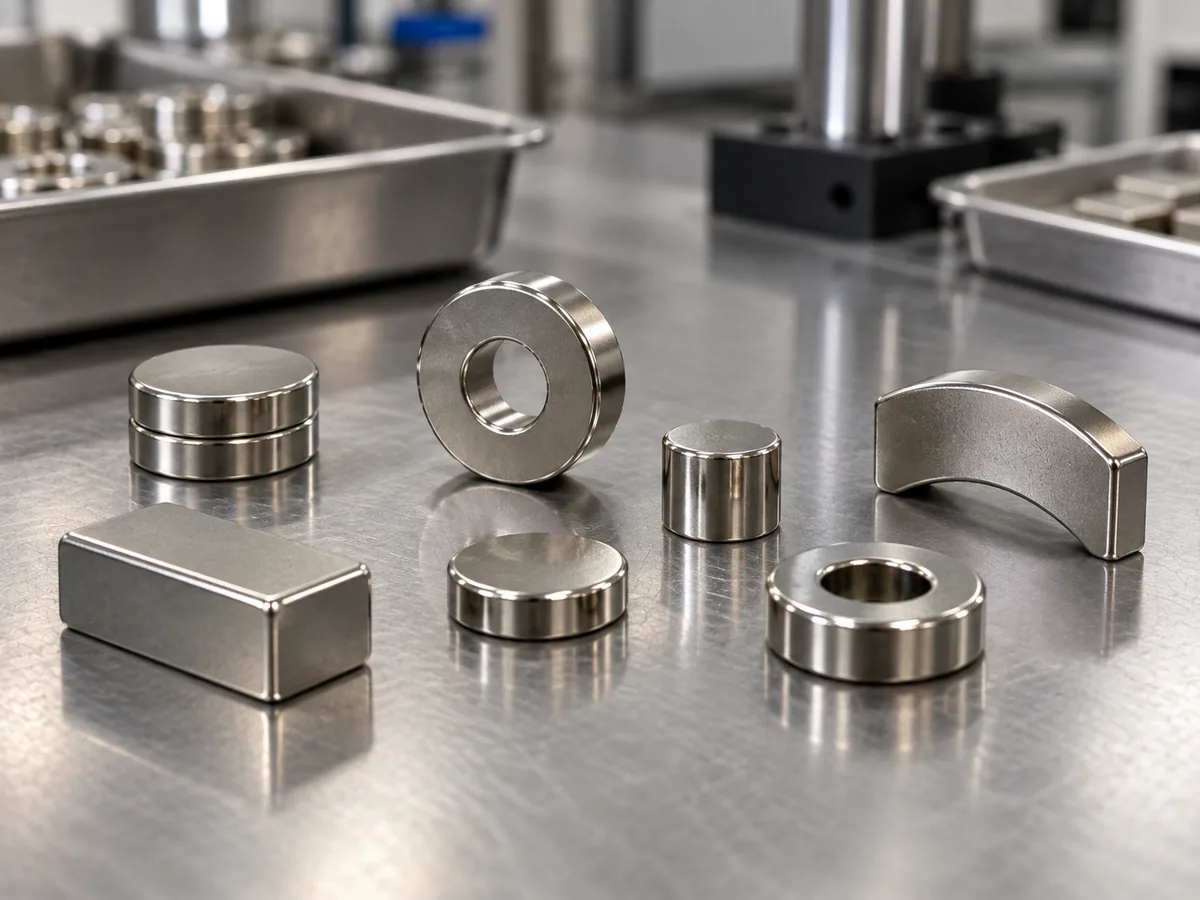
Do Neodymium Magnets Lose Strength Over Time?
Yes, but time alone is usually a weak predictor of useful life. Permanent magnets can experience magnetic viscosity, sometimes called magnetic aging, in which magnetization changes gradually with time under a given internal magnetic field and temperature.
Peer-reviewed work on sintered NdFeB shows why blanket lifespan percentages are risky. An IEEE Transactions on Magnetics study of long-term NdFeB flux loss found that lifetime behavior depends on temperature, coercivity, and permeance coefficient. More recent research on magnetic viscosity in FeNdB magnets also shows that time-dependent loss changes with internal opposing field and temperature.
The procurement consequence is simple: do not specify lifespan from a calendar number alone. Define the operating condition and the minimum acceptable magnetic performance, then validate the magnet and circuit against those conditions.
Do Neodymium Magnets Wear Out From Repeated Use?
No. Normal attaching and removing does not gradually consume an NdFeB magnet’s magnetism like a battery. Repeated attraction itself is not a normal wear mechanism for a permanent magnet. What can shorten service life are the conditions that accompany use: hard snap-together impacts, coating abrasion, excessive heat, a strong opposing magnetic field, or movement that changes the working gap.
If a frequently used magnet seems weaker, check the assembly before blaming calendar age. A larger air gap, different steel target, surface contamination, misalignment, chipped edges, or a loose magnet can reduce measured holding performance even when the magnetic material has not suffered major irreversible loss.
| What changes? | Main driver | Can it recover? | Buyer check |
|---|---|---|---|
| Magnetic output while hot | Temperature | Often partly reversible | Test at operating temperature |
| Permanent magnetic loss | Heat + operating point + opposing field | Not by simple cooling | Check grade, geometry, circuit and demag margin |
| Magnetic material volume | Corrosion or chipping | No | Inspect coating and physical dimensions |
| Assembly output | Gap, target, movement, retention | Sometimes | Repeat the system-level acceptance test |
What Shortens Neodymium Magnet Service Life?
Most premature NdFeB failures can be traced to one or more of five conditions: excessive temperature, corrosion, an unfavorable magnetic circuit, a strong opposing field, or mechanical damage. These mechanisms are different, so the correct corrective action depends on identifying which condition changed.
Temperature and Irreversible Demagnetization
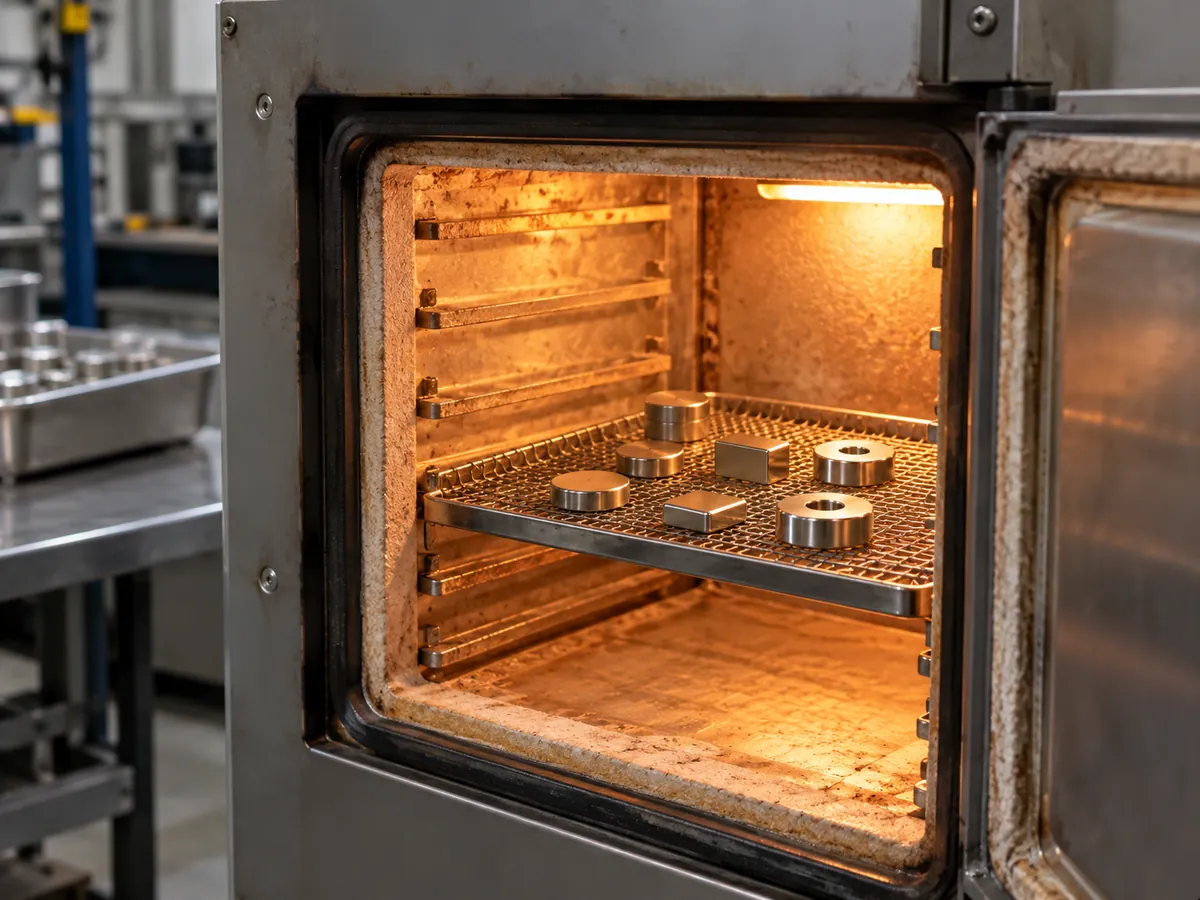
Heating an NdFeB magnet reduces magnetic output while it is hot. Part of that change can be reversible, meaning the magnet recovers when it cools. The more serious risk is irreversible loss, which occurs when the working point crosses into a region of the demagnetization curve from which the magnet does not fully recover.
This is why a single “maximum working temperature” number should not be treated as a universal guarantee. The safe temperature margin depends on the grade’s intrinsic coercivity, magnet geometry, permeance coefficient, nearby opposing fields, and thermal cycle. A current NdFeB technical reference from Arnold Magnetic Technologies likewise notes that maximum use temperature is application-dependent.
For a new design, provide normal temperature, peak temperature, exposure time or duty cycle, magnet geometry, and any opposing magnetic field. Those inputs determine whether the candidate grade family has enough demagnetization margin. For a deeper explanation, see how temperature affects magnet strength.
Corrosion Can End Service Life Without “Using Up” the Magnet
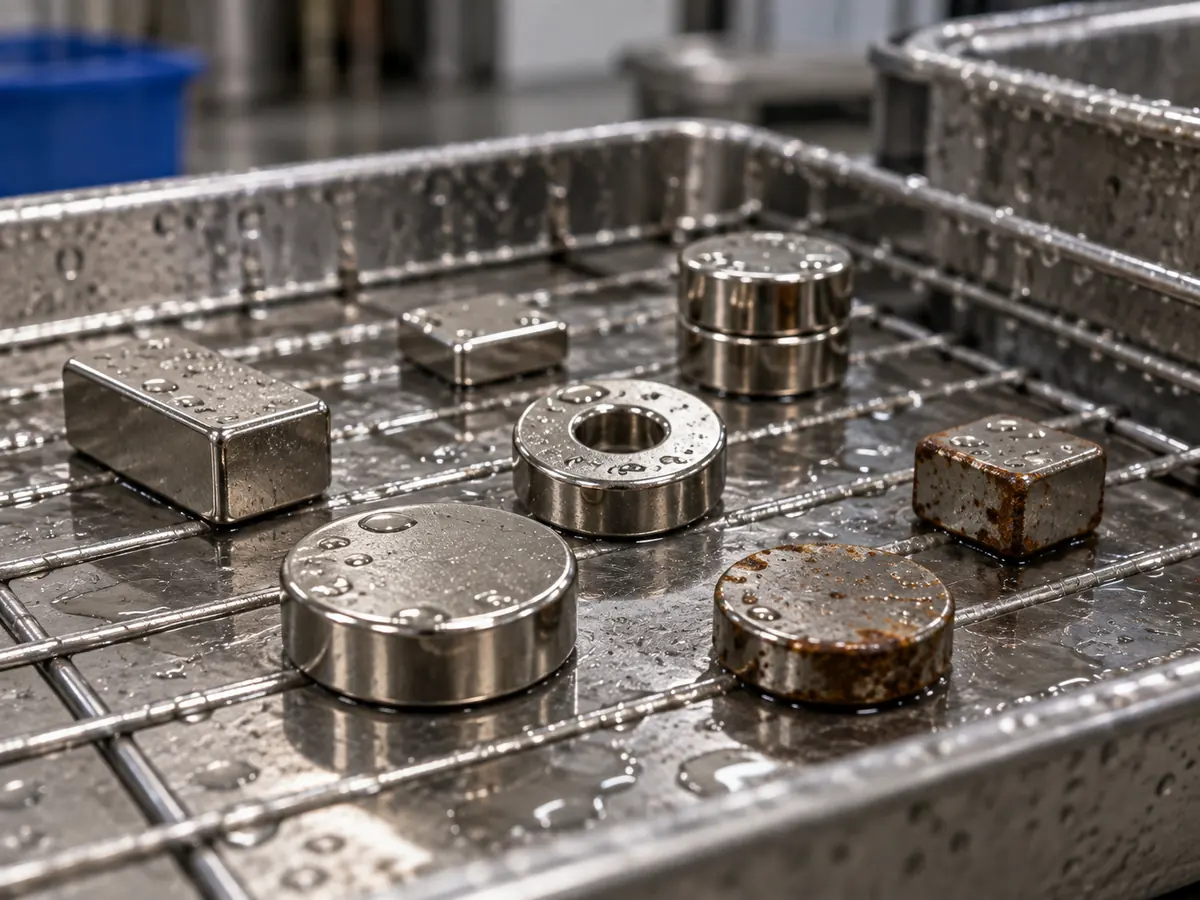
Sintered NdFeB contains iron and needs environmental protection in many applications. If moisture or chemicals reach the magnet material through a damaged or unsuitable coating, corrosion can remove material and change both mechanical integrity and magnetic output.
Coating therefore affects service life, but coating is not a magic shield. Edge damage, abrasion, bonding processes, dimensional constraints, salt exposure, humidity, and chemical contact all influence whether a coating remains effective.
OSENC can evaluate project-specific coating directions such as NiCuNi, zinc, epoxy, PTFE, Parylene, gold, or other suitable options, but coating selection should follow the actual environment and assembly process rather than a generic “best coating” ranking. See the neodymium magnet coating guide and the explanation of why neodymium magnets rust.
If corrosion is part of the failure risk, define humidity or liquid exposure, salt or chemical contact, abrasion, operating temperature, bonding method, and whether the magnet edges are exposed. Then select and validate the coating around those conditions.
Geometry, Air Gap and Magnetic Circuit Conditions Affect Long-Term Stability
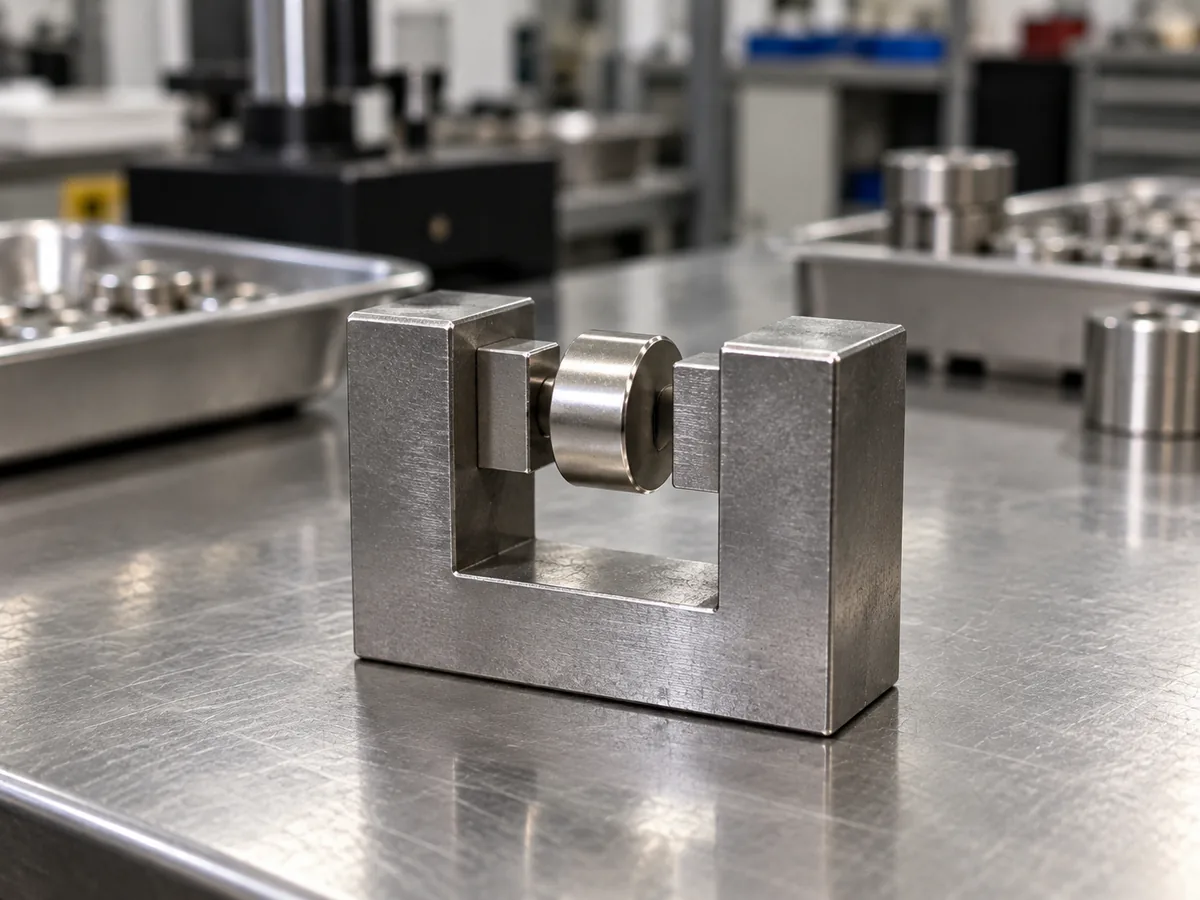
Two magnets made from the same grade can have different demagnetization margins because geometry changes the magnet’s self-demagnetizing field. The surrounding steel, air gap, target material, pole layout, and neighboring magnets or coils also change the operating point.
This is why grade alone does not determine finished lifespan. A compact magnet in an unfavorable open circuit may be more vulnerable than the same material operating with a better magnetic return path. A large air gap or strong opposing field can shift the working condition further toward the knee of the demagnetization curve.
The design action is to evaluate the magnet as part of the complete magnetic circuit. For critical applications, supply magnet dimensions, steel geometry, working gap, mating material, nearby fields, and required field or force at the real operating position. If grade selection is still open, use the magnet grade guide as a starting point, not as a finished design answer. When geometry and field distribution are central to the decision, magnetic field simulation can support a project-specific circuit review.
External Magnetic Fields Can Cause Permanent Loss
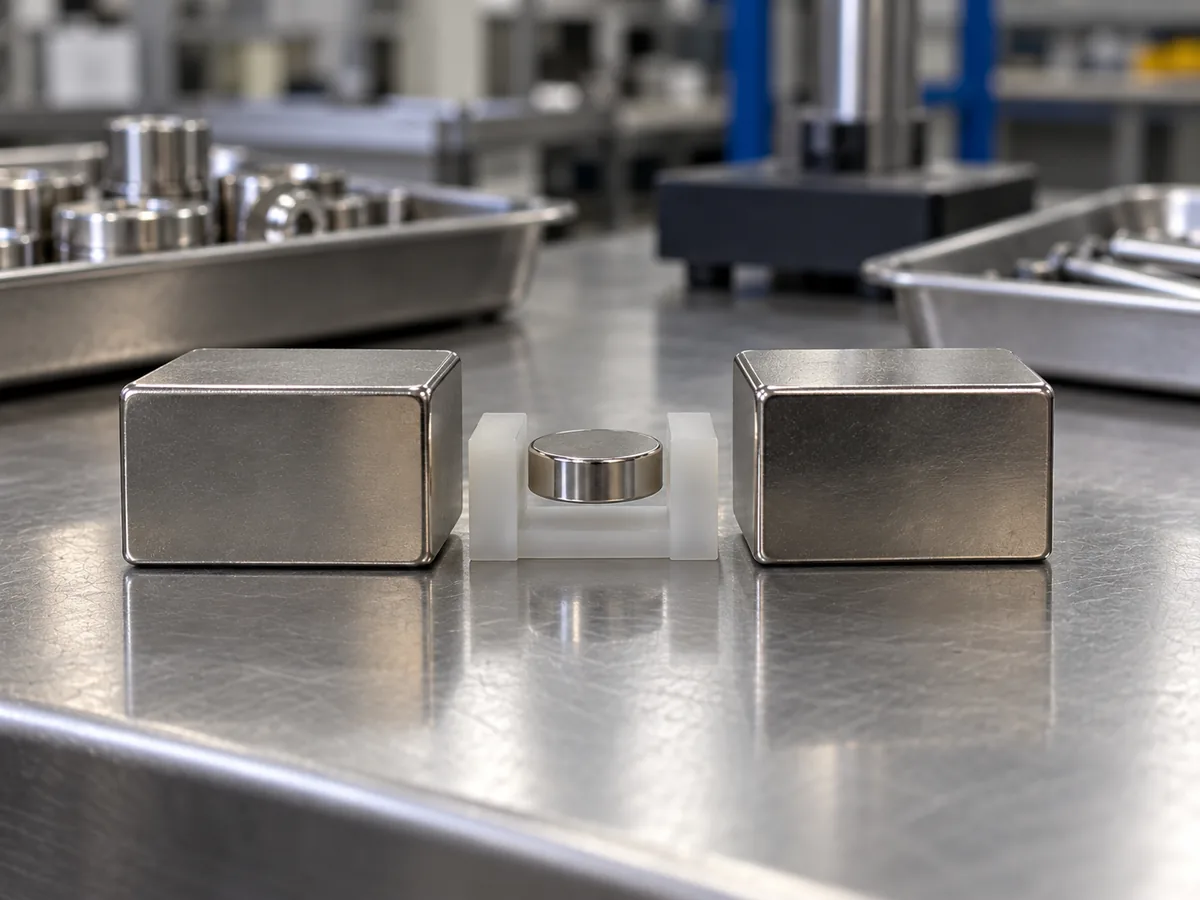
A neodymium magnet does not normally become weak because it is “used” repeatedly, but it can be partially demagnetized by a sufficiently strong opposing magnetic field. This can come from coils, neighboring magnets, fault conditions, assembly processes, or unusual storage arrangements.
Intrinsic coercivity, often written Hcj, is especially important when evaluating resistance to irreversible demagnetization. Hcj is not the same as Br, Hcb, or BHmax, and none of those values alone tells you the finished force at a working distance.
If an application includes strong external fields, identify their direction, approximate magnitude, duration, and relationship to the magnetization direction. The magnet grade and circuit can then be checked for adequate margin rather than assuming that a higher N-number automatically lasts longer.
Mechanical Damage Can Be the Real Lifespan Limit
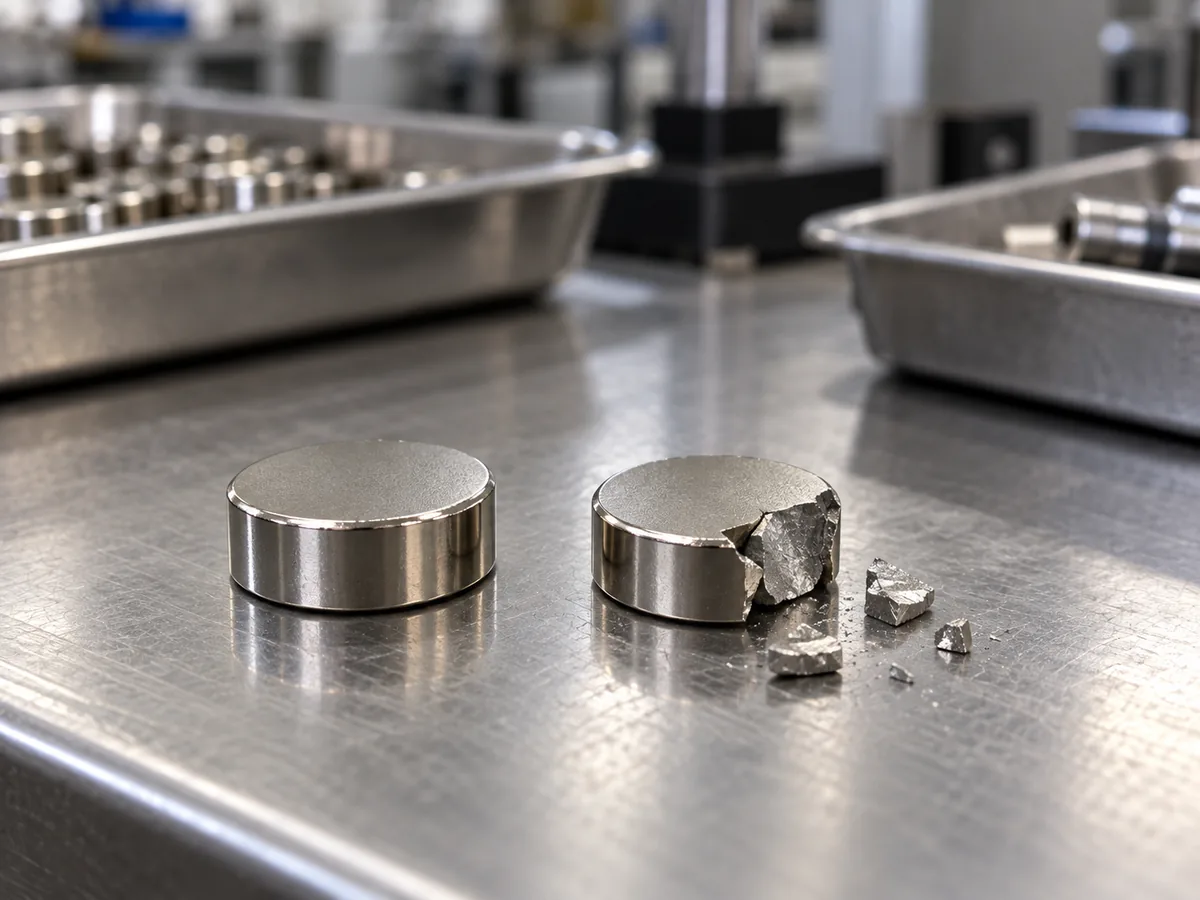
Sintered NdFeB is hard and brittle. A magnet may retain its material magnetization yet become unusable after chipping, cracking, coating damage, or movement inside the assembly.
Press fits are particularly risky when they place tensile stress on a brittle magnet or damage the plating. Repeated impact, vibration, uncontrolled snap-together handling, sharp edges, and tolerance stack-up can also create failure modes that have nothing to do with natural magnetic aging.
The practical response is mechanical protection: appropriate clearances, fixtures, adhesive or retention design, edge protection, and handling controls. When the assembly is critical, the magnet should be evaluated together with the housing and retention method rather than as a loose component.
How Do You Check Whether an Older Magnet Is Still Good?
Do not judge an older magnet by feel. Human perception is poor at detecting moderate field or force changes, and a different target plate or air gap can make a healthy magnet appear weak.
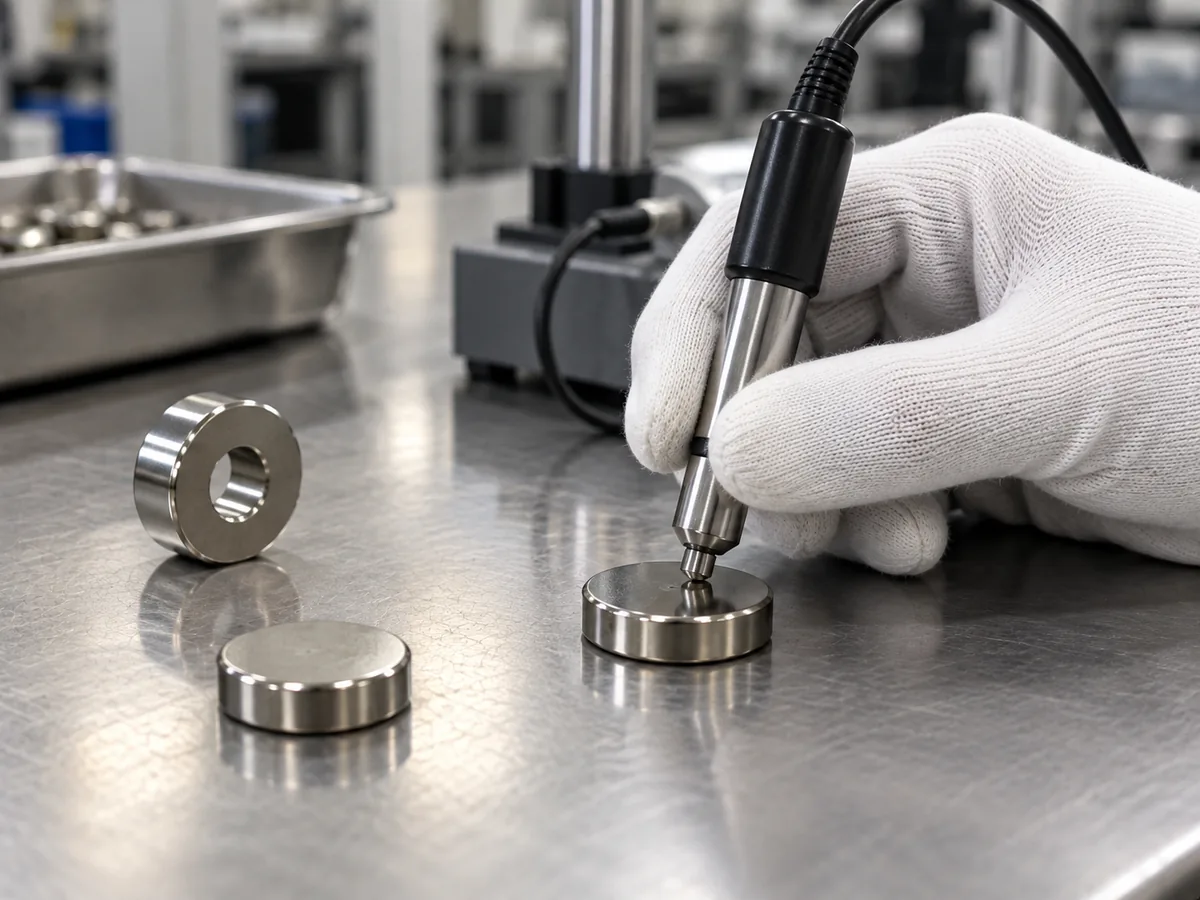
Start with a physical inspection for corrosion, coating damage, cracks, chips, or movement. Then repeat the same acceptance test used for the original part whenever possible. A surface-field check can be useful for one question, while a pull-force test answers another. Neither should be substituted for the actual system requirement.
Keep the fixture, target material, contact condition, air gap, orientation, and temperature consistent. Compare the result with an established baseline or acceptance limit. A lower result does not automatically prove irreversible demagnetization; first eliminate changes in the assembly and test condition.
Symptom → Possible Cause → Verify → Action
| Observed symptom | Possible cause | How to verify | Buyer action |
|---|---|---|---|
| Lower holding force | Increased air gap, target change, contamination or misalignment | Repeat the test with the original target, gap, fixture and orientation | Correct the assembly condition before attributing the loss to the magnet |
| Visible rust or swelling | Coating breach and corrosion | Inspect exposed edges and compare dimensions or mass only when the original baseline exists | Review environment and coating; replace if material loss or acceptance failure is confirmed |
| Normal when cool, weaker when hot | Reversible temperature effect or insufficient thermal margin | Measure under the defined operating-temperature condition | Review the thermal design and candidate grade family |
| Output does not recover after cooling | Irreversible demagnetization is possible | Repeat the original field, force or assembly-level acceptance test after thermal stabilization | Review Hcj, geometry, circuit and opposing-field exposure |
| Chip, crack or loose magnet | Mechanical or retention failure | Inspect geometry, seating and retention | Repair the assembly and replace the magnet when damage compromises retention, coating or acceptance |
When Should You Replace an Old Neodymium Magnet?
Replace based on condition and acceptance performance, not age alone. A magnet that is old but undamaged and still passes the original acceptance test may remain serviceable. A newer magnet can require replacement if corrosion, cracking, irreversible magnetic loss, or assembly damage prevents the system from meeting its requirement.
| Condition | Decision | What to do next |
|---|---|---|
| No visible damage and the repeatable acceptance test passes | KEEP | Continue under the approved operating conditions and test interval |
| Minor surface damage with no exposed substrate and performance still passes | INVESTIGATE | Check whether coating integrity or future corrosion risk has changed |
| Visible corrosion, coating breach or material loss | INVESTIGATE / REPLACE | Assess the environment and replace when geometry, retention or acceptance performance is affected |
| Chip or crack that affects seating, coating, dimensions or retention | REPLACE | Correct the mechanical cause before installing the replacement |
| Output is below the defined limit under the same test conditions | REPLACE OR REDESIGN | Identify whether the cause is magnet loss, circuit change or a changed application requirement |
| Temperature, gap, target or opposing-field condition has changed | REVALIDATE | Do not assume the old grade remains suitable for the new operating point |
How to Specify a Neodymium Magnet for Long Service Life
For long-life design, the target should not be “the strongest grade.” The target should be sufficient magnetic performance with adequate thermal, corrosion, magnetic, and mechanical margin.
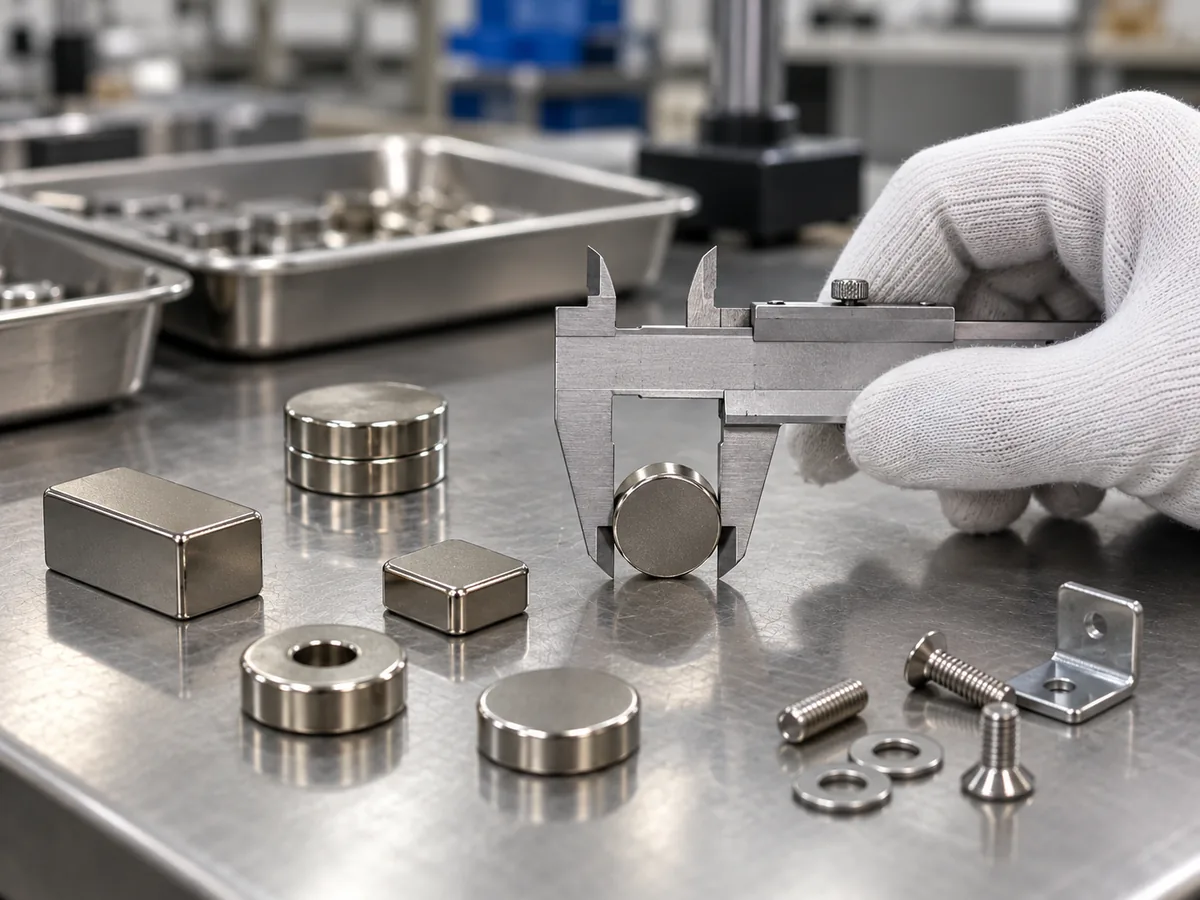
A useful RFQ should include the drawing or available space, magnet dimensions and tolerances, required field or force at the real working distance, target material, normal and peak temperature, environment, coating constraints, magnetization direction or pole pattern, assembly method, nearby opposing fields, quantity, and the test or acceptance method.
With those inputs, a project can move from a general concept direction toward an engineering review. Final grade, geometry, coating, and validation conditions should be confirmed against the actual drawing or sample rather than inferred from an article. OSENC’s custom neodymium magnet page provides the appropriate next step for project-specific requirements.
What to Send for a Lifespan-Focused Magnet Review
- Drawing, shape and available space
- Dimensions and critical tolerances
- Required field or force at the real working distance
- Target or mating material
- Normal and peak temperature plus duty cycle
- Humidity, salt, chemical or abrasion exposure
- Coating and bonding constraints
- Magnetization direction or pole pattern
- Nearby coils or opposing magnetic fields
- Assembly and retention method
- Acceptance test and pass/fail condition
- Sample or production quantity
FAQ
Do magnets expire if they are stored for a long time?
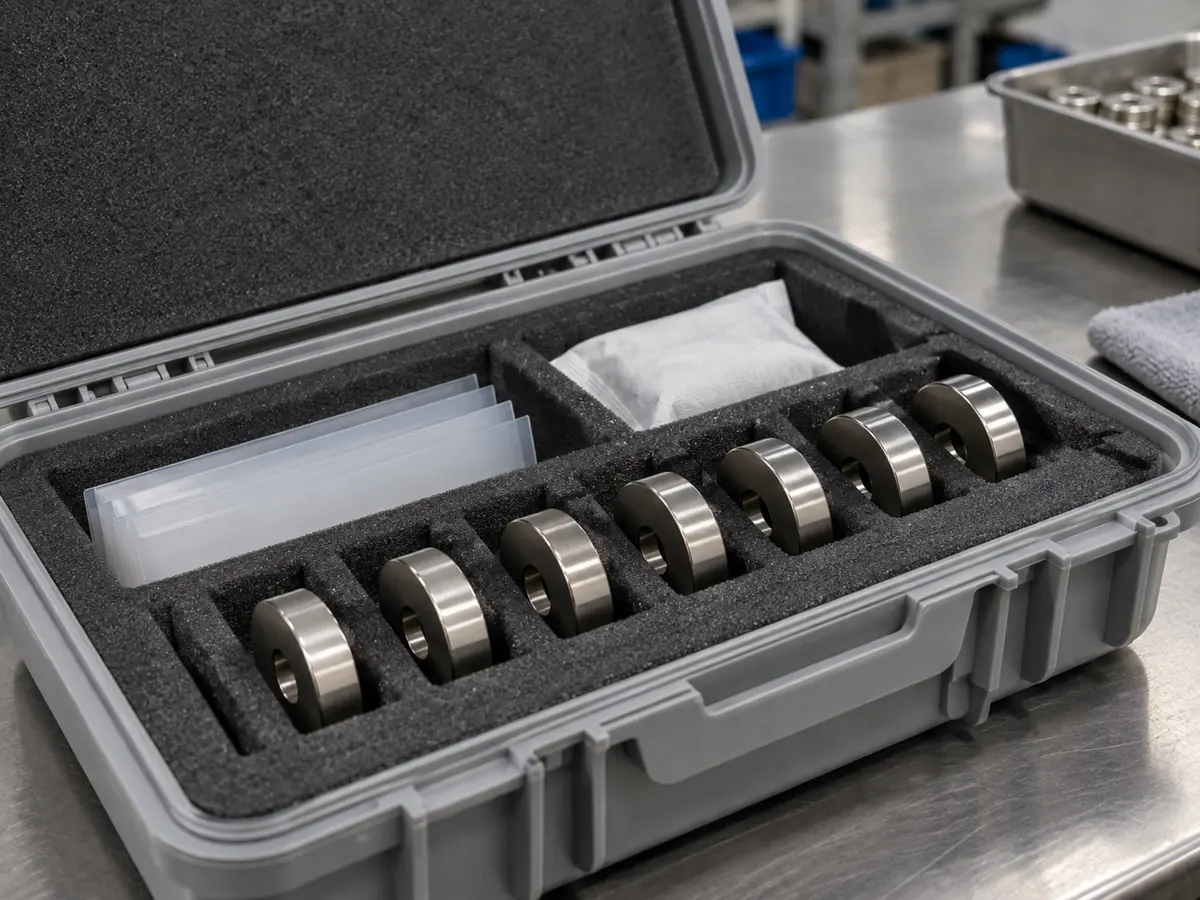
Permanent magnets do not have a battery-like expiration date. For NdFeB, storage life is usually limited by environmental, magnetic, or physical conditions rather than a fixed calendar age. Keep magnets dry, protected from impact, and away from damaging heat or strong opposing fields.
Does N52 last longer than N35?
Not automatically. N52 mainly identifies a higher maximum energy product range, not guaranteed service life. Long-term stability also depends on intrinsic coercivity, geometry, temperature, magnetic circuit, environment, and the acceptance requirement.
Can a neodymium magnet recover after getting hot?
Some temperature-related magnetic reduction is reversible and returns after cooling. If the operating point crosses into irreversible demagnetization, the lost output does not fully recover just by cooling. The boundary depends on the grade and magnetic circuit.
Does coating prevent a neodymium magnet from losing magnetism?
Coating mainly protects NdFeB from corrosion and surface damage. It does not prevent thermal or external-field demagnetization. Coating type and integrity still matter because corrosion can remove magnetic material and change the finished geometry.
Can an old neodymium magnet be tested before replacement?
Yes. Inspect its physical condition and repeat the same field, force, or assembly-level acceptance test used for the original design. Keep the target, gap, fixture, orientation, and temperature consistent so the comparison is meaningful.
Can a neodymium magnet be remagnetized after partial demagnetization?
Remagnetization can be possible when the magnetic material remains physically intact and an adequate magnetizing field can be applied. It does not repair corrosion, cracks, coating loss, missing material, or an unsuitable magnetic-circuit design, so the failure cause should be identified first.
How should neodymium magnets be stored for long service life?
Store NdFeB magnets in a dry, controlled environment, protect coated surfaces and edges from impact, and keep them away from excessive heat and strong opposing magnetic fields. For critical parts, preserve the original acceptance baseline so stored magnets can be checked under the same conditions before use.