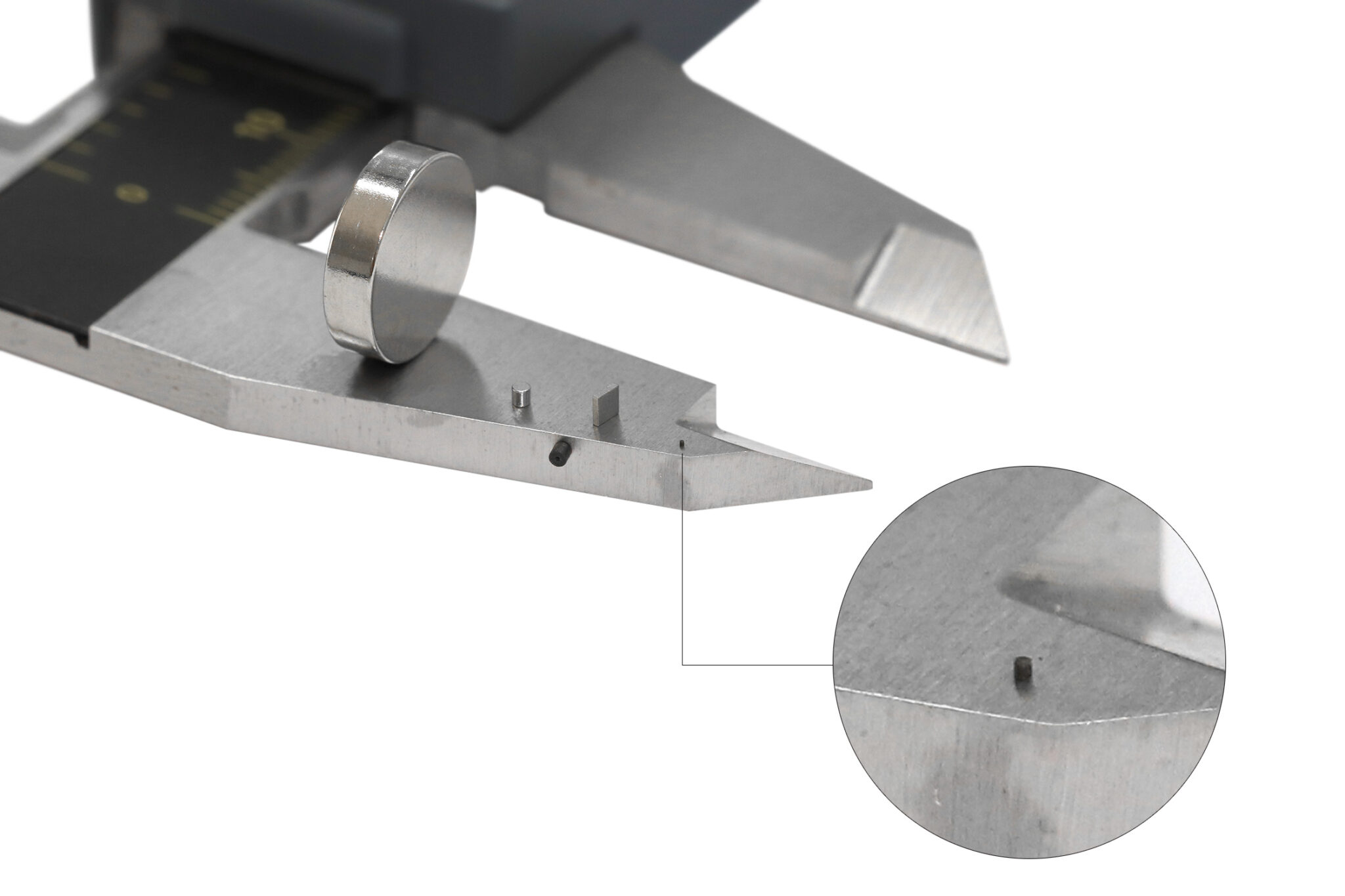
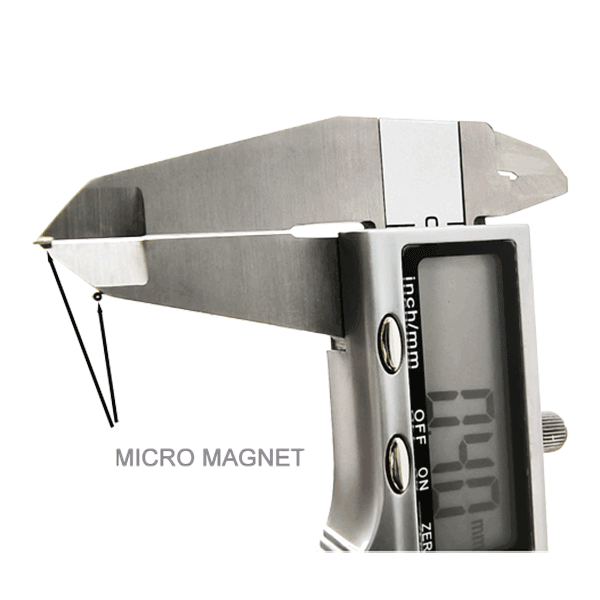
Precision Micro Magnets - Neodymium Micro Magnets

When you’re buying micro magnets for production, “tiny” isn’t the hard part—repeatability is. Our micro neodymium magnets (NdFeB) and other neodymium micromagnets are built for designs where a few tenths of a millimeter changes fit, field, and yield—compact sensors, micro actuators, microrobotics, and lab-to-pilot builds. Share your drawing and stack-up, and we’ll help you lock OD/ID/thickness, coating build, and magnetization—then validate with samples before you commit to volume (often listed as a micron magnet or mikro magnet in EU docs).

(Note: For smallest neodymium magnets, feasibility depends on geometry, coating thickness, and handling yield. Send your drawing + quantity + coating requirement, and we’ll confirm manufacturability and a realistic tolerance window before sampling.)

micro neodymium magnets

Hot-Selling Micro Magnets

Neodymium Micro Magnets

Micro Magnets 1 mm — Micro Neodymium Magnets (NdFeB)

Neodymium Micro Magnets

Super-Strong Neodymium Micromagnets — Grade Options

Neodymium Micro Magnets

Flat Micro Magnets for Fixtures & Sensors — Tight Tolerance

Neodymium Micro Magnets

Micro Ball Magnets — Precision Sorting & Assembly Use

What Are Micro Magnets?

Micro magnets are ultra-small permanent magnets where tolerance and coating build directly change fit and field, so they’re part of the functional spec—not a “nice-to-have.” For clarity, we use:

Small magnets: 0.80–15.00 mm
Micro magnets: 0.20–0.79 mm (200–790 μm)

In this range, most teams choose NdFeB for strength-to-volume, but your real limiter is usually handling yield + coating uniformity + air gap in the stack-up (often called a micron magnet in research notes, or mikro magnet in EU documentation).

Features of Micro Magnets

  • Built for production: repeatable dimensions, coating control, and consistent magnetization for micro magnets and micro neodymium magnets

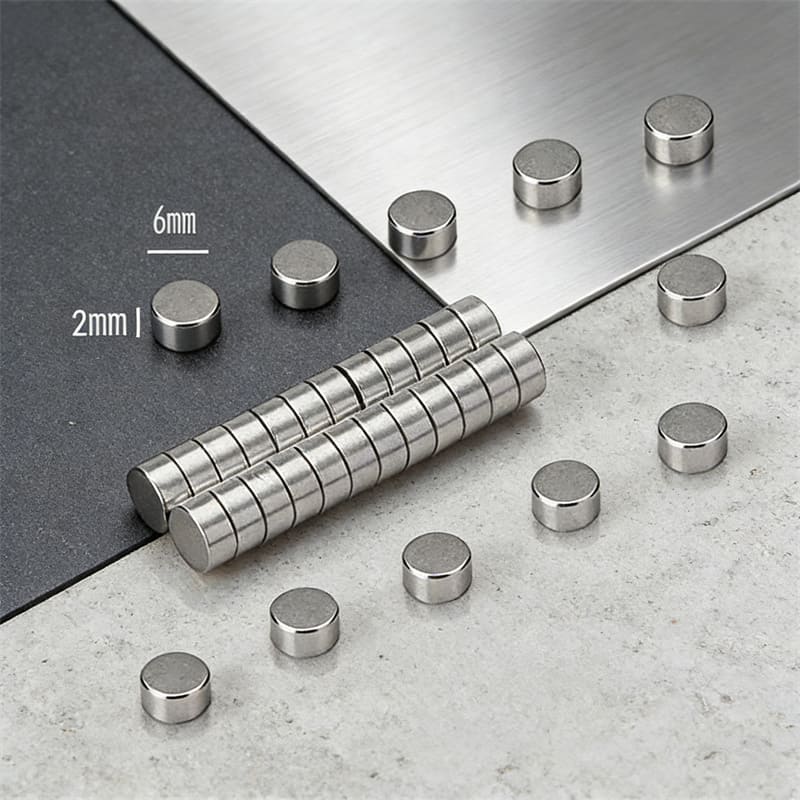
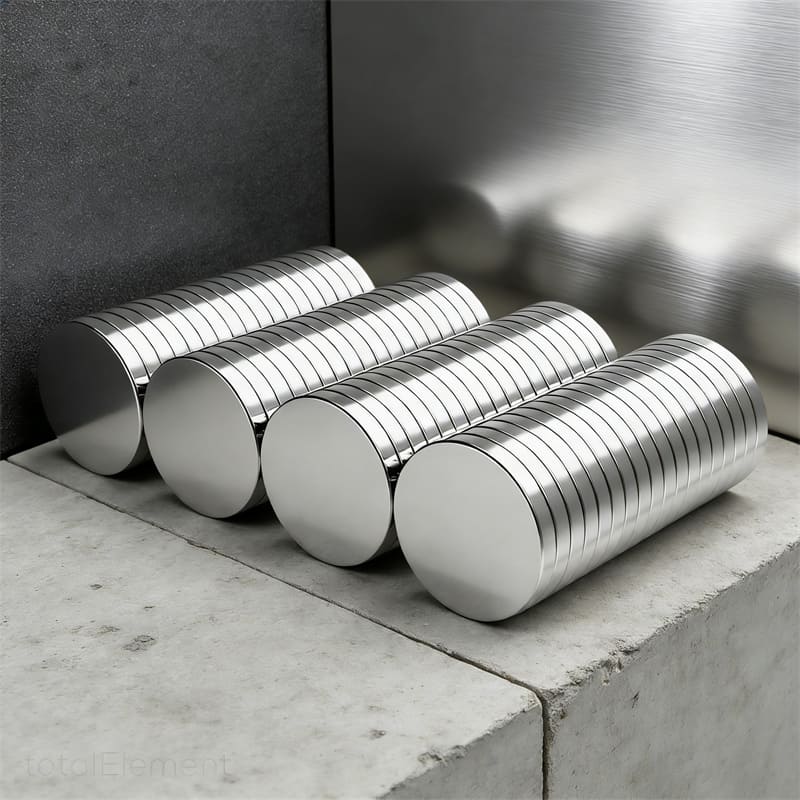
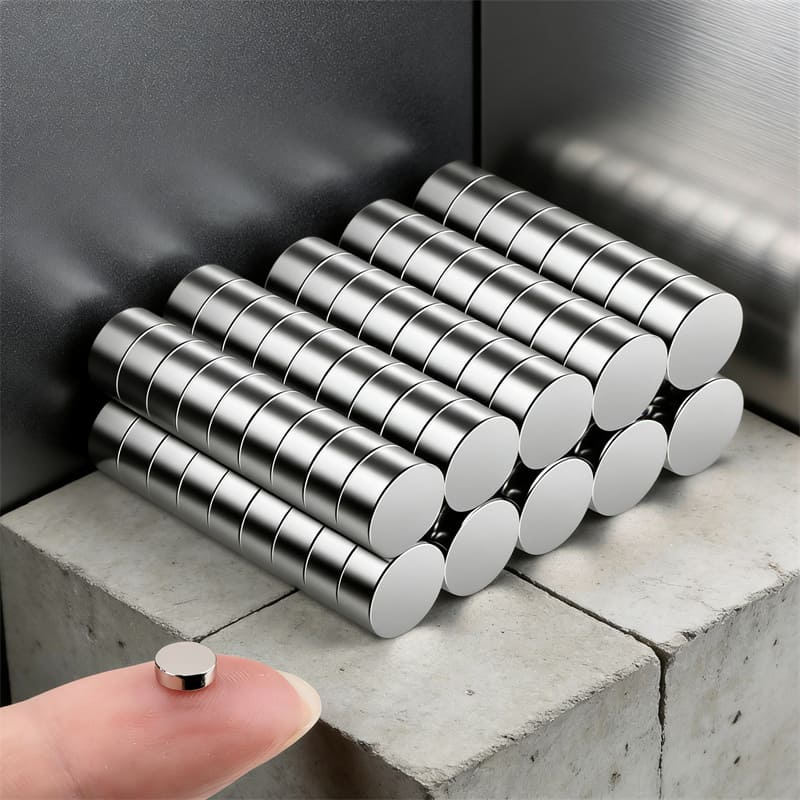
  • Common shapes: disc, block, cylinder, ring, tube, ball (custom micro forms available)

  • Grades: N35–N55, plus temperature grades on request when heat is a risk

  • Coatings: NiCuNi / Zn / Epoxy / Parylene options (coating build affects final OD/ID)

  • Packaging for assembly: trays, tape-and-reel, or custom fixtures for pick-and-place

  • Micro-part reality: brittle material—specify handling, cleanliness, and inspection needs early

Tiny neodymium Magnet
micro neodymium magnet

Measurement Unit

Most RFQs for micro magnets use mm, while research notes may call them a micron magnet in μm. Either is fine—but always specify magnetization direction on the drawing. In micro assemblies, one wrong assumption (like treating the last dimension as the magnetization axis) can turn a “perfect sample” into a field-direction mismatch at build stage.

Minimum Size, Tolerance and Magnetization Options

Osenc can produce micro magnets with the dimensions below as a custom magnet supplier.

  • Minimum block: 0.2*0.2*0.2 mm
  • Minimum disc: 0.2*0.2 mm
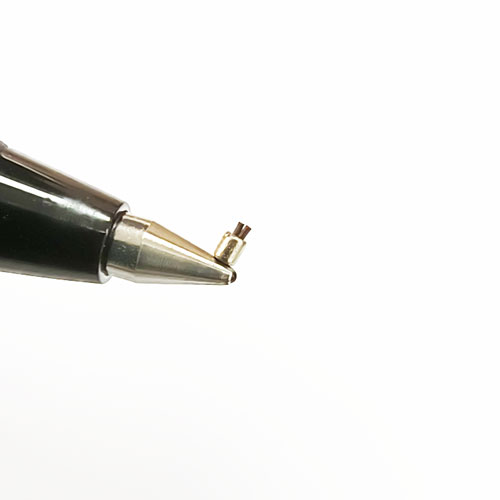
  • Minimum tube: 0.38*0.14 *2 mm
  • Tolerances: between +/- 0.005mm and +/- 0.020 mm
  • Minimum hole diameter: 0.10 mm

If you’re working with ultra-thin parts (for example, 50 × 50 × 0.2 mm), we’ll confirm flatness, coating uniformity, and packaging to reduce cracking and chipping during transit.

For ring, tube, and hole-type micro magnets, concentricity control should be reviewed during the drawing stage. Even a small eccentricity between OD and ID may affect assembly fit, rotation balance, or signal stability in magnetic encoder and micro motor applications.

For encoder, rotor, and Hall effect sensor array projects, multi-pole magnetization may be available depending on magnet size, geometry, material grade, and fixture feasibility. Please share the pole count, magnetization pattern, mechanical datum, and sensor position so we can review whether the design is suitable before sampling.

Grades of Micro Magnets

Neodymium grades (N35–N55) describe material capability, but they don’t guarantee performance once your assembly adds coating, adhesive, housings, or any air gap. For micro neodymium magnets / neodymium micromagnets, volume is so small that many builds start at N52–N55 to keep usable field after losses. If heat is possible, prioritize a temperature grade first—because avoiding irreversible loss matters more than chasing the highest N-number.

Material Selection for Micro Magnets

NdFeB micro magnets are usually the first choice when the design requires high magnetic strength in a very small space. Their high BHmax, also called maximum energy product, helps provide stronger magnetic performance from a limited magnet volume, which is useful for compact sensors, micro motors, encoders, and precision assemblies.

MaterialBest ForMain AdvantageKey Limitation
NdFeBCompact sensors, micro motors, encoders, precision assembliesHighest magnetic strength in small volumeUsually requires coating for corrosion protection
SmCoHigh-temperature sensors, aerospace assemblies, harsh environmentsBetter temperature stability and strong resistance to irreversible demagnetizationHigher material cost and more brittle handling
FerriteCost-sensitive micro parts with moderate magnetic requirementsGood corrosion resistance and lower costLower magnetic strength than NdFeB and SmCo
AlNiCoSpecific sensor or temperature-stable applicationsGood temperature stability and stable magnetic behaviorLower coercivity and less suitable for very small high-force designs

SmCo micro magnets are better suited for high-temperature or harsh environments where magnetic stability matters more than maximum pull strength. Depending on the grade, SmCo can offer better operating temperature stability and stronger resistance to irreversible demagnetization than standard NdFeB magnets.

Ferrite and AlNiCo micro magnets may be considered when the application requires lower cost, better corrosion resistance, or specific temperature stability rather than the highest magnetic strength. If your design involves heat, a changing air gap, or long-term field stability, OSENC can review the material grade and demagnetization curve before sampling.

micro pipe magnet

Coatings for Micro Magnets

NdFeB micro magnets can corrode quickly in humidity or salt exposure, so coating should be treated as part of the spec—not an afterthought. Common options include NickelZincepoxyParylene, selected based on corrosion risk and wear. For smallest neodymium magnets, coating thickness isn’t “free”: it changes effective OD/ID and can become a real air gap in your stack-up. If you’re tolerance-sensitive, confirm coating type, thickness target, and how thickness is measured before sampling.

For humidity, salt exposure, or long-term corrosion-sensitive applications, salt spray testing can be arranged to compare coating performance and confirm whether the selected coating is suitable for the working environment.

What Are Micro Magnets Used For?

Micro magnets are used when reliable magnetic force is required in a very small mechanical space—for sensing, positioning, holding, triggering, or actuation. They are commonly used in electronics, medical devices, precision hardware, micro motors, sensor modules, and compact mechanical assemblies where every millimeter affects fit and performance.

Micro Magnets for Medical and Lab Devices

In medical device and laboratory equipment manufacturing, micro magnets can be used in disposable surgical instruments, catheter tip assemblies, microfluidic diagnostic cartridges, compact actuation modules, and precision positioning components. For these applications, buyers often need more than magnetic strength. Coating stability, Parylene coating options, corrosion resistance, cleanliness, dimensional consistency, and packaging method can all affect the final assembly result.

For very small neodymium micro magnets, coating build and edge quality must be reviewed early because even a thin protective layer may change the final OD, ID, fit, or working gap. OSENC can support drawing review, coating selection, sample validation, and packaging recommendations before volume production.

Micro Magnets for Hall Effect Sensors and Position Detection

In Hall effect sensor applications, micro magnets are usually selected based on surface gauss, magnetization direction, working distance, and the air gap between the magnet and the sensing element. These factors can affect switching distance, signal stability, and proximity detection accuracy.

For reed switch triggers, rotary position detection, magnetic encoders, and compact sensor modules, the magnet should be designed together with the sensor position, housing structure, and assembly tolerance. A small change in size, coating thickness, or magnetization axis may create a noticeable difference in sensor response.

Micro Magnets for Micro Motors, Encoders, and Actuators

Micro motors, magnetic encoders, and miniature actuator assemblies often require high magnetic flux density in a limited magnet volume. High-grade N52 to N55 neodymium micro magnets are commonly considered when the design needs stronger magnetic performance from a very small rotor or moving component.

In these applications, dimensional tolerance, magnetic consistency, magnetization direction, and assembly method are all critical. OSENC can review your drawing, rotor size, working gap, coating requirement, and target magnetic performance before sampling to help reduce trial-and-error during development.

Other Common Applications

Sensors & detection: Hall effect sensors, reed switches, proximity sensing, position detection, and signal triggering.

Micro motors & rotors: small BLDC motors, magnetic encoders, miniature rotors, and compact actuator assemblies.

Fastening & latching: tiny closures for cases, covers, doors, lids, and precision housings.

Alignment & positioning: jig fixtures, precision locating, repeatable docking, and assembly positioning.

Electronics & connectors: magnetic charging tips, pogo-pin alignment, cable ends, earbuds, headphones, and wearable devices.

Medical & lab devices: small instruments, disposable cartridges, microfluidic fixtures, and compact diagnostic assemblies.

Industrial fixtures: pick-and-place aids, small-part holding, and assembly support.

Modeling & prototyping: miniature parts, hobby builds, product testing, and early-stage prototype assemblies.

micro ring magnet
Neodymium Micro Magnets6

Engineering Review for Custom Micro Magnets

For custom micro magnet projects, OSENC can review your drawing, material requirement, coating, magnetization direction, working distance, and assembly stack-up before sampling. This helps confirm whether the proposed size, tolerance, coating build, and magnetic direction are realistic for production.

If the magnet is used for holding, latching, sensing, or a magnetic assembly, we can help evaluate key factors such as surface gauss, magnetic flux density, air gap influence, and possible pull force against the target part. For more complex assemblies, Finite Element Analysis (FEA) can be used to estimate field distribution and force behavior before tooling or sample production.

This early review helps reduce trial-and-error cost, avoid field-direction mismatch, and improve the chance that the first sample matches the final application requirement.

Quality Control & Inspection for Micro Magnets

Micro magnets require more than standard visual inspection. Because the part size is extremely small, small variations in geometry, coating thickness, magnetization direction, or magnetic output can affect the final assembly result.

For dimensional control, OSENC can inspect OD, ID, thickness, hole size, and micro geometries using optical projector inspection, microscope measurement, and other precision inspection methods. This is especially important for ring magnets, tube magnets, blind-hole magnets, and ultra-thin parts where concentricity control and edge quality may affect assembly fit.

For magnetic performance control, surface gauss can be checked with a Gaussmeter according to the required measuring position and distance. For projects that require stronger batch consistency, magnetic moment or material-grade consistency can be reviewed with suitable magnetic testing methods such as Helmholtz coil testing or related magnetic measurement procedures.

For coating reliability, salt spray testing can be arranged for NiCuNi, zinc, epoxy, Parylene, or other corrosion-resistant coatings when the application requires humidity, salt exposure, or long-term environmental resistance. Inspection reports can include dimensional data, surface gauss readings, coating notes, and packaging confirmation before shipment.

Where to Buy Custom Micro Magnets?

To quote micro magnets accurately (and avoid spec mismatches), please send:

  • Drawing + quantity.
  • OD/ID/thickness tolerances.
  • Coating type (and any max coating build). Magnetization direction.
  • Operating temperature.
  • Your real stack-up/air gap.

If you’re sourcing micro neodymium magnets for assembly, tell us your packaging preference (tray or tape-and-reel) and we’ll recommend the most stable option before you move into volume.

Neodymium Micro Magnets

FAQ

Micro magnets are ultra-small magnets—often under 4 mm (commonly 1–3 mm)—made for assemblies where tiny tolerances matter. Most micro magnets use Neodymium (NdFeB) for maximum strength in a small footprint, while Samarium Cobalt (SmCo) is chosen when higher temperature stability is needed.

  • Typical size range: 1–3 mm features; often custom micro parts

  • Common materials: NdFeB (strongest mini form), SmCo (better heat stability)

  • Where they’re used: electronics, sensors, medical devices, micro-actuators

With our experience, such strong mini magnets are use in medical products , aircraft instrument sensor, mechanical watches, and microrobotics.

In medicine, they enable targeted drug delivery and enhance surgical instruments for less invasive procedures.
In microrobotics, they function as actuators for precise movement and are integral to sensing and control systems, allowing accurate navigation and positioning.

Overall, micromagnets provide precision, control, and efficiency in these applications, leading to improved patient outcomes and new possibilities in both fields.

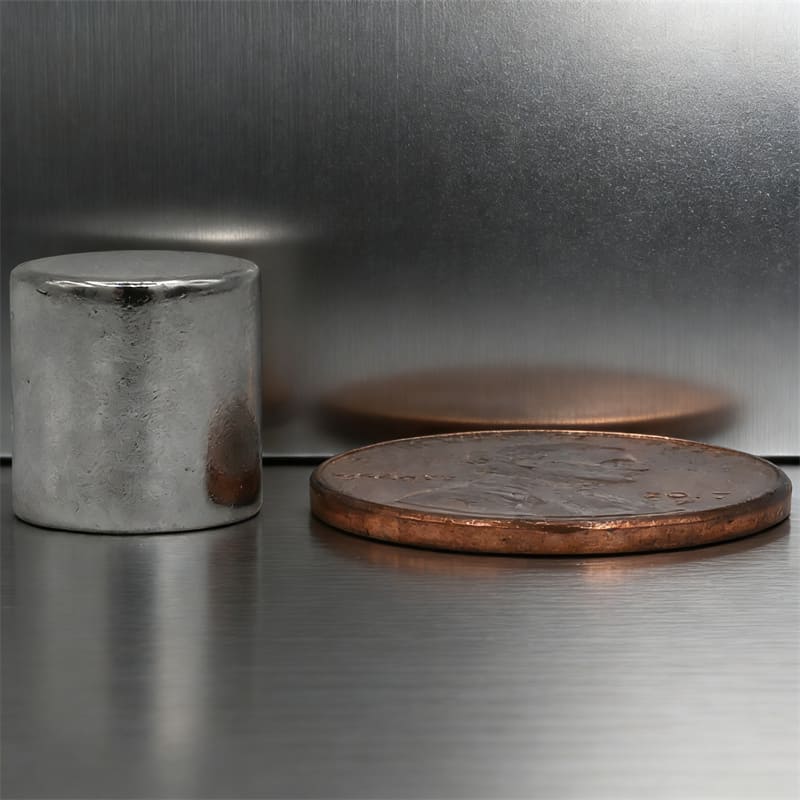
A small neodymium magnet can feel “surprisingly strong” because neodymium (NdFeB) packs a lot of magnetic energy into a tiny volume. In real use, strength depends on grade, size, shape, coating, air gap, and the steel surface. For example, a 2-gram (0.07 oz) magnet can sometimes lift far more than its own weight—under ideal, flat-to-flat contact conditions.

  • What affects pull the most: magnet grade (e.g., N35–N52), face area, thickness, and the air gap

  • Best-case vs real-world: paint, plating, curvature, and thin steel can reduce holding force fast

  • Why it’s popular: high pull-to-size ratio + good resistance to demagnetization for many applications

The main downside of a neodymium magnet is that it’s not “tough” material. NdFeB is brittle, can chip or crack, and it can corrode if the coating is damaged—especially in humid or salty environments. Standard grades also start to lose strength as temperature rises; many typical neodymium magnets are rated around 80°C (176°F) unless you choose high-temp grades.

If you’re shopping for the strongest small magnets, you’re typically looking at high-grade Neodymium (NdFeB)—especially N56 where available. At Osenc, N56 neodymium magnets are positioned as top-end options for maximum strength in a compact size, often with nickel-copper-nickel plating for corrosion resistance. If you need a broader mix of sizes, N52 is also a common “high power” choice in tiny formats (for example, 1/8" × 1/16" discs).

Generally speaking, mechanical watches are highly sensitive to magnetism. People have to avoid any magnetic interference with it. That is why people believed that mechanical watches do not contain magnets. However, there are exceptions.

Some mechanical watches, such as those powered by the ETA 2895-2 movement, they have two pieces very micro magnets. They are use for balance the second wheel. These magnets are carefully engineered with very low magnetic field strength to prevent the magnetization of other components, which could otherwise compromise the watch’s accuracy.

eta 2895-2 movement

Parylene.
In lots of medica case, customers choose Parylene.

Let‘s Realize Your Grand Plan Together

Get Your Fast Quote (Price + Lead Time)

Receive updated pricing, specs, MOQ, and shipping options—no spam, just the info you need. Reply within 3-6 hours.

Get This Month’s Latest Price & Specs