Osenc makes custom Everlube coated neodymium (NdFeB) magnets to your drawing, with Everlube 10047 or 6155 specified on the quote.
Have a drawing? Share the revision and quantity. Replacing a part? Start with a photo, the mating dimensions and what failed.
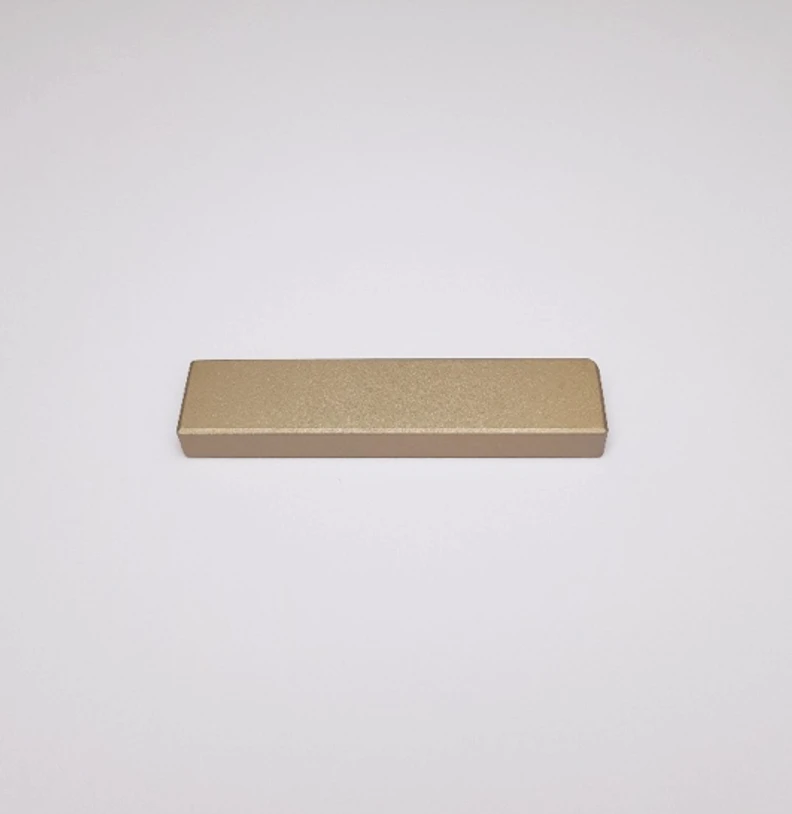
Everlube 10047 and 6155 form a thin, aluminized barrier over the NdFeB surface. If moisture reaches bare NdFeB through a chip or an uncovered edge, corrosion can start at that spot. The coating is applied as a liquid and cured. Surface preparation helps the film bond, and coverage matters most at the places your part exposes or contacts during assembly.
Use the table to specify the finish on your drawing. Then choose the magnet grade for the strength and temperature your assembly needs. If the grade is still open, use our guide to neodymium magnet grades to compare strength and temperature ratings.
| Coating designation | Dry film thickness | ASTM B117 salt spray reference |
|---|---|---|
| Everlube 10047 | 10–25 µm typical | More than 500 hours to red rust on zinc-phosphated 1010 cold-rolled steel with a 15 µm film. |
| Everlube 6155 | 8–25 µm processing range | More than 500 hours on grit-blasted steel with a 0.8 mil film (about 20 µm). |
The salt spray figures above come from two steel-panel setups. For part approval, name the specimen in the RFQ: a finished magnet or an assembled part. Agree on the method, exposure time, sample count and pass criteria. If the magnet can scuff during installation, inspect a trial-installed part and include it in the exposure test where relevant. Use the actual service conditions to assess life in use.
Compare both coatings and review finished-magnet requirements for your drawing or RFQ.
Download Osenc TDS (PDF)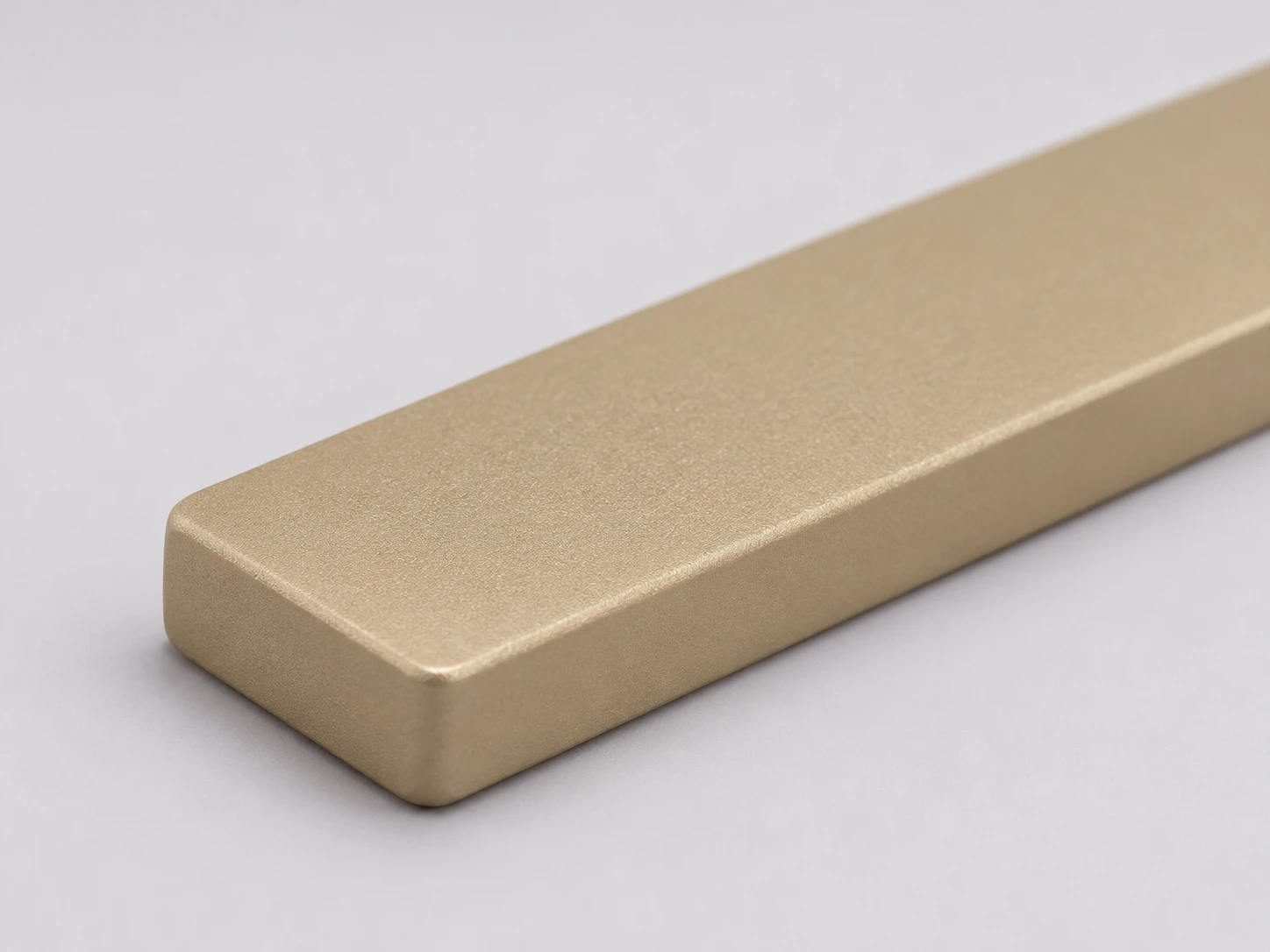
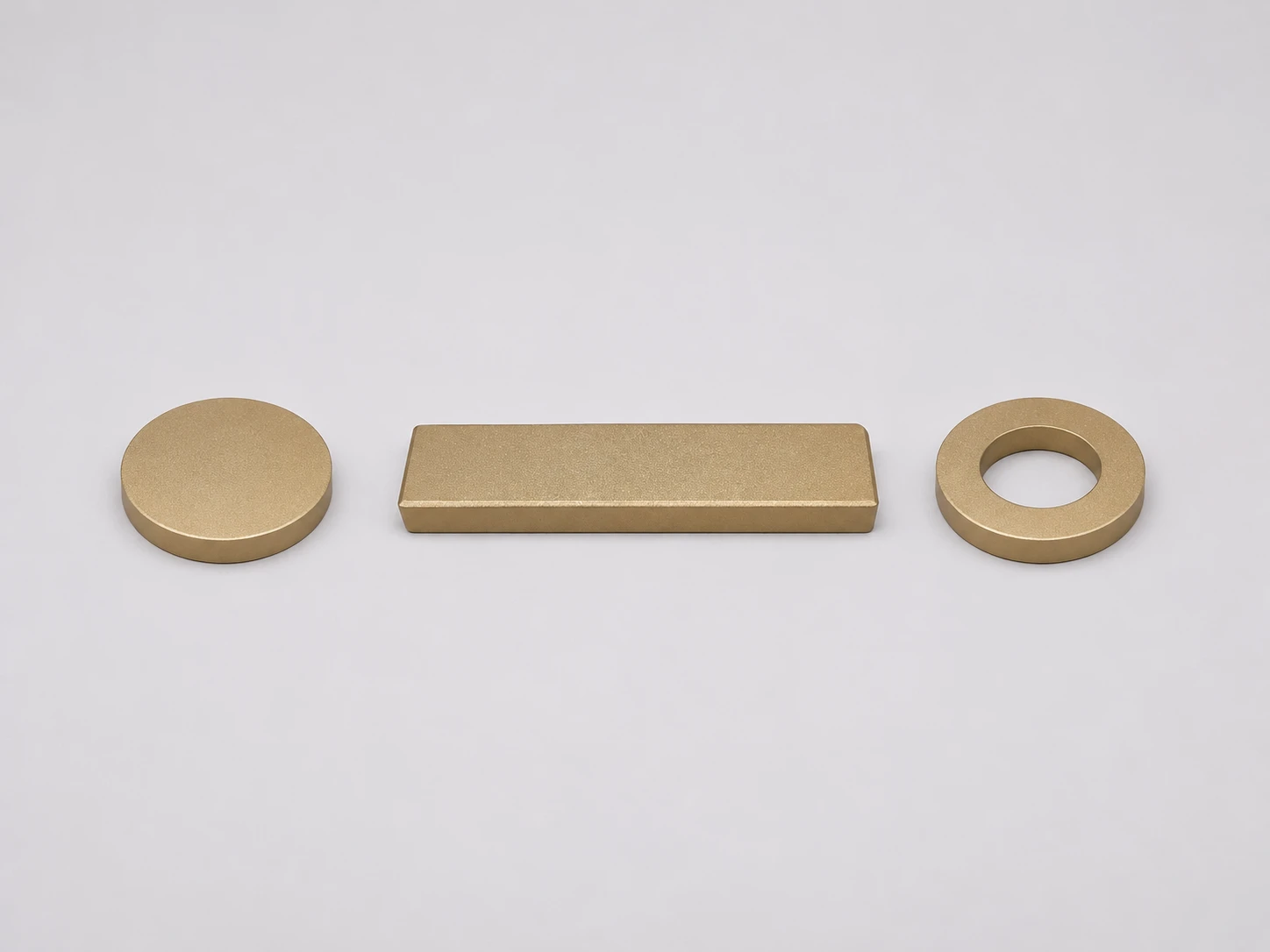
For an Everlube coated disc magnet that drops into a pocket, start with the finished outside diameter and thickness. Mark the north face if the disc is axially magnetized, or the pole axis if it is magnetized across the diameter. The table also shows what to specify for block and ring magnets.
| Shape to quote | What to show on the drawing |
|---|---|
| Everlube coated disc magnets | Finished diameter and thickness. For axial magnetization, mark the north face. For diametrical magnetization, mark the pole axis across the diameter. |
| Block magnets | Finished length, width, and thickness. Identify the pole faces and any tight-fitting pocket or chamfer. |
| Ring magnets | Finished outside diameter, bore, and thickness. Mark the pole layout and any coated bore that must clear a shaft. |
For a drop-in replacement, mark the dimensions that apply after coating. As a simple fit example, a 0.020 mm film on each side of a disc adds about 0.040 mm to its bare diameter. If the pocket allows only 0.030 mm of diametral clearance, the coated disc would be about 0.010 mm too large for that pocket before machining and coating variation are counted. Set the finished diameter on the print and check the coated sample against the actual mating part or a fit gauge.
If your drawing specifies pole orientation, check the north and south poles on the finished sample before assembly.
Set the magnetic acceptance test on the finished part. For a sensor, give the field limit, probe location and orientation, working distance and temperature. For a holding magnet, give the minimum pull force, target material and thickness, gap and pull direction. Include the coating, adhesive and assembly clearances when setting the gap. If the design has little margin, check performance at the largest allowed gap and highest relevant operating temperature. See our magnet strength measurement guide for fixture and measurement details.
Send the tightest fit, pole direction, and the gap where the magnet has to work. See custom neodymium magnet options for other shapes.
Keep the current finish if it meets your fit, exposure, and test requirements. If your drawing specifies Everlube 10047 or 6155, put that exact designation on the RFQ. For a redesign or a failed part, use the table to decide what to compare on finished samples.
| Finish | When to use it as a baseline or candidate | What to check on the finished magnet |
|---|---|---|
| Everlube 10047 or 6155 | Your drawing specifies it, or you need to evaluate a thin barrier for moisture or fluid exposure. | Coverage at bores and edges, finished fit, and condition after the specified exposure. |
| Nickel-copper-nickel (Ni-Cu-Ni) | You already have an approved nickel-plated part, or it serves as the baseline for a new comparison. | If rust starts at an insertion edge, inspect for assembly damage and repeat the trial at the specified clearance. |
| Zinc plating | Your drawing or existing production part specifies zinc. | Compare finished samples in the same humidity or condensation cycle if moisture is causing failures. Inspect the same areas on each sample. |
| Epoxy | An approved epoxy-coated part is your baseline, or you are choosing between two barrier coatings. | If epoxy blisters or lifts in service, test both finishes in the same fluid at the same part temperature. Include the adhesive if it contacts the fluid. |
For a side-by-side test, keep the magnet shape and grade the same. Measure the coated dimensions first, then use the same exposure and acceptance criteria for each finish.
If a magnet is already corroding, start with the returned part and a photo of its installed position. Rust at a scraped lead-in edge calls for a trial fit and a clearance check. Damage where water collects calls for a condensation or wet-dry test in the installed orientation. Use what you find to decide whether to change the finish, the assembly fit or how the assembly sheds water.
Explore Osenc’s epoxy coated neodymium magnets if the approved finish is epoxy or if you need a second sample for comparison.
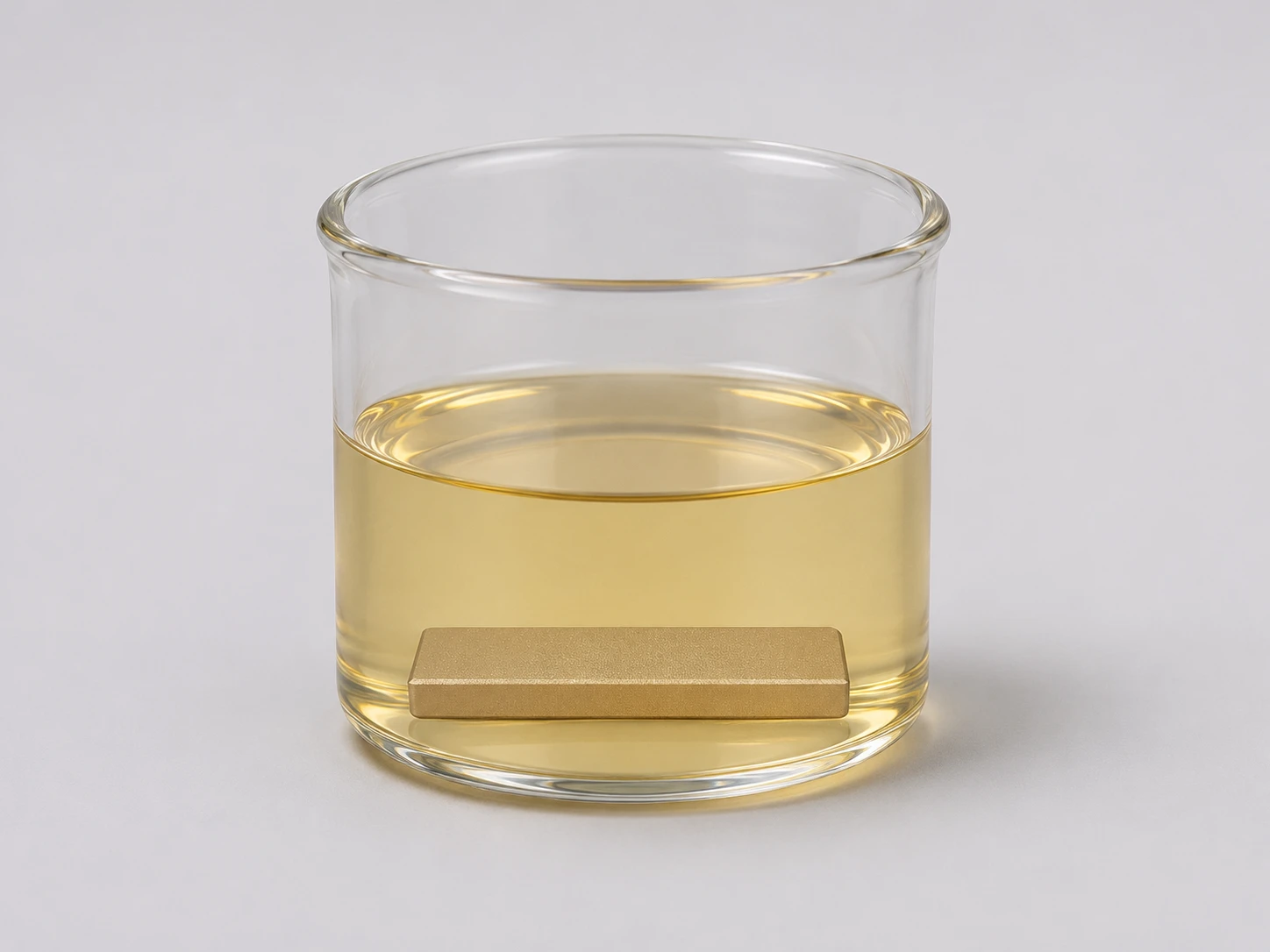
Yes, Everlube coated magnets can be evaluated for transmission-oil service. Qualify the finished part in your exact oil and at its operating temperature. Use full immersion when the part sits below the oil level in service. For splash exposure, reproduce how the oil contacts the part.
See how to bond neodymium magnets when the magnet is glued into a housing.
Include the oil spec, temperature, and whether the magnet is splashed or submerged.
Approve the sample against the same drawing and test setup you plan to use for the first production lot. Osenc reviews custom magnet drawings before quoting and supports sample approval for new custom projects.
Put the part number, revision and exact 10047 or 6155 callout on the RFQ. Ask which documents can carry that information and the lot ID. For a second-source project, include the approved sample or the current inspection method if available.
Confirm that the sample uses the intended grade, geometry, magnetization and coating setup. Check fit in your mating part and measure output at the working gap. Record the fixture, measured values and acceptable finish at edges and bores.
Agree on which dimensions, coating checks and magnetic values to record by lot, and when to repeat exposure tests. If a coating, pretreatment or coating site changes, agree on notice, approval and any retesting before the next order.
Osenc’s quality management overview lists dimensional tools, gauss meters, Helmholtz coils, coating thickness testers and a salt spray chamber. Share your inspection points and required records so we can review what to include for your part.
Send the drawing revision, planned quantities and the checks you need at sample approval and on production lots.
10047 and 6155 are two Everlube coating designations for rare-earth magnets. If your drawing names one, use that designation in the RFQ. If the finish is open, share the actual fluid or environment, operating temperature, finished dimensions and acceptance criteria. That gives us a basis for reviewing the coating and magnet grade together.
Request a 6155 sample for comparison and route the change through your drawing approval process. Compare both versions on the same magnet geometry. Check the coating build, finished fit and performance in your actual exposure test. Once approved, record the revised coating designation on the drawing or deviation so purchasing and inspection use the same requirement.
Put the critical fit dimensions and tolerances on the drawing in the finished, coated condition. For a disc in a pocket, call out the finished outside diameter. For a ring on a shaft, call out the finished bore and identify the mating surfaces. If your only drawing shows bare dimensions, include the mating part or its dimensions so we can review the fit. Verify the coated sample against the mating part or a fit gauge.
It can affect the result when the coating increases the distance between the magnetic material and the target or sensor. For a holding application, share the target material, working gap and minimum pull force at that gap. For a sensor, share the measurement point, sensor distance, pole orientation and required field or switching distance. Check the finished sample in the actual assembly or a fixture that reproduces those conditions.
Set the service temperature for the complete assembly. Share the continuous and peak magnet temperatures, how long the peaks last, and your minimum pull force or field. Check the selected NdFeB grade in the intended geometry and gap, along with the coating and any adhesive. The coating cure temperature is a manufacturing setting. For a temperature-sensitive design, check magnetic performance at the operating temperature and inspect the coating after the planned cycles.
Use a finished sample in the exact oil your assembly will see. Specify the fluid by product name or specification, continuous and peak temperatures, exposure time and whether the part is splashed or fully submerged. Include the holder or adhesive if it contacts the oil in service. Before and after exposure, use the same fixture and gap to check fit and magnetic performance. Set visual acceptance criteria for edges, holes and working faces before the test.
Yes. Specify the finished coated magnet as the test specimen and list the test method, duration, inspection areas and pass criteria. For example, define how the edges, bores and working faces will be judged. The table lists typical ASTM B117 results on the specified coated steel panels. Use your finished-part test for approval.
Start with a sketch or photos of the mating part, the space available and the estimated quantity. Add the continuous and peak temperatures and the fluid, humidity or other exposure. For a holding part, include the working gap and minimum pull force. For a sensor, include the required field or switching distance. Those details let us review geometry, grade, pole direction and coating together.
Ask for a coated sample quote and share the expected production quantity. Use the intended production geometry, grade, coating designation and pole direction for the sample. Agree on how you will check fit, magnetic performance and coating condition. If the sample passes, keep the approved drawing revision and inspection criteria with the production RFQ so the order is reviewed against the same requirements.
Start with the adhesive you already use and test it on the coated magnet and actual housing. Use the intended cleaning, bond line and cure, then check strength after the expected fluid or thermal cycles. Inspect where the joint failed. Coating left on the housing with bare metal on the magnet points to the coating-to-magnet interface. A coating that stays on the magnet calls for a closer look at the adhesive joint.
List the documents you need in the RFQ. Examples include a certificate of conformance with the part number, revision and coating designation, a first-article inspection report, or lot-level readings for critical dimensions and magnetic output. Ask which records can be linked to the magnet and coating lots. If your project requires PPAP or third-party testing, include the submission scope for review before ordering.
Send the drawing revision, quantity, finished dimensions and tolerances, coating designation, NdFeB grade and pole direction if known. Add the working gap and magnetic target if those govern acceptance. Include any salt spray or fluid test requirement and whether you need samples first. Ask each supplier to quote against the same drawing revision and test scope so you can compare what each quote covers.
Send your drawing revision or a sketch, the 10047 or 6155 callout, critical coated dimensions and magnetic acceptance test. Add your sample, pilot and production quantities and target delivery dates. If you are replacing a failed part, include a photo of where the damage started and the actual exposure.
Ask us to itemize any tooling, special testing, inspection reports or packaging, and to state when each lead time starts. You can compare quotes using the same drawing revision, inspection scope and delivery terms.