
Let‘s Realize Your Grand Plan Together
- [email protected]
- 0086 139 2737 7121
- Changping, Dongguan, Guangdong 523000, China
- We will respond to you within five minutes.
From micro to large neodymium ring magnets, we quote to your drawing and application: size (OD/ID/H), grade + temperature grade, magnetization (axial/radial/diametric), and coating—so you can validate performance in your real steel and air-gap conditions.
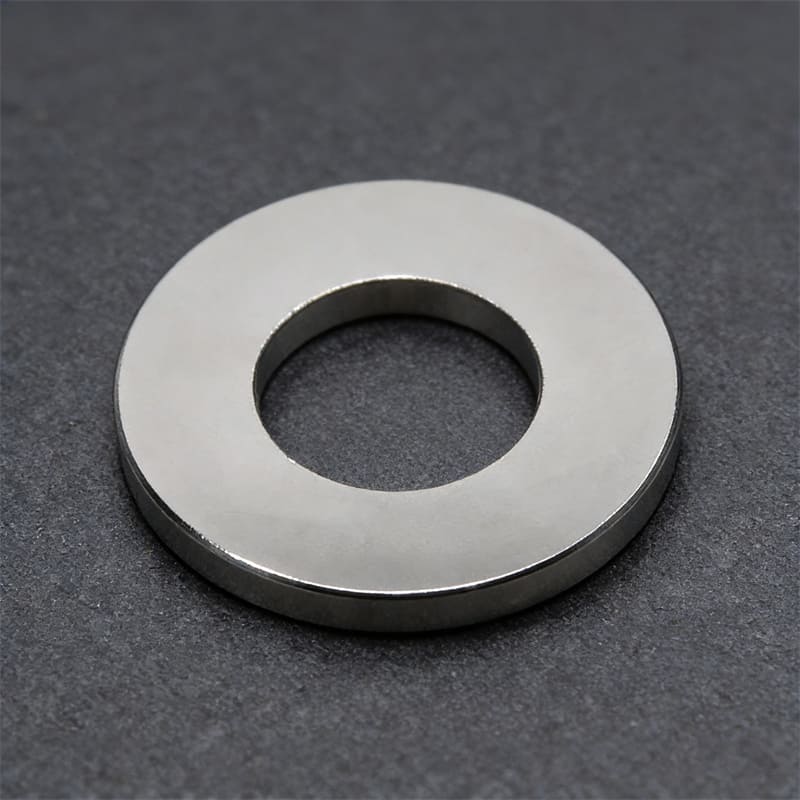
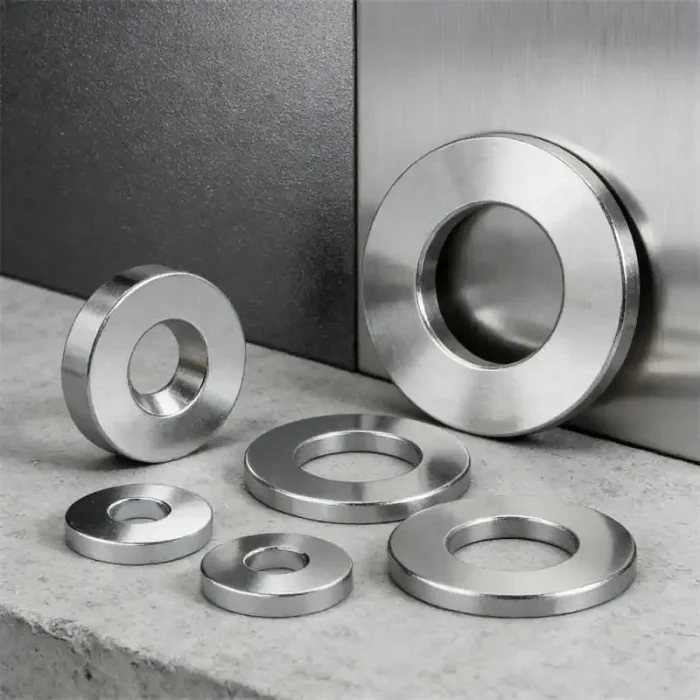
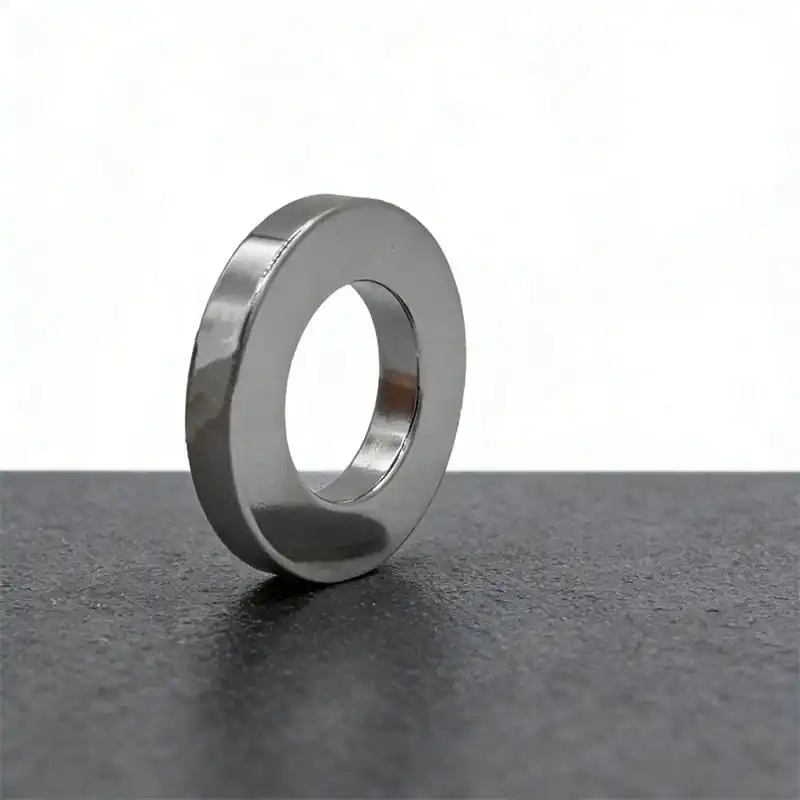
Rare earth neodymium ring magnets (NdFeB)—often called magnet rings—are donut-shaped permanent magnets with a center hole for repeatable mounting on shafts, rods, and fasteners. In rotating builds (motors, encoders, speakers, couplings), that repeatable alignment is usually the difference between “works on paper” and stable performance over time—so grade and magnetization need to match the real assembly.
A quick production lesson: grade is a material spec, not a guaranteed pull-force number. In real assemblies, performance is usually set by OD/ID/H, magnetization (axial/radial/diametric), and the air gap created by paint, tape, epoxy, or rubber. Even a “thin” layer can matter—so if you’re comparing strength, validate on your actual steel, spacing, and pull direction before you lock the spec.
Neodymium ring magnets are a go-to choice when your design needs a center bore, repeatable alignment, and a compact magnetic circuit.
Here’s where grade and magnetization choices matter most in real builds:
Motors & rotors — especially radial neodymium ring magnets for circular field patterns
Encoders & sensors — axial or diametric layouts for side/face reading
Speakers & audio — ring-shaped magnetic circuits and consistent spacing
Magnetic couplings — shaft-mounted designs with controlled air gaps
Fixtures & holding tools — strong ring magnets where concentricity matters
Industrial assemblies — custom ring magnets for OEM builds and repeat orders
Tell us your load direction (pull vs shear), expected air gap, and the steel target, and we’ll recommend the most cost-effective build—not just the highest grade.
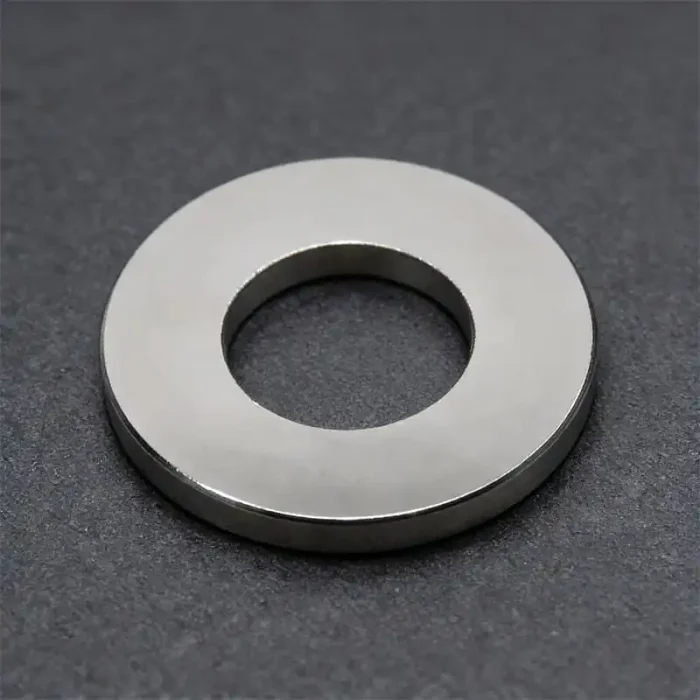
As a custom neodymium magnet supplier, we support micro rings (tiny OD/ID) through large-diameter neodymium ring magnets for industrial assemblies. For most OEM programs, the “make-or-break” details are tolerance, magnetization, and how the part is tested—so we keep the RFQ process straightforward.
We can customize:
OD × ID × thickness (with tighter tolerances when required)
Grade (N35–N55) and temperature grade (H/SH/EH/AH, etc.)
Magnetization direction (axial / radial / diametric)
Coatings for corrosion protection and handling needs
Prototypes → pilot runs → volume production, with sample validation on request
To avoid confusion, we use a simple ring magnet format:
D = outer diameter (OD)
d = inner diameter (ID)
H = thickness (height)
Example (straight hole): D10 × d7 × H3 mm = OD 10 mm, ID 7 mm, thickness 3 mm. If you have a press fit, adhesive bond line, or plating stack-up, include it—those “small” layers often become the real air gap.
Ring neodymium magnets commonly come in two hole styles:
Straight hole (standard bore)
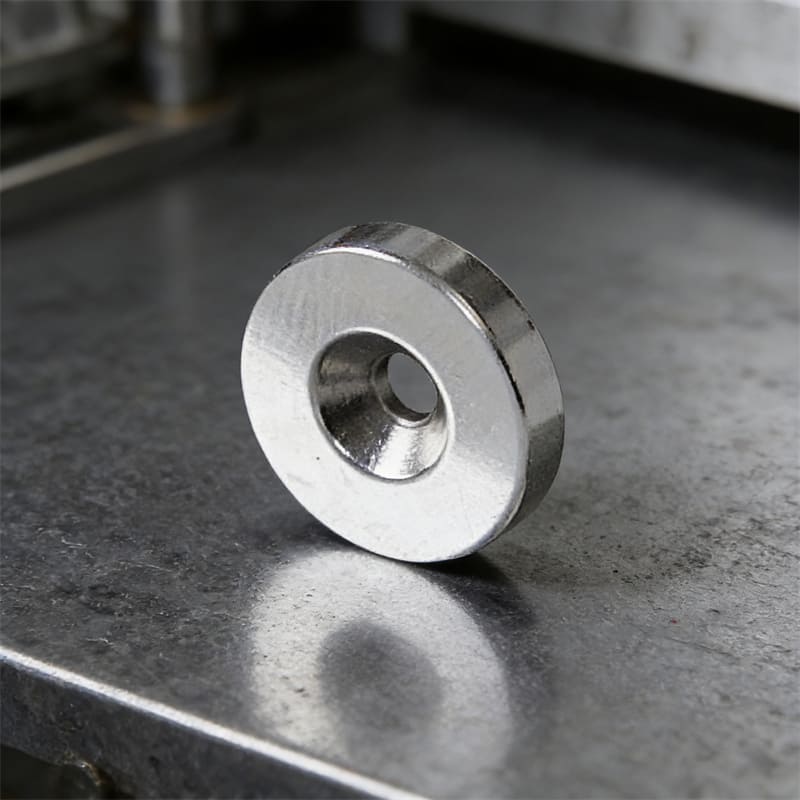
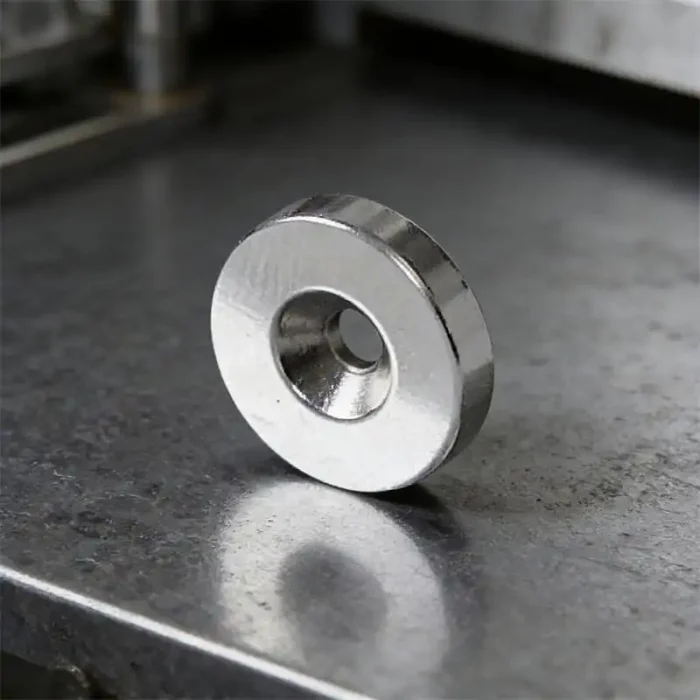
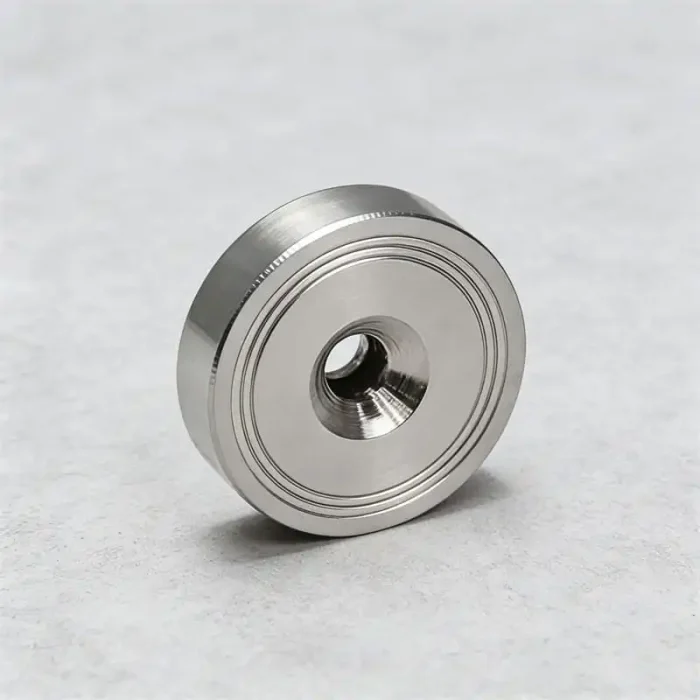
Countersunk hole (screw-mount)
A straight hole is drilled vertically through the magnet, making it easy to slide onto a shaft, rod, or fixture pin.
A countersunk ring magnet has a tapered recess on one face so a flat-head screw can sit flush.
For countersunk magnets, we recommend confirming:
D = OD (outer diameter)
M = major diameter (countersunk major hole)
H = thickness
Countersink angle (commonly 90°, but not always)
Example (countersunk):
D10 × M7 × H2 mm means OD = 10 mm, major diameter = 7 mm, thickness = 2 mm.
(Please also specify the countersink angle.)
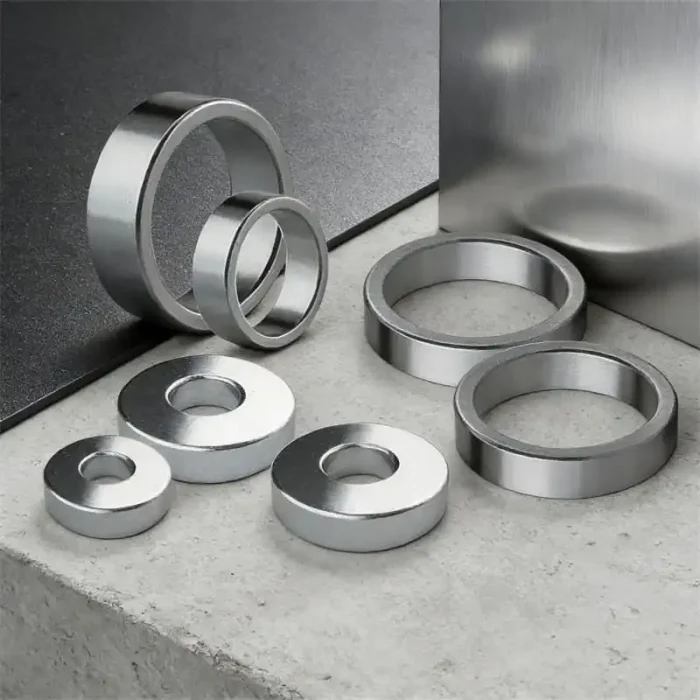
Available sizes for neodymium ring magnets:
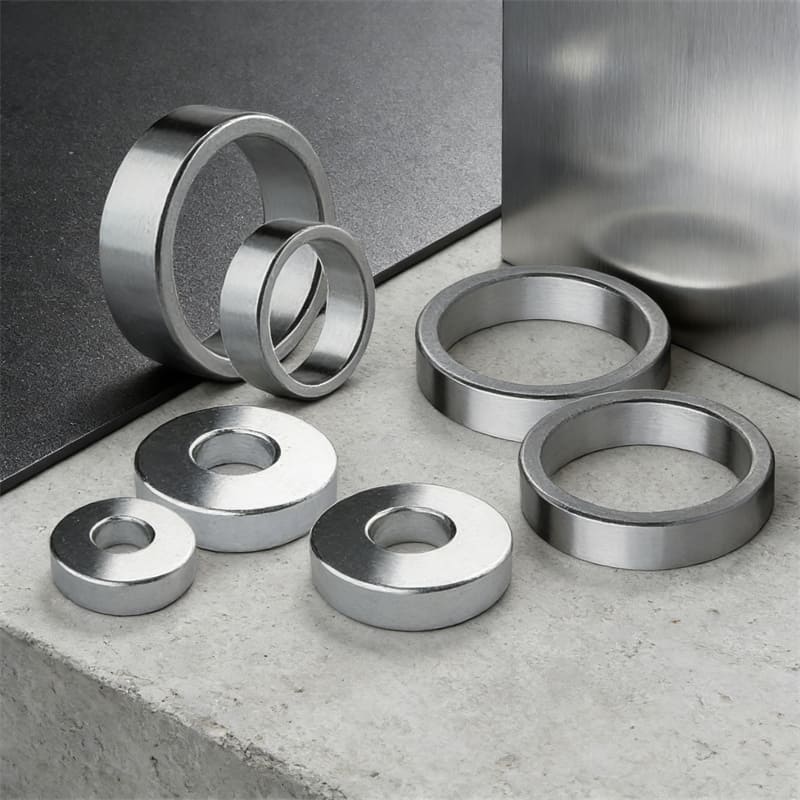
Outer diameters (OD): 1.5–300 mm (1/16 – 11 13/16 inches)
Inner diameters (ID): 0.4–250 mm (1/64 – 9 27/32 inches)
Thickness (H): 0.3–120 mm (1/64 – 4 3/4 inches)
We can produce large neodymium ring magnets such as:
OD 250 mm × ID 220 mm × H 60 mm
OD 80 mm × ID 50 mm × H 120 mm
(If your ring is large, we strongly recommend confirming steel target thickness and air gap—they often determine real performance more than grade.)
We can produce micro neodymium ring magnets such as:
OD 1.5 mm × ID 0.4 mm × H 0.3 mm
Note:
Large OD + very thin thickness is fragile.
Very thin ring walls are also easier to break and may require special handling and packaging.
Most neodymium ring magnets are specified from N35 to N55. When heat is involved, temperature grades (H / SH / UH / EH / AH) are often the difference between “passes on the bench” and “holds after installation,” because they resist irreversible strength loss at higher operating temperatures.
A practical buying rule:
Share your working temperature and any paint/tape/epoxy layer, and we’ll recommend the most cost-effective grade for your real air gap. (Read more details about the grades of magnets)
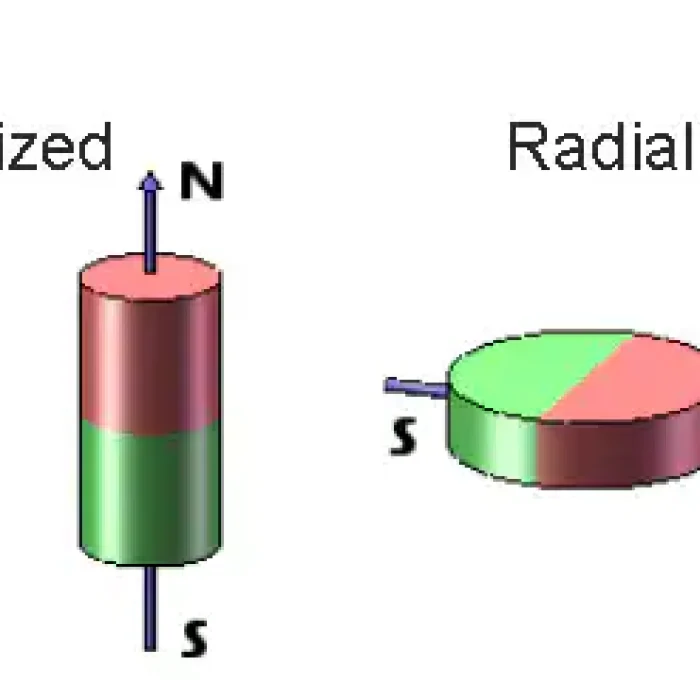
Neodymium ring magnets are typically magnetized one of three ways, and picking the wrong one is a common reason a design “feels weak” even with a high grade:
Quick rule: if your target reads the face, start with axial; if it reads the side, consider diametric; if you’re building a rotor field, radial is usually the right path.
Pull-force numbers are typically measured on clean, flat, thick steel with near-zero air gap. In real assemblies, performance can change a lot due to:
Steel thickness and material
Surface condition (clean vs painted/rough)
Air gap (paint, tape, epoxy, rubber, plastic covers)
Pull direction (vertical pull vs shear/slide)
If you need holding-force performance in your product, the safest approach is to validate using your actual steel target, spacing, and mounting method.
Size first (fit & force): Confirm OD × ID × thickness first, then account for anything that creates an air gap (plating, adhesive, paint, coatings). Even a small gap can noticeably reduce holding force.
Magnetization (field direction): Pick the field direction based on how you’ll “read” or use the ring: axial for face-reading, radial for motor rotors, diametric for side-reading sensors.
Grade & temperature: Choose N35–N55 when you want more strength potential, but if heat is involved, step up to H / SH / UH / EH / AH so performance doesn’t drop off in real use.
Coating & tolerance: Match coating to your environment and handling: Match coating to your environment and handling: NiCuNi / Zn / Epoxy for different corrosion and durability needs. If positioning matters, specify tolerances (OD/ID/H, plus concentricity if needed) to avoid alignment headaches.
Get Your Fast Quote (Price + Lead Time)
Receive updated pricing, specs, MOQ, and shipping options—no spam, just the info you need. Reply within 3-6 hours.
Get This Month’s Latest Price & Specs