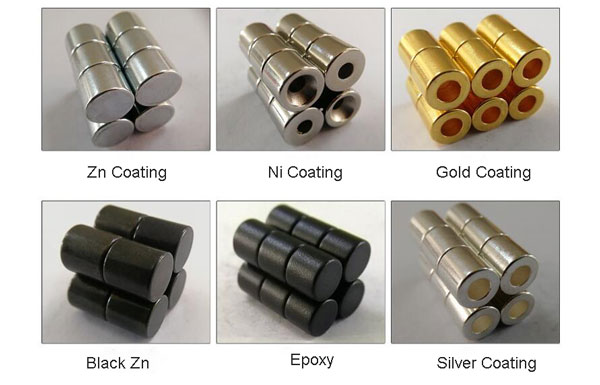
Neodymium magnet coating is one of the main factors in production. Because the materials of neodymium magnets are unstable since they contain a lot of iron. They can have negative chemical reactions – corrosion (rust) – under hot and humid working conditions. This will weaken the magnetic performance and even shorten their life spans. And the coating can prevent or slow down oxidation very well.
In many cases, people just consider how to make sure the neodymium magnet will not rust. But in some high technology cases or medical cases, there are many factors should be conisder, likes:
There are many standards for distinguishing coatings, and Osenc mainly divided into two types:
Nickel (Ni)
Zinc (Zn)
Gold (Au)
Tin (Sn)
Titanium (Ti)
Titanium Nitride (TiN)
Parylene C
Everlube
PTFE(Polytetrafluoroethylene)
Phosphate passivation
Nickel-Copper-Nickel
Nickel-Copper-Nickel, plus Rubber
Zinc, plus Rubber
Nickel-Copper-Nickel, plus Parylene
Nickel-Copper-Nickel, plus PTFE
Tin, plus Parylene
Zinc chromate
Even with the same adhesive, different magnet coating will stick differently. Please choose the right plating according to your needs.