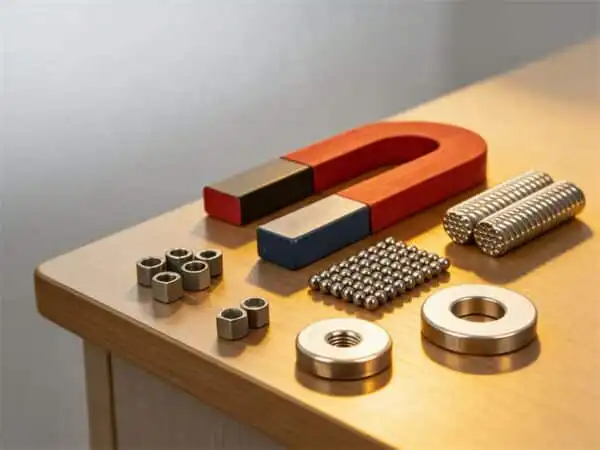
Salt spray testing is useful because it gives engineers and buyers a controlled way to evaluate corrosion resistance. It becomes misleading, however, when a test-hour number is treated as a direct prediction of real-world service life.
What Does Salt Spray Testing Actually Measure?
Salt spray testing creates a repeatable corrosive environment so that a material, plating, paint system, or other protective finish can be evaluated under controlled conditions. The test is especially useful for quality control, process validation, and checking whether a specified coating system continues to meet an agreed acceptance requirement.
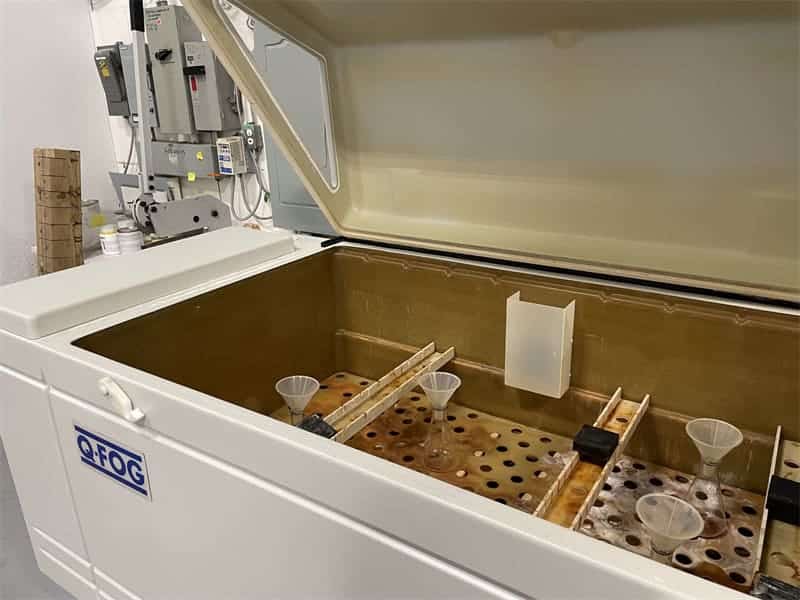
The most important boundary is this: a salt spray test is not a weather forecast for the part. ASTM explicitly notes that natural-environment performance has seldom correlated reliably with salt spray results when the test is used as stand-alone data. ISO 9227 likewise states that its salt spray methods are not intended to predict long-term corrosion resistance.
ASTM B117 vs ISO 9227: What Is the Difference?
The two names appear constantly in specifications, but neither one gives buyers a complete product requirement by itself. That small detail causes a surprising amount of procurement nonsense.
| Standard | What it controls | What it does not decide for you |
|---|---|---|
| ASTM B117 | Practice for operating salt spray (fog) apparatus and maintaining a controlled corrosive environment. | It does not prescribe a universal specimen type, exposure period, or interpretation for every product. |
| ISO 9227 | Specifies apparatus, reagents and procedures for neutral salt spray (NSS), acetic acid salt spray (AASS), and copper-accelerated acetic acid salt spray (CASS). | It does not set one universal specimen geometry, test duration, or pass/fail result for all products. |
As of September 2026, ASTM lists B117-26 as the active edition, while ISO lists ISO 9227:2022. A purchase drawing or quality plan should still identify the required standard and edition instead of assuming every supplier is working from the same revision.
For many coated metal components, neutral salt spray is the familiar baseline. More aggressive or modified salt-fog methods also exist, but a harsher test is not automatically a better test. The correct method is the one that matches the product specification and the engineering question you are trying to answer.
NSS vs AASS vs CASS: Which Salt Spray Method Is Appropriate?
Direct answer: NSS, AASS and CASS are different ISO 9227 salt-spray methods, not interchangeable difficulty levels. The correct choice depends on the material or coating system and the requirement being verified. A more aggressive method does not automatically provide a more useful result for a neodymium magnet project.
| Method | Test environment | How buyers should use it |
|---|---|---|
| NSS — Neutral Salt Spray | Neutral sodium-chloride salt fog. | Use when the applicable specification calls for NSS or a neutral salt-fog baseline. |
| AASS — Acetic Acid Salt Spray | An acidified salt-spray environment. | Use only when the coating system or governing specification specifically requires AASS. |
| CASS — Copper-Accelerated Acetic Acid Salt Spray | An acidified salt-spray environment accelerated with copper salts. | Use where CASS is relevant to the specified coating system. Do not substitute it merely because it is more aggressive. |

How Does a Salt Spray Test Work?
The exact procedure depends on the governing standard and product specification, but the basic sequence is consistent.
- Define the specimen. Decide whether the test uses a coated coupon, an individual component, or the finished part.
- Record the starting condition. Identify the coating system, visible defects, edges, holes, masked areas, scratches or intentional scribe marks, if applicable.
- Place specimens in the chamber. Positioning and spacing are controlled so the salt fog reaches specimens consistently and runoff from one sample does not invalidate another.
- Expose the samples to the specified salt-fog environment. Neutral salt spray commonly uses a sodium-chloride solution and a chamber temperature around 35°C, but the release requirement should point to the governing standard rather than relying on a remembered number.
- Run for the specified duration. The test standard does not magically choose 24, 48, 96, 500 or 1,000 hours for your product. That duration belongs in the product, drawing, customer or validation specification.
- Evaluate against a defined acceptance criterion. Depending on the coating and product, this may include visible substrate corrosion, blistering, peeling, pitting, coating creep, discoloration or another agreed defect definition.

What Do 24, 48, 500 or 1,000 Hours of Salt Spray Testing Mean?
A salt spray hour value tells you how long a defined specimen was exposed under a defined test before reaching, or not reaching, a defined failure criterion. Without those three pieces of context, the hour number is nearly decorative.
For example, two suppliers can both claim “500-hour salt spray performance” while using different substrates, coating stacks, edge conditions, specimen geometries, acceptance rules or inspection methods. Those results should not be treated as equivalent unless the test conditions and pass/fail criteria are aligned.
ASTM B117 also warns that chamber-to-chamber variability can occur even when nominal conditions are within the practice. That is why a serious validation plan uses adequate specimens and records the test conditions instead of treating one surviving sample as eternal proof of coating superiority.
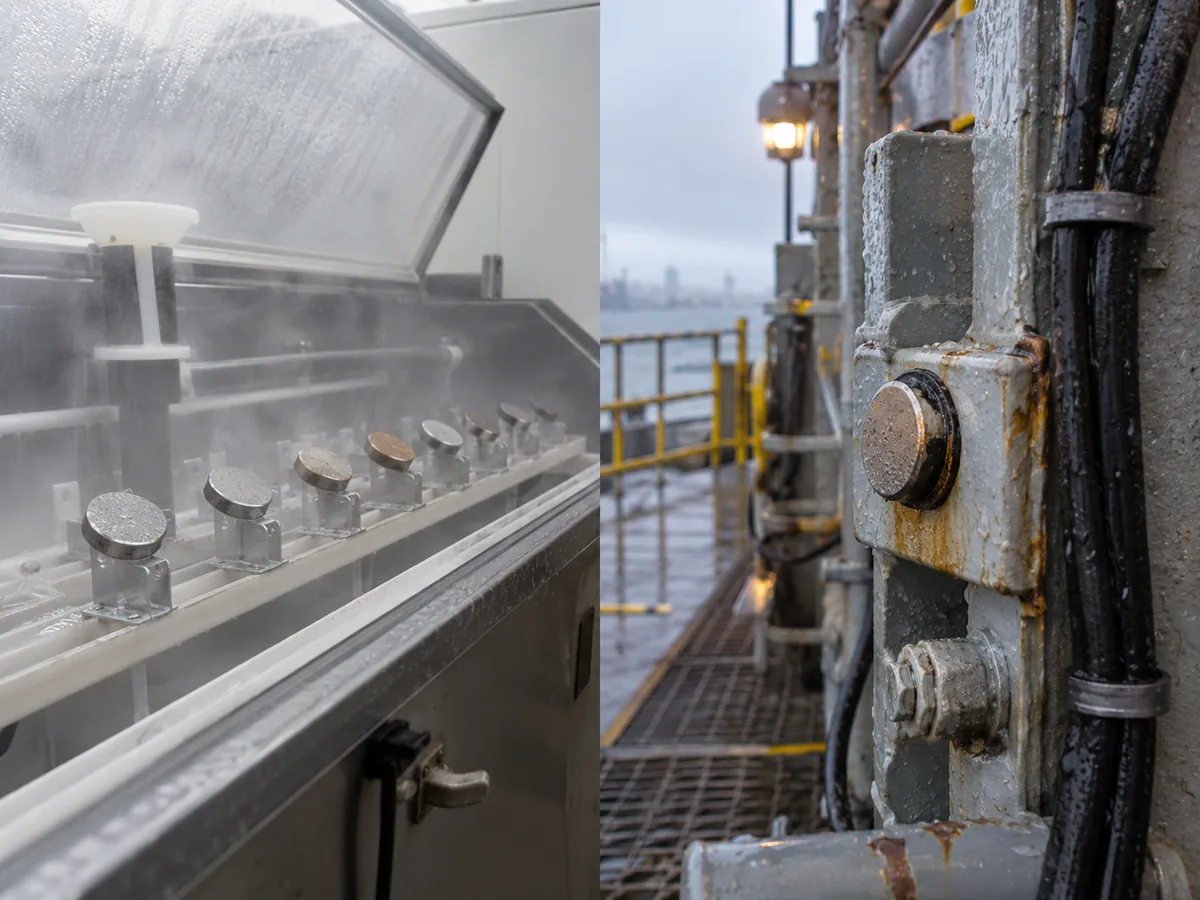
Does 1,000 hours of salt spray equal a certain number of years outdoors?
No. There is no universal conversion from salt spray hours to field years. Real service can include drying cycles, condensation, UV exposure, temperature changes, chemicals, abrasion, electrical contact, crevices and galvanic coupling. A continuous salt fog does not reproduce all of those mechanisms.
What Makes Two Salt Spray Test Results Non-Comparable?
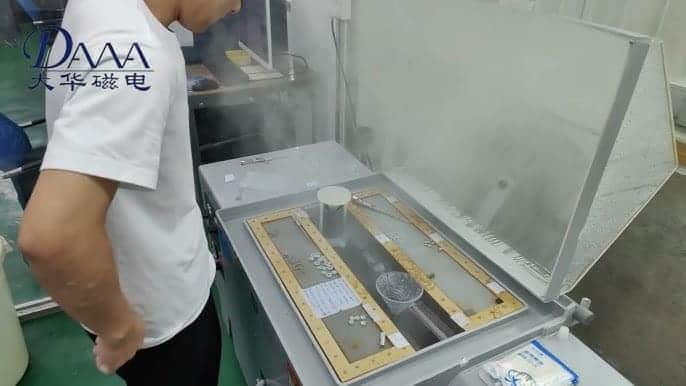
Direct answer: Two salt spray results are only meaningfully comparable when the specimens, preparation, test method, exposure conditions and evaluation basis are sufficiently aligned. The same hour value can represent very different tests if those inputs change.
| Variable | Why the result can change | Buyer action |
|---|---|---|
| Test method | NSS, AASS, CASS and modified or cyclic methods create different exposure conditions. | Require the exact method and governing standard. |
| Specimen geometry | Flat faces, edges, holes, countersinks and crevices do not expose a coating in the same way. | Use finished or representative geometry when those features matter. |
| Surface preparation | Cleaning, contamination and handling condition can change where corrosion starts. | Define how specimens are prepared before exposure. |
| Pre-test damage | Scratches, chips, scribe marks or assembly damage can create intentional or accidental failure paths. | Record the starting condition and any intentional damage. |
| Specimen position | Orientation and spacing influence exposure, drainage and shielding. | Follow the applicable test method and record the setup. |
| Chamber control | Nominally similar tests can still vary if chamber conditions and collection are not controlled consistently. | Require a compliant, documented test environment. |
| Evaluation method | Different inspection timing, cleaning rules or failure definitions can change pass/fail conclusions. | Define how and when the specimen will be evaluated. |
| Sample quantity | A single specimen may hide part-to-part or coating-process variability. | Set a representative sample or replicate requirement. |
Why Salt Spray Testing Matters for Neodymium Magnets
Sintered NdFeB magnets are corrosion-sensitive, so a protective surface system is often part of the finished magnet design. If moisture or chloride reaches the magnet through a pore, scratch, chipped edge or other coating defect, local corrosion can undermine both the coating and the underlying magnet material.

That is why corrosion testing for a neodymium magnet should not be separated from the geometry and coating process. A flat coupon can be useful for process control, but it may not reproduce the edge radius, countersunk hole, sharp corner, handling damage or coating coverage of the actual part.
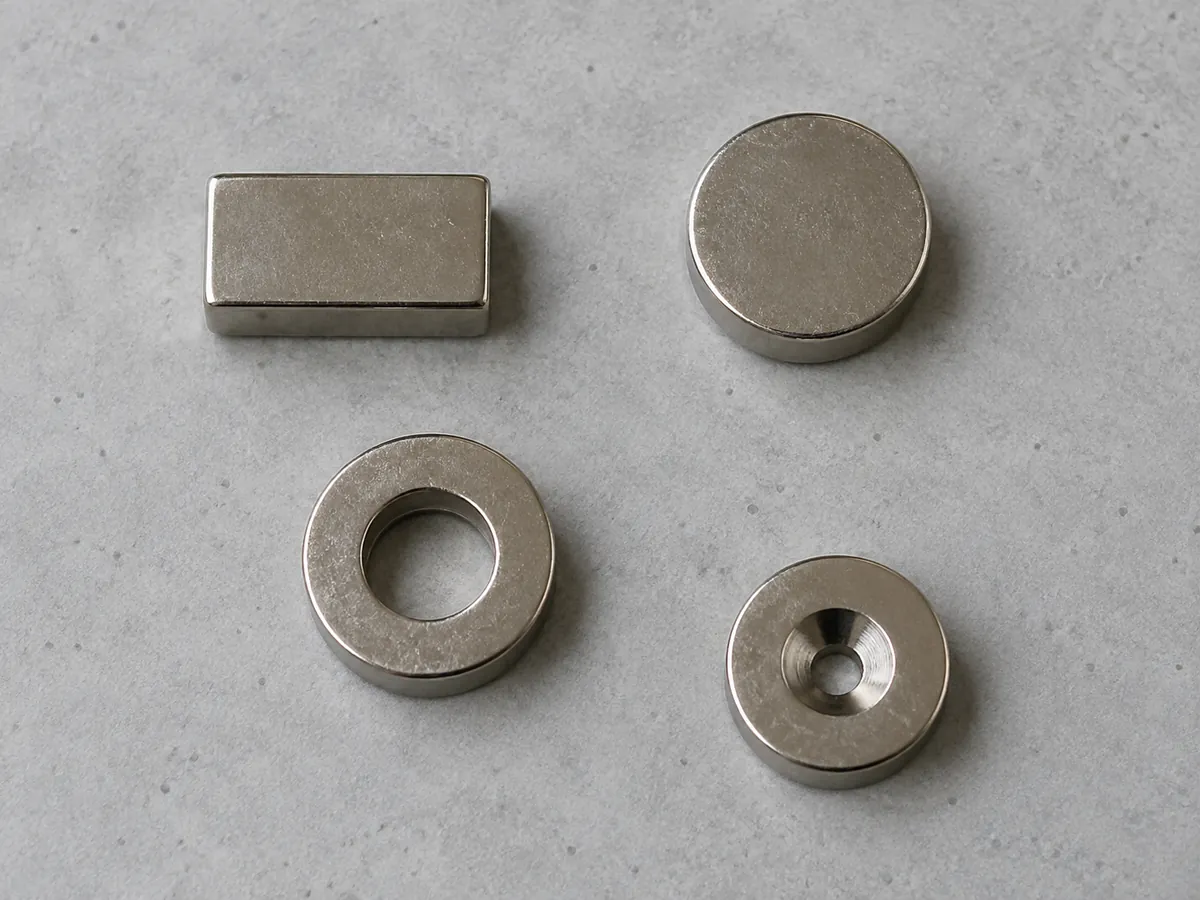
If you are still deciding how the surface should be protected, review the neodymium magnet coating options and the practical corrosion mechanisms described in Do Neodymium Magnets Rust?.
How to Compare Magnet Coatings Without Misreading Salt Spray Data
Salt spray data can support coating selection only when the comparison is controlled. It should not be treated as a universal ranking method for dissimilar materials or coating systems. Before comparing two hour values, align the substrate, specimen geometry, preparation, test method, exposure conditions and acceptance criteria as far as the engineering question requires.
| Variable | Why it changes the result | Procurement action |
|---|---|---|
| Substrate and magnet grade | Base-material corrosion behavior can affect what happens after a coating defect develops. | Compare equivalent substrates where possible. |
| Coating stack and process | Layer sequence, continuity, adhesion and defects affect barrier performance. | Specify the actual coating system, not only a color or generic coating name. |
| Geometry | Edges, holes and sharp features can be harder to cover uniformly than broad flat faces. | Test representative finished geometry for critical parts. |
| Surface condition | Scratches, chips, handling damage and intentional scribe marks change where corrosion begins. | Define whether the sample is tested as-produced, damaged, scribed or assembled. |
| Test method and edition | NSS, AASS, CASS and modified/cyclic methods are not interchangeable. | State the governing standard and method. |
| Duration | A longer exposure is a different acceptance challenge. | State the required exposure time. |
| Pass/fail rule | “No red rust,” “no substrate corrosion,” and “no blistering” are not identical requirements. | Define observable acceptance criteria before testing. |
This is also why “coating A is always better than coating B because it survived more salt spray hours” is too crude. The result belongs to the coating system, specimen condition, test method and evaluation rule that were actually used. A controlled comparison can answer a defined procurement question; it cannot create a universal corrosion-resistance ranking across unrelated materials and test conditions.
What Counts as Failure in a Salt Spray Test?
Direct answer: A salt spray standard defines how the exposure is run, but the product requirement still needs to define what observation constitutes failure. Depending on the material and coating system, the acceptance criteria may address one or more visible corrosion or coating defects.
- substrate corrosion or red rust where applicable;
- white corrosion products where relevant to the coating system;
- blistering, peeling or flaking;
- pitting or localized attack;
- corrosion spread from a defined scratch or scribe, when the test uses one;
- coating breakdown around edges, holes or other critical geometry;
- project-specific appearance limits or other documented defects.
When Salt Spray Testing Is Not Enough
If the real application includes repeated wet-dry cycles, condensation, thermal cycling, chemicals, abrasion, outdoor UV or galvanic contact with other metals, continuous neutral salt spray may not reproduce the dominant failure mechanism.

In those cases, use salt spray as one validation tool and add a test that reflects the actual exposure mechanism. ASTM, for example, publishes ASTM G85 for modified salt spray testing, including several modified or cyclic environments. The right method still depends on the product requirement, not on choosing whichever test sounds most severe.
Salt Spray vs Cyclic Corrosion vs Field Exposure
| Approach | Best suited to answer | Main limitation |
|---|---|---|
| Continuous salt spray | How a specimen or coating performs under a defined continuous salt-fog exposure. | It does not reproduce every real wet-dry, thermal, UV, chemical or mechanical exposure mechanism. |
| Cyclic corrosion testing | How a system responds when a specified cycle intentionally changes exposure conditions over time. | The cycle must still be relevant to the product and failure mechanism being investigated. |
| Field exposure | How the actual part behaves in the real service environment. | It is slower, less controlled and difficult to reproduce as a short procurement test. |
How Should a Buyer Specify Salt Spray Testing?
A purchasing specification should make the result auditable. For custom neodymium magnets, send the test requirement together with the coating and finished-part requirements instead of adding “salt spray resistant” as a lonely note on the drawing.

At minimum, define:
- the required standard and edition;
- the exact salt spray method or variant, such as NSS, AASS or CASS where applicable;
- whether the specimen is a coupon, loose finished magnet or assembled part;
- magnet geometry, coating system and any critical edges, holes, masked areas or contact surfaces;
- specimen cleaning, preparation and starting condition;
- required exposure duration;
- preconditioning, scribe or intentional damage requirements, if any;
- sample quantity or replicate requirement;
- specimen positioning requirements where relevant to the governing method;
- inspection timing and whether cleaning is allowed before evaluation;
- the exact failure definition and allowable corrosion, blistering, peeling, pitting or other defects;
- required test report content and photographs.
For production quality planning, it is also useful to define whether salt spray testing is a one-time design validation, a periodic process audit, a coating qualification test or a recurring lot requirement. Those are different quality-control jobs and should not be priced or scheduled as if they were identical.
For a custom NdFeB project, OSENC can review the drawing, magnet geometry, coating requirement, service environment and the corrosion acceptance documents supplied for the project as one decision package. Any project-specific test method, testing responsibility, sample condition, acceptance rule and required deliverable should be agreed before quotation, sample release or production. See OSENC’s quality management page for the broader inspection context.
Salt Spray Testing FAQ
What is salt spray testing?
Salt spray testing is an accelerated corrosion test that exposes a material or coated part to a controlled saline fog. It is mainly used for coating and process verification under a defined laboratory method.
Is ASTM B117 the same as ISO 9227?
No. Both are widely used salt-spray references, but they are different standards. ASTM B117 describes operation of a controlled salt-spray apparatus, while ISO 9227 defines NSS, AASS and CASS procedures. The purchase specification should identify the required standard and method.
How many hours should a salt spray test last?
There is no universal duration for every product. The required exposure time should come from the product specification, customer requirement, drawing or validation plan, together with a defined pass/fail criterion.
Does 1,000 hours of salt spray testing equal a certain number of years outdoors?
No. Salt spray hours cannot be converted reliably into a universal number of field-service years. Real environments include variables that a continuous salt fog does not reproduce.
What is a neutral salt spray test?
Neutral salt spray, usually abbreviated NSS, is a salt-fog method conducted under near-neutral conditions. ISO 9227 includes NSS as one of its defined salt-spray procedures.
What should be included in a salt spray requirement for neodymium magnets?
Specify the standard, method, specimen condition, finished geometry, coating system, exposure time, sample quantity, inspection procedure and acceptance criteria. For critical parts, test representative finished magnets or assemblies when edges, holes or assembly damage may influence coating performance.
Define the Corrosion Test Before You Order the Magnet
Send your drawing, coating requirement, operating environment, required test method or variant, specimen condition, exposure duration and pass/fail criteria. OSENC can review the corrosion requirement together with the magnet geometry and project validation inputs before quotation or sample release.
Send Your Drawing and Test Requirement