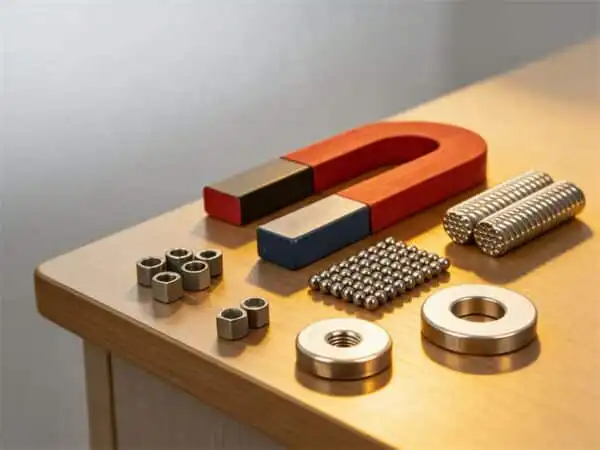
When magnets lock together, the usual mistake is to pull straight. That wastes effort, increases pinch risk, and can chip brittle neodymium magnets. The safer approach is to slide one magnet sideways first, create a small gap, insert a non-metal spacer, and separate them in controlled steps.
This guide covers small magnet stacks, stronger workshop magnets, when to use a shim, when to create a gap with a wedge, when a simple fixture or magnet splitter makes more sense, and how to store magnets safely after separation.
Quick Answer
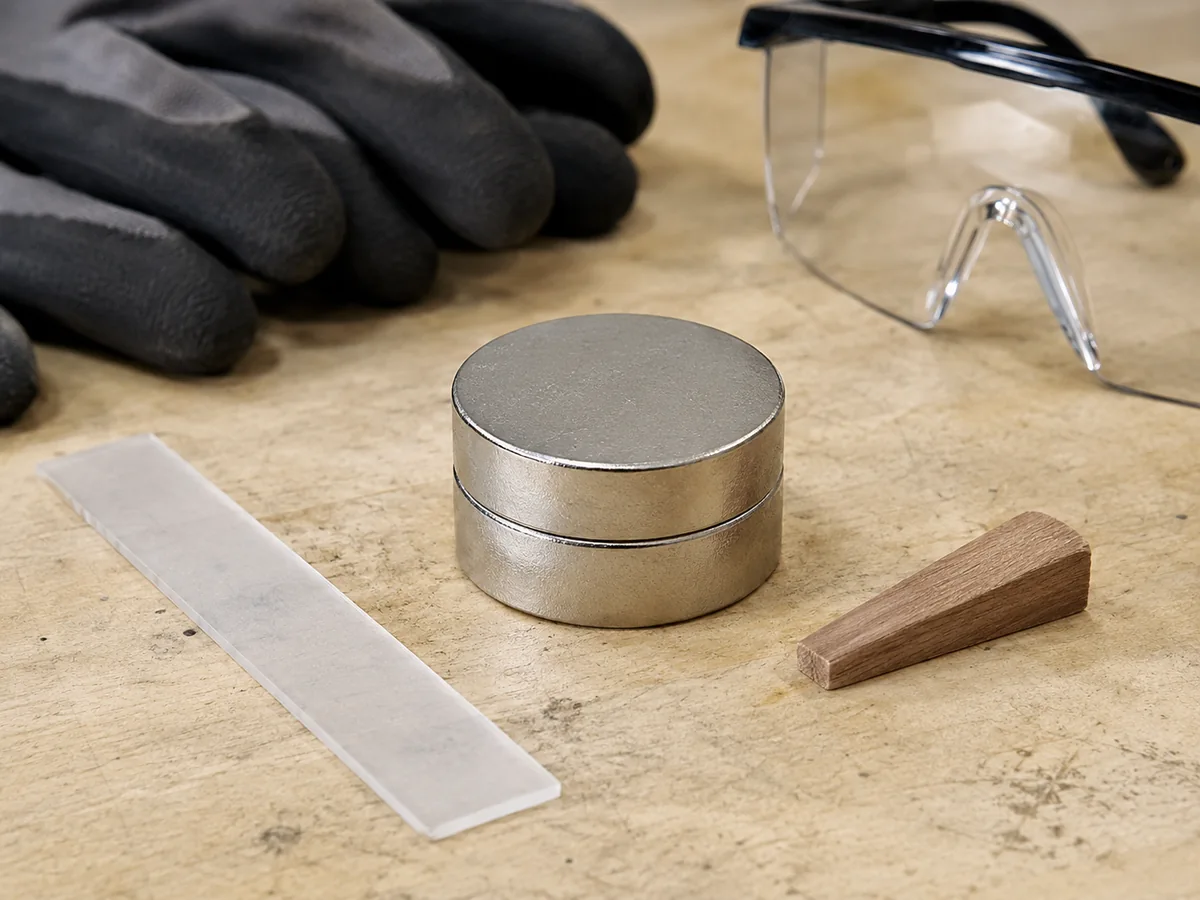
If two magnets are stuck, do not pull straight. Put on gloves and safety glasses, hold one magnet steady, slide the other sideways, and insert a plastic or wooden shim as soon as a small gap appears. Stronger magnets may need a fixture, wedge, or splitter to keep the movement controlled.
Why Magnets Stick Together (And Why Some Repel)
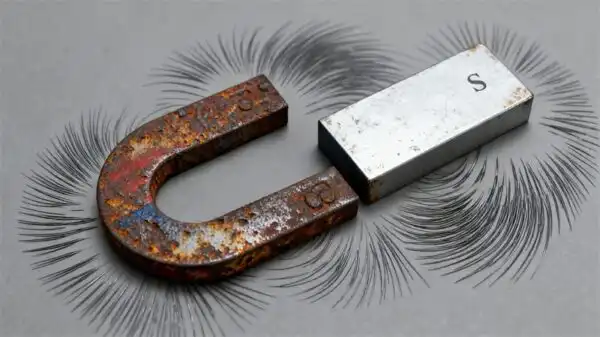
Magnets attract or repel according to pole alignment. Opposite poles attract and like poles repel. Once strong magnets make full face contact, the large contact area and short magnetic gap make them difficult to separate by hand.
This is why straight pulling usually feels useless. The objective is not to out-muscle the magnetic force. The objective is to reduce contact and introduce a controlled gap.
Practical rule: reduce contact first, then separate. Sliding, peeling, shimming, and controlled leverage are safer than direct pulling.
How To Separate Magnets Easily
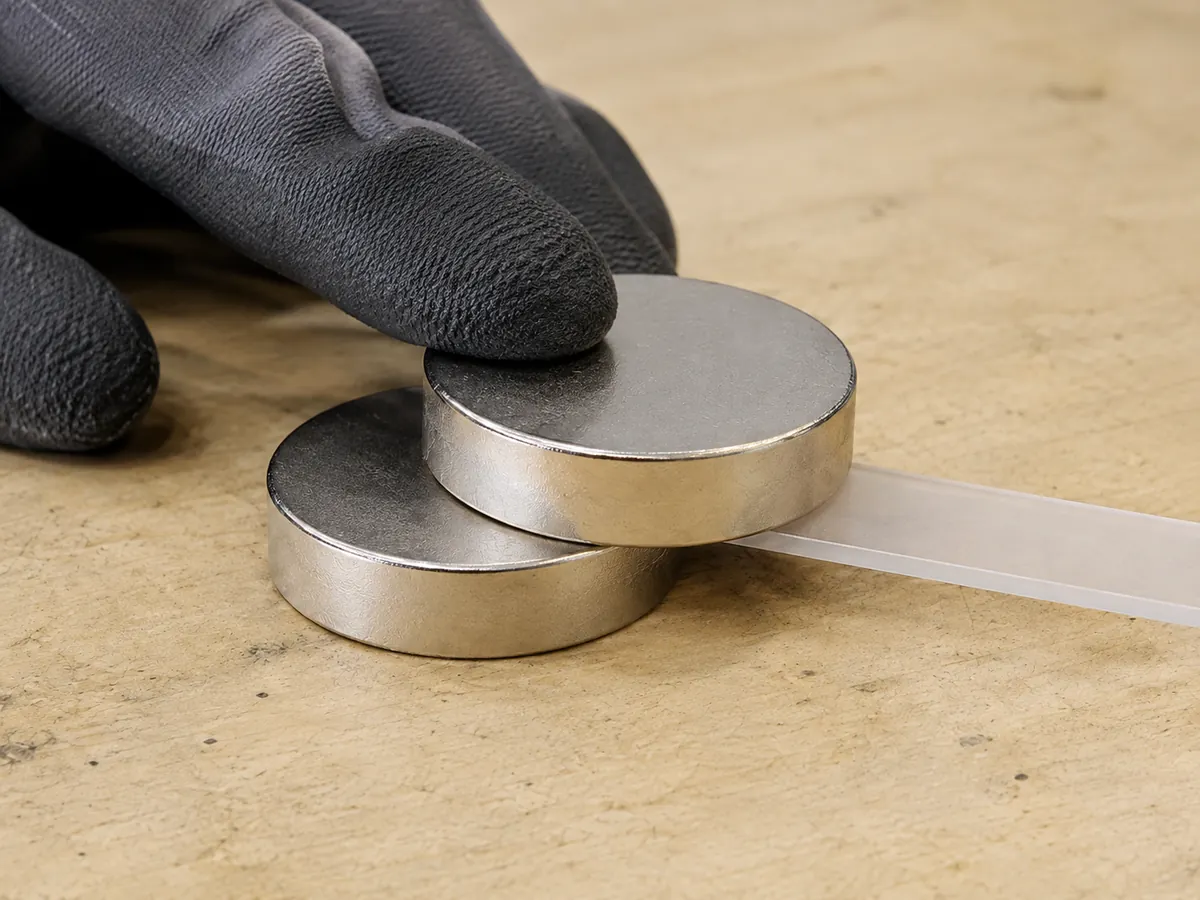
If you only remember one method, remember this one: hold one magnet steady and slide the other sideways. As soon as you create a tiny gap at the edge, insert a plastic or wooden shim and continue in small controlled steps.
- Wear gloves and safety glasses.
- Work on a clean non-metal surface.
- Hold one magnet still and push the other sideways.
- Insert a plastic or wood shim once a small gap appears.
- Keep fingers away from the pinch line.
- Finish slowly and store the magnets with spacers.
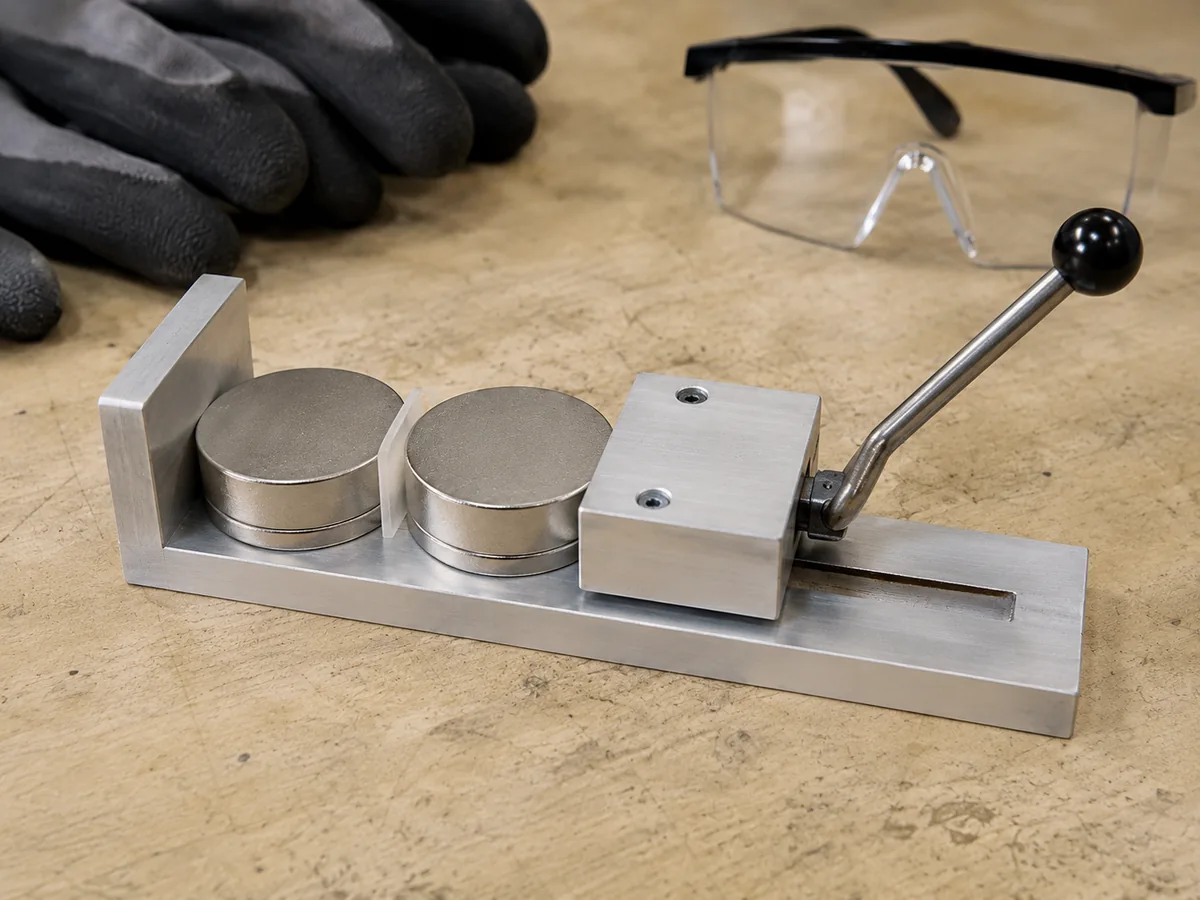
For larger magnets, a simple fixture can help by restraining one magnet and forcing the other to move sideways along a safe, predictable path. The point is control, not force.
Are Small Magnets Easy To Separate?
Not always. Small magnets are easy to grip the wrong way, so people often pinch them and scrape their fingers. Small stacks should still be separated by controlled sideways motion.
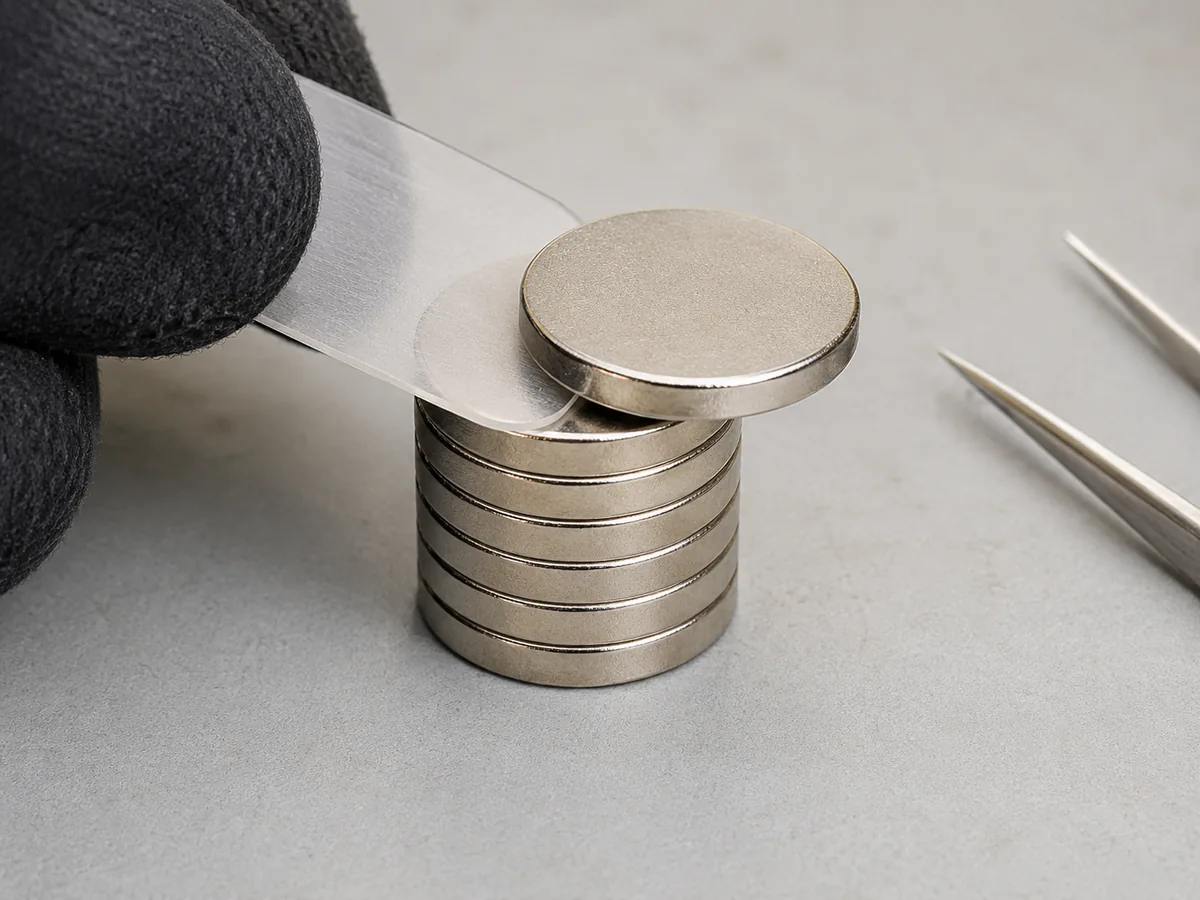
How to Separate Small Magnets Without Scraping Your Fingers
- Keep the stack stable on the table.
- Offset the top magnet sideways first.
- Use a thin plastic card from the edge if needed.
- Lift the top magnet only after it has moved past the strongest contact area.
The Magnet Size Really Does Matter
The right separation method depends less on magnet shape and more on how much pull force or stored magnetic attraction you are dealing with. Stronger magnets need earlier spacers and more controlled tooling.
| Approximate Situation | Best Method | Main Risk |
|---|---|---|
| Small or light magnets | Sideways slide by hand | Finger scraping from pinching instead of sliding |
| Moderate pull force | Slide early and insert a shim immediately | Snap-back when the first small gap appears |
| Larger strong magnets | Create a gap, then use a wedge or simple fixture | Pinched fingers and chipped edges |
| Very strong or awkward magnets | Use a controlled splitter or separation jig | Loss of control, impact damage, or unsafe handling |
Simple takeaway: the stronger the magnet, the less you should rely on grip strength and the more you should rely on spacing and guided movement.
What Is a Magnet Splitter?
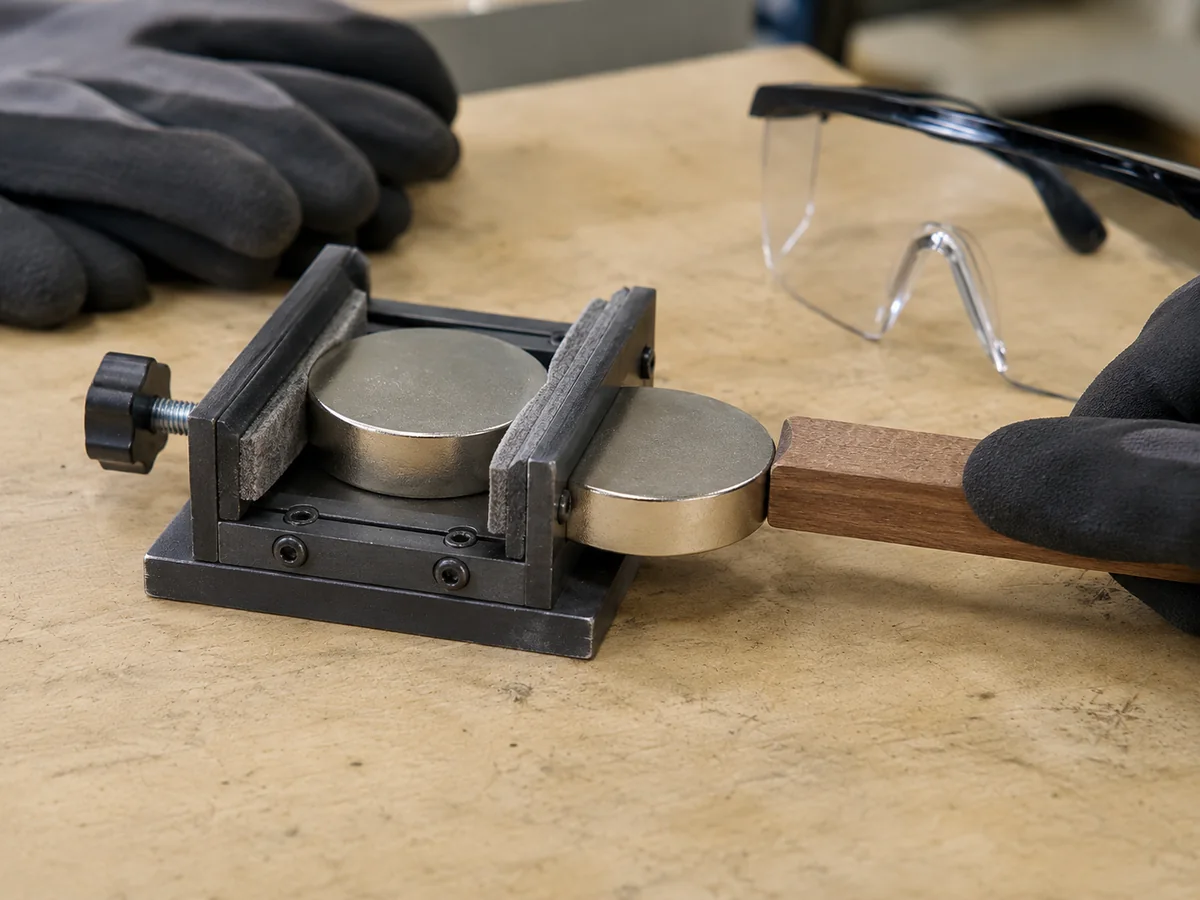
A magnet splitter is a controlled separating device. It restrains one magnet and guides the other along a set path so the separation happens by sliding or leverage instead of direct pulling.
When to Use It
Use a splitter when the magnets are large, strong, stacked, or awkward to control by hand. It is also useful when you need repeatable, low-risk separation in a workshop.
How It Helps
It transforms direct pulling into guided lateral movement. That lowers pinch risk and reduces the chance of impact damage to brittle neodymium magnets.
Want To Separate Magnets Easily? Create a Gap
Some strong magnets will not cooperate until you first create a very small opening. A tapered wooden wedge or firm plastic shim can do that job safely if the movement stays slow and controlled.
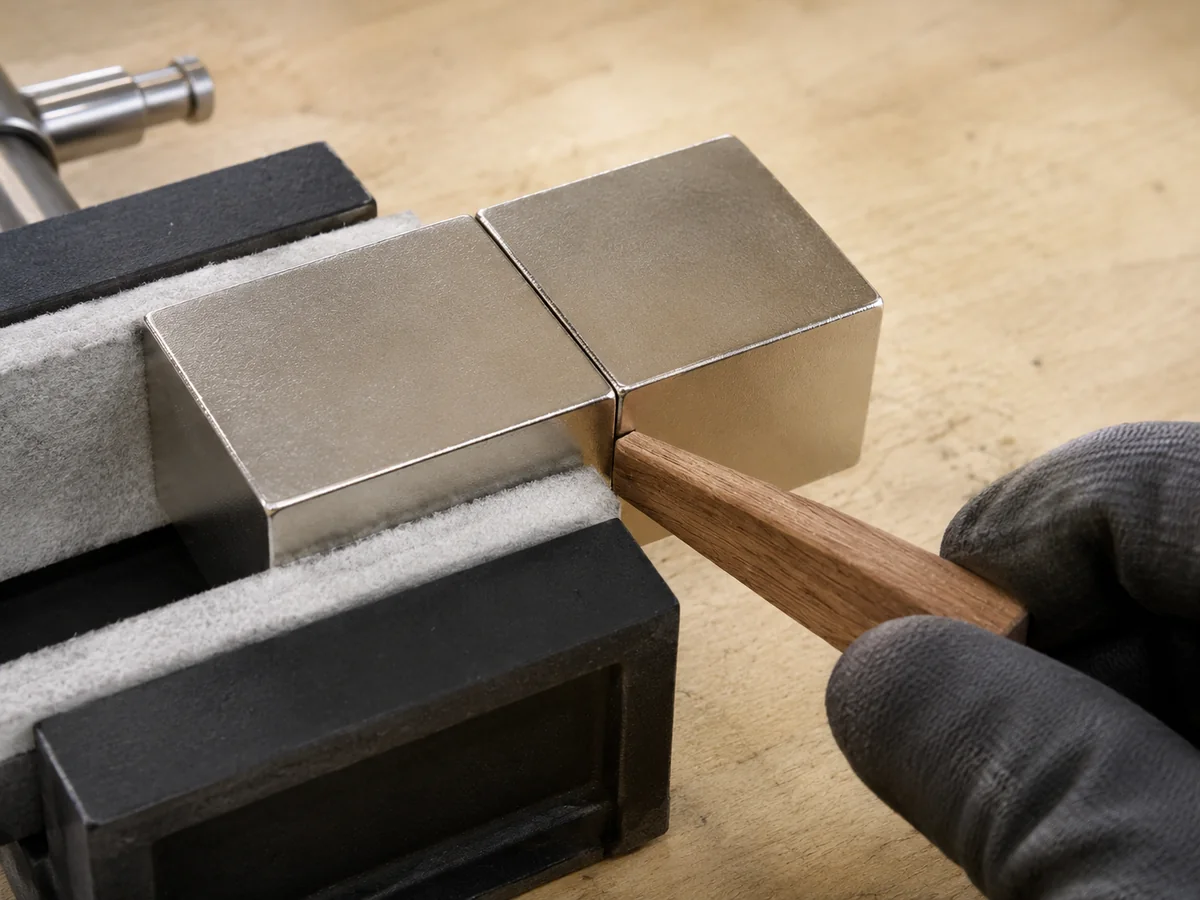
Creating a Wedge
- Stabilize the magnets first. Do not chase them around the bench.
- Use a real tapered wood wedge, not a metal screwdriver.
- Create only a small opening, then continue with a spacer or sideways movement.
- Keep your hands on the safe side of the wedge, not near the gap.
How to Remove a Strong Magnet From Metal
When a strong magnet is attached to a steel surface, the same rule still applies: do not pull straight away from the metal if you can avoid it. Work from the edge, create a slight separation, and peel or slide the magnet away in control.
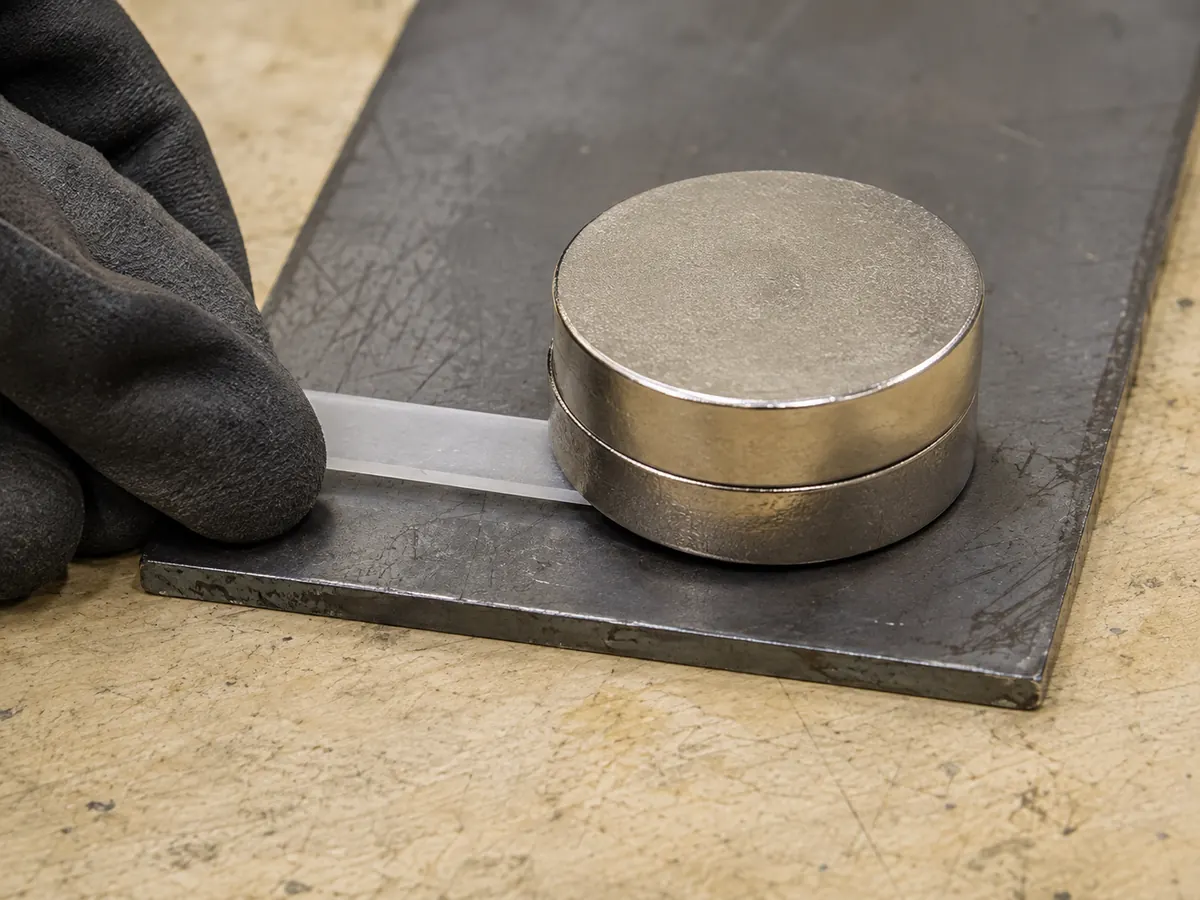
Plastic or wood is safer than metal prying tools because metal tools can slip, damage the magnet, or create sudden uncontrolled movement.
Storing Your Magnets After Separation
Once you finish separating magnets, store them in a way that prevents sudden snap-back. Use non-metal separators, foam compartments, and clear spacing between strong pieces.
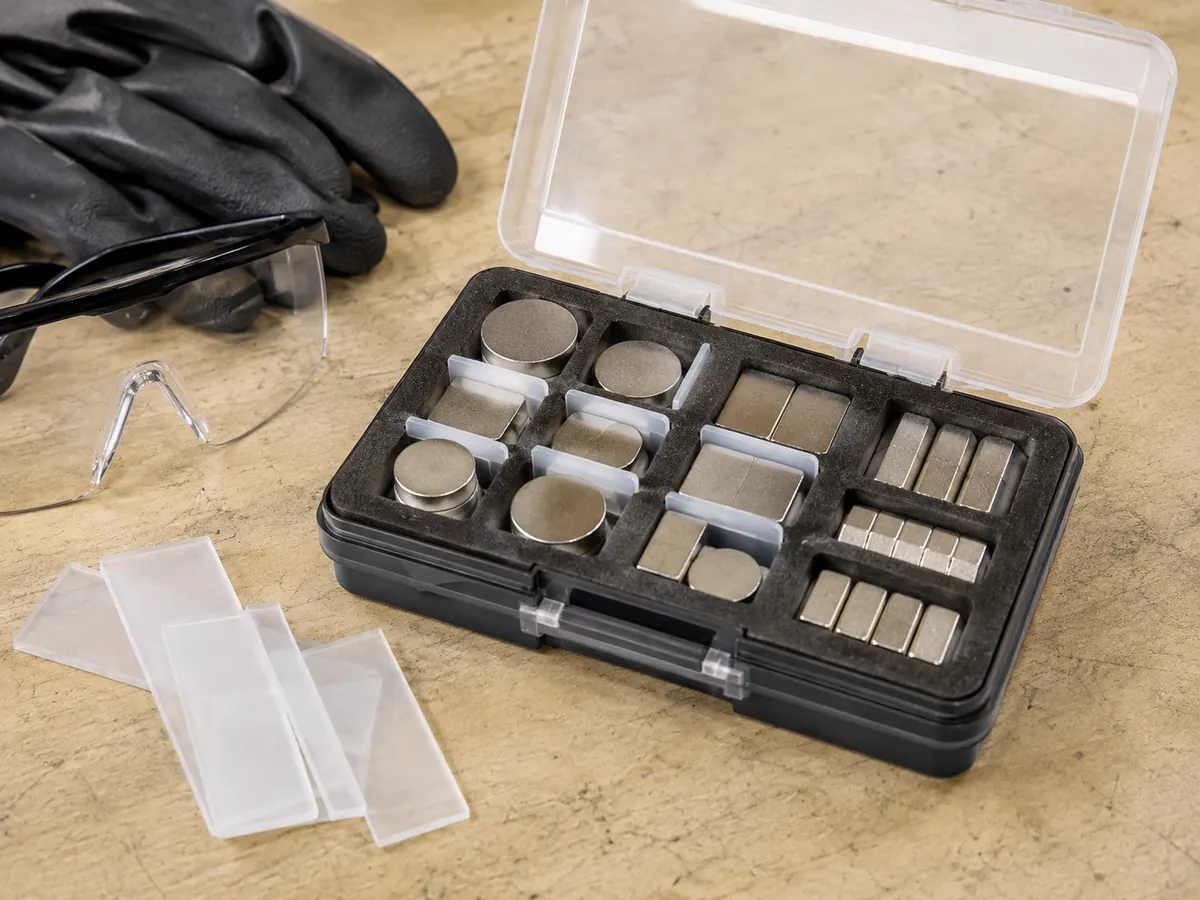
- Store stronger magnets in separate cells or with rigid spacers.
- Use plastic dividers, not metal shims.
- Keep brittle neodymium magnets from slamming into each other.
- Label and organize magnets by size or application if they are used repeatedly in a workshop.
What Happens If You Cut or Break a Magnet in Half?
Strong neodymium magnets are brittle. If they chip or fracture, they can produce sharp fragments and a rough dark-gray broken interior under the thin metallic coating. Breaking a magnet is damage, not a valid separation method.
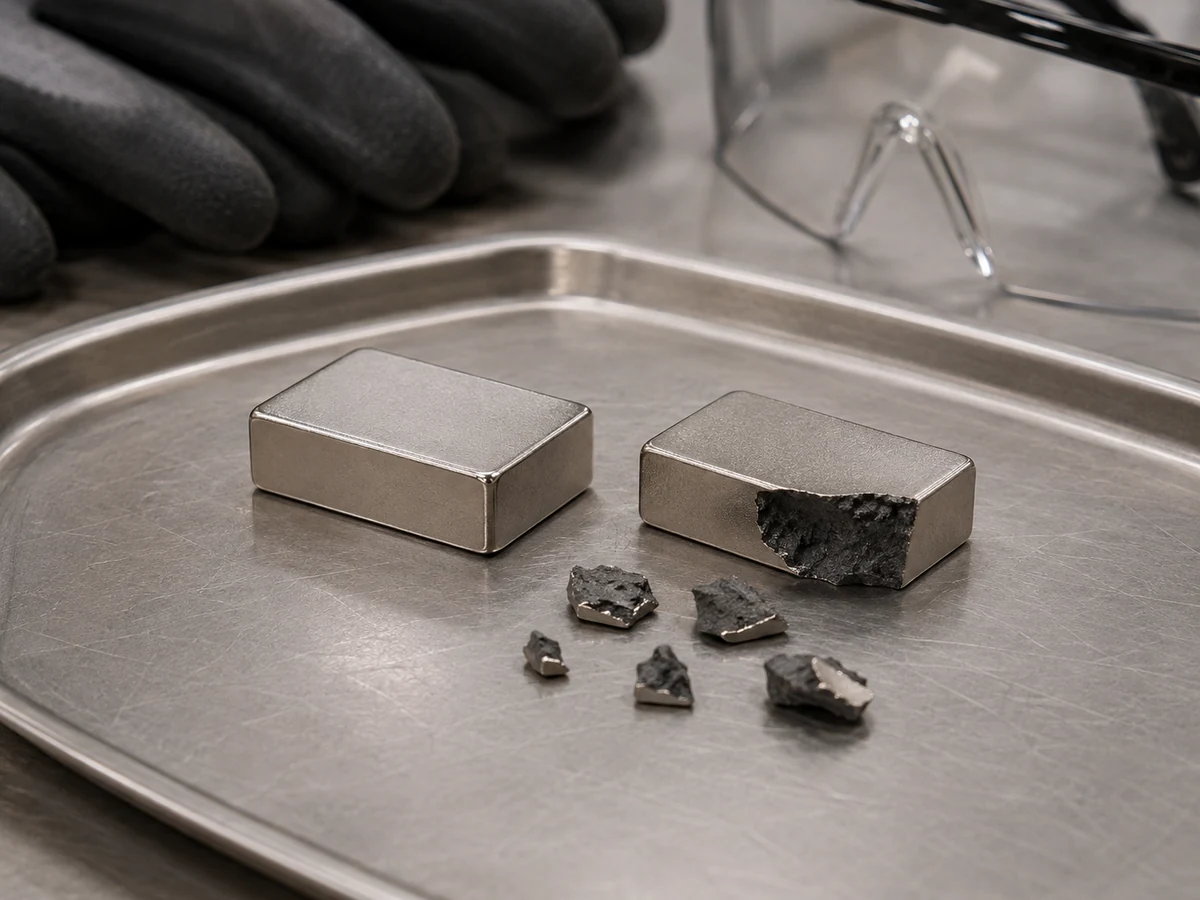
Important: chipped neodymium magnets can still attract strongly. Handle broken pieces carefully and keep fragments out of sensitive equipment and away from children.
Frequently Asked Questions
How do you separate two magnets safely?
Put on gloves and safety glasses, hold one magnet steady, slide the other sideways, and insert a plastic or wooden shim as soon as a small gap appears. Avoid pulling straight apart.
How do you separate two magnetic disks?
Keep one disk flat, offset the top disk sideways, and use a thin plastic card or shim from the edge if needed. Continue sliding until the top disk moves beyond the strongest contact point.
How do you separate strong neodymium magnets?
Use controlled sideways motion first. For stronger magnets, create a gap, add a spacer, and consider a fixture or splitter to guide the movement and keep your fingers away from the pinch zone.
How do you remove a strong magnet from metal?
Work from the edge instead of pulling straight up. Use a plastic or wooden separator to create a slight gap, then peel or slide the magnet away in a controlled motion.
Are small magnets always easier to separate?
No. Small magnets can be surprisingly difficult because people grip them the wrong way. Small stacks still separate more safely by controlled sideways motion.
What should I use as a spacer?
Use non-metal materials such as plastic cards, rigid plastic shims, or small wooden separators. Avoid metal tools that can slip or damage the magnet.
Need Help With Neodymium Magnet Applications?
If your project involves strong NdFeB magnets, custom sizes, or safe handling requirements, contact Osenc. We support a wide range of neodymium magnet applications and can help you evaluate product options for industrial use.