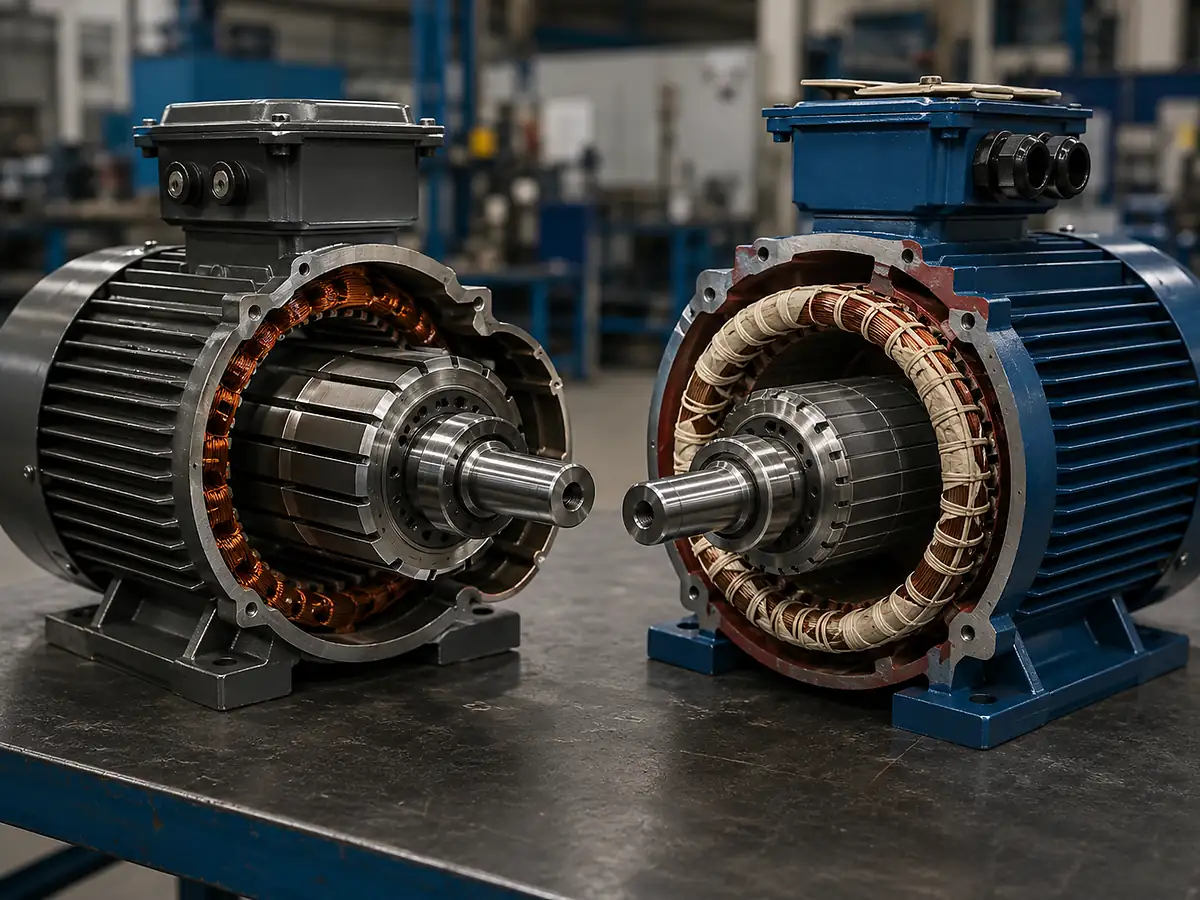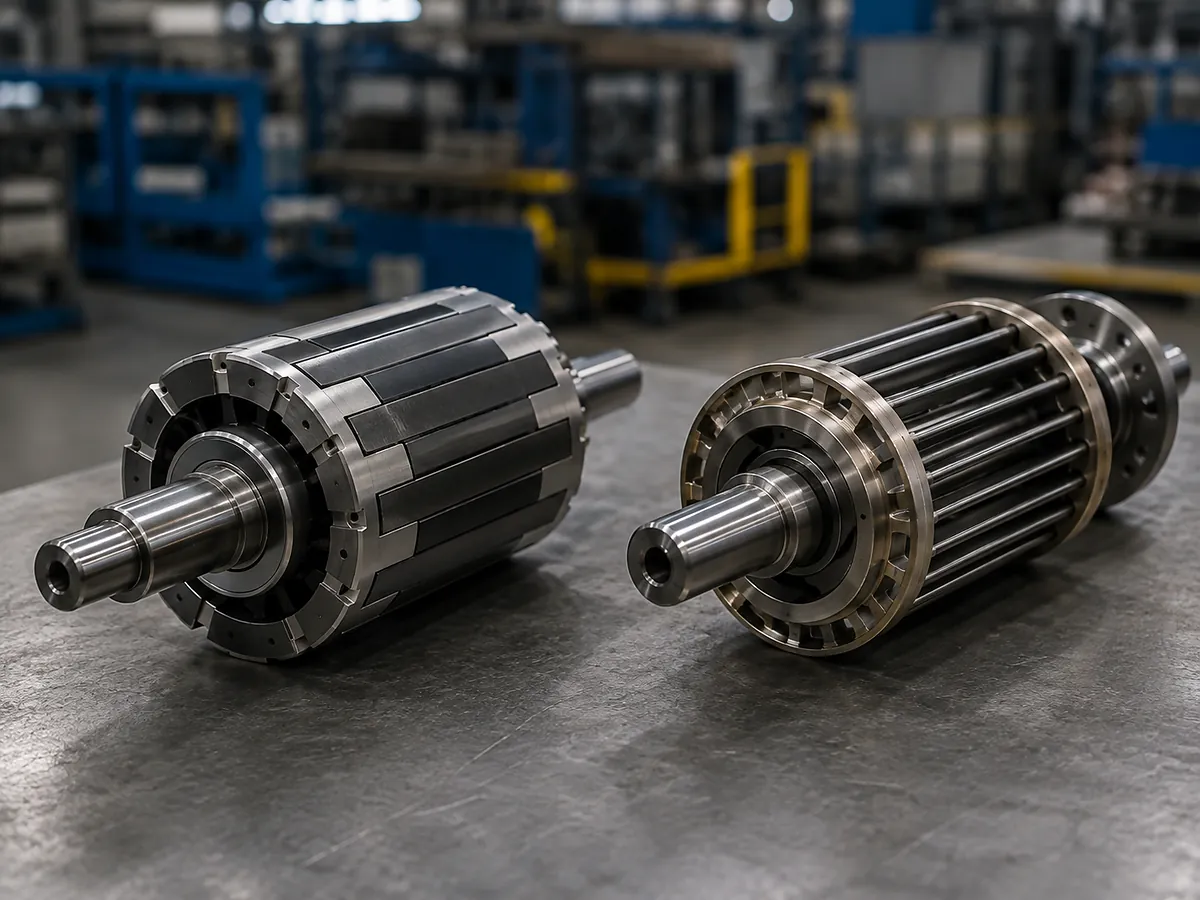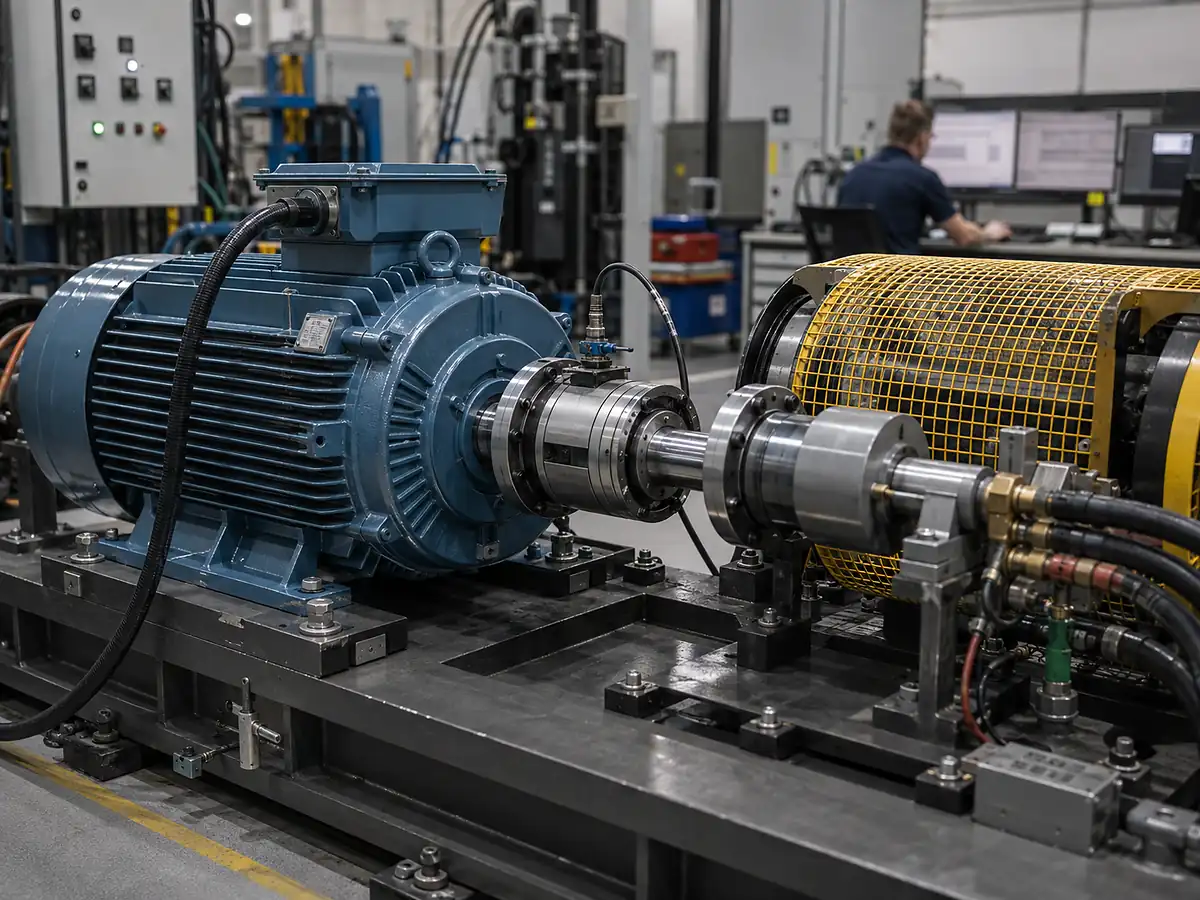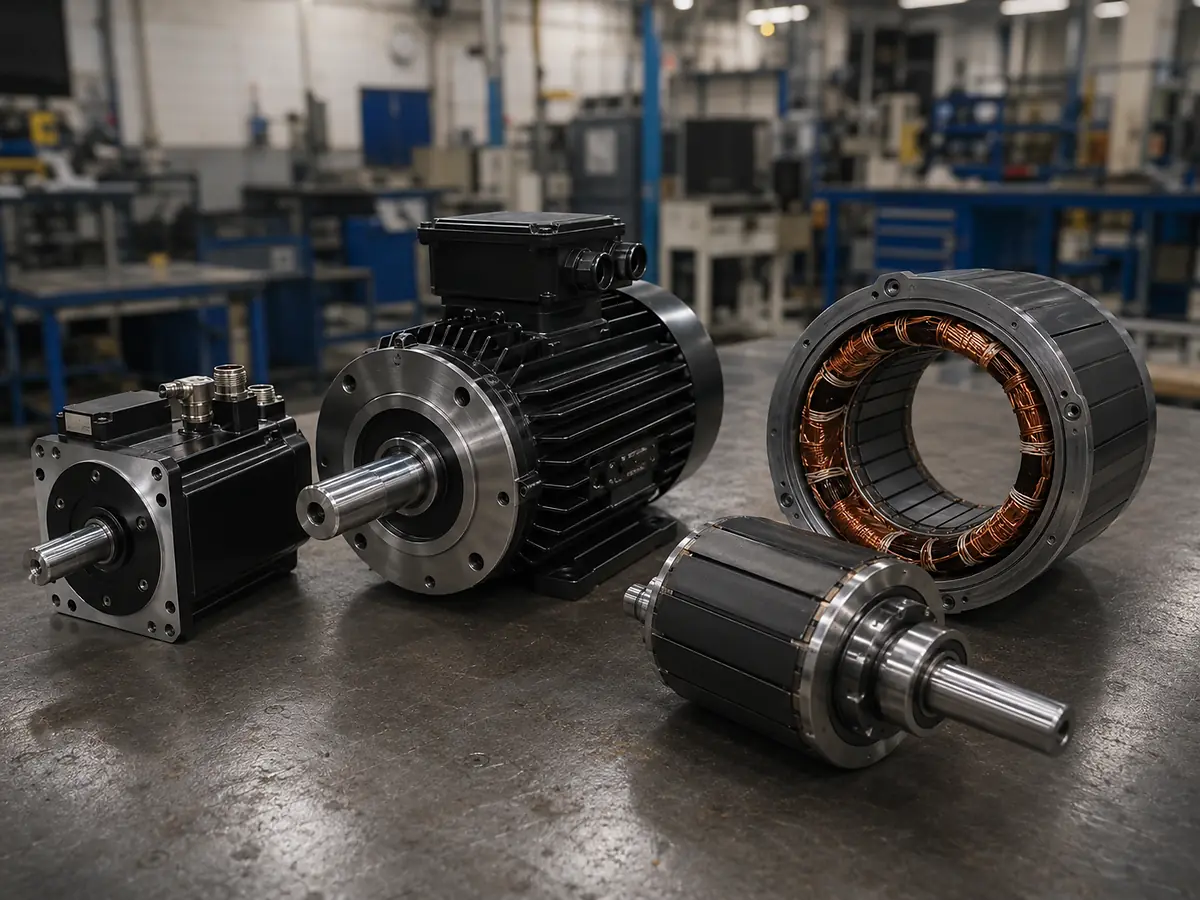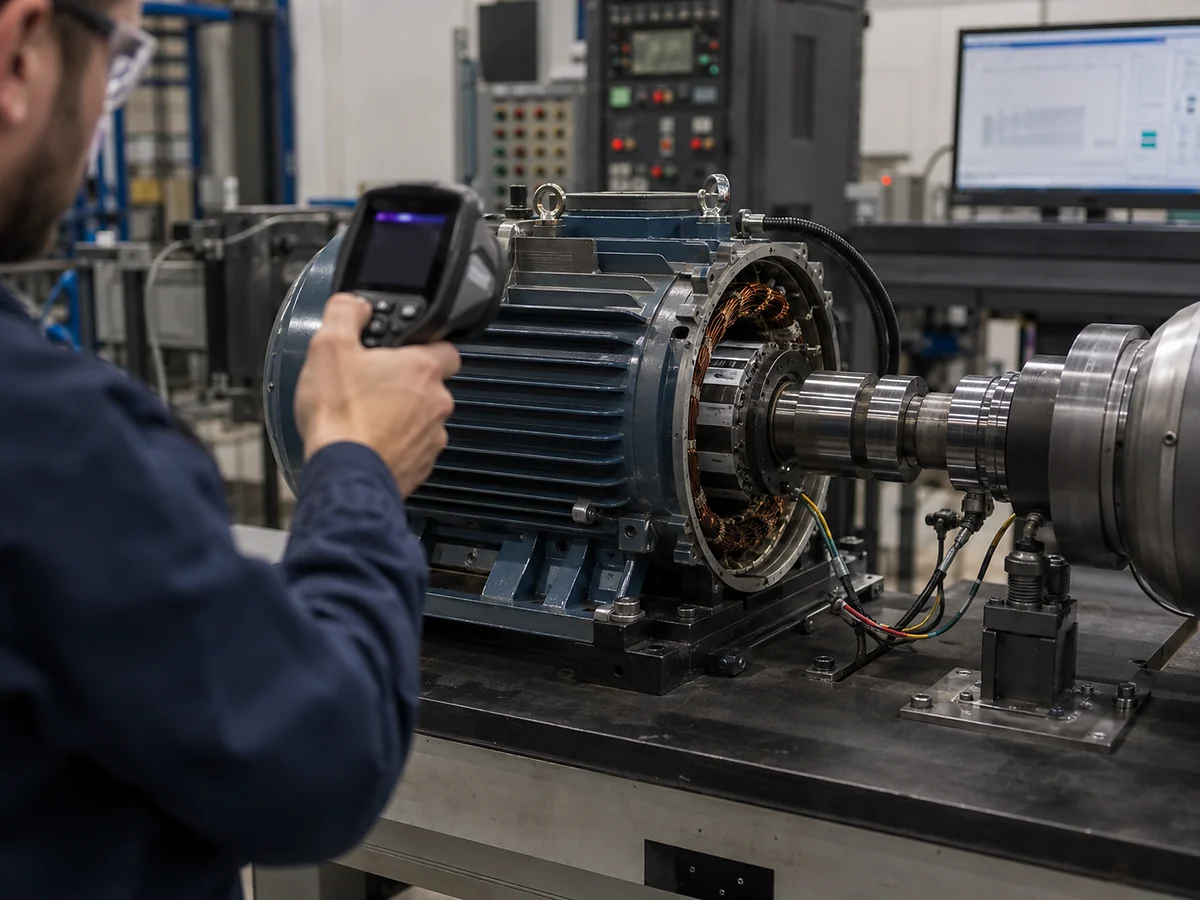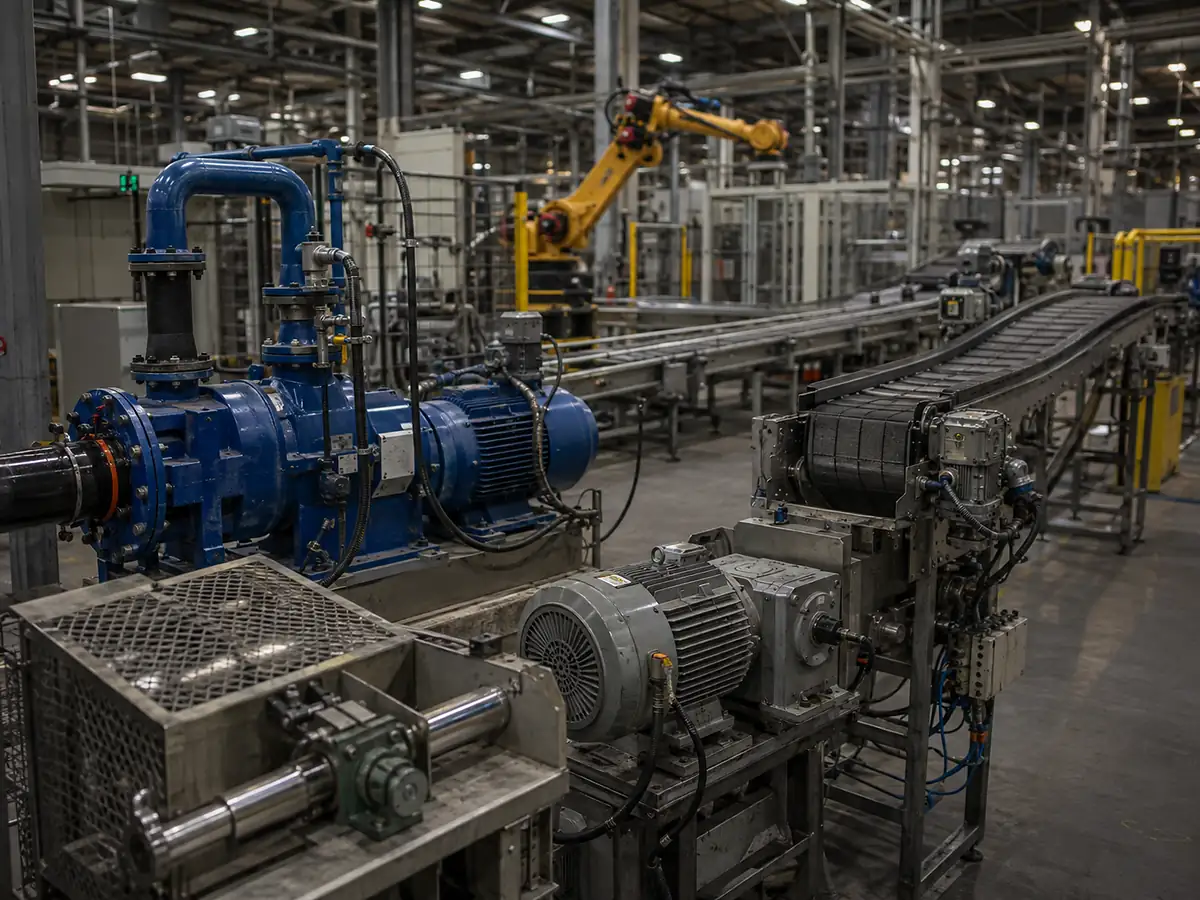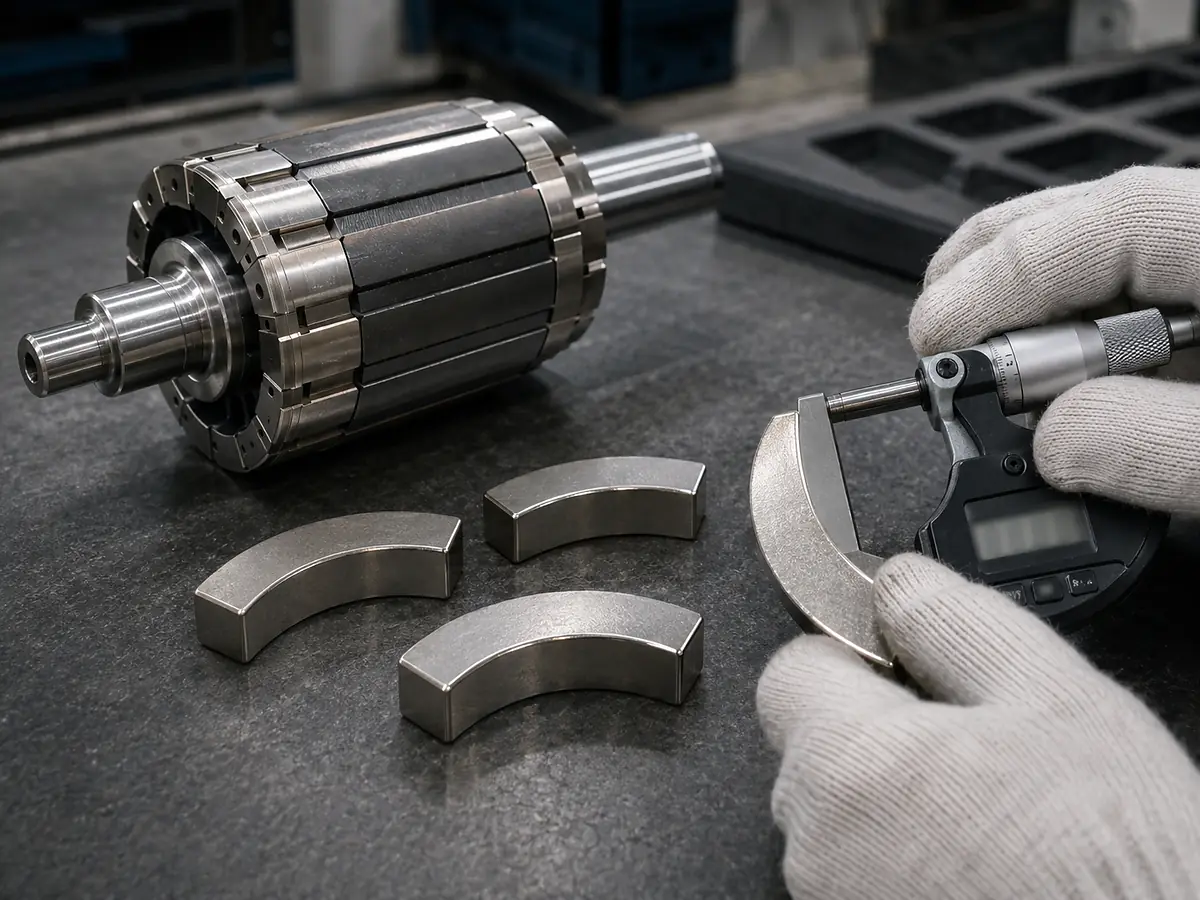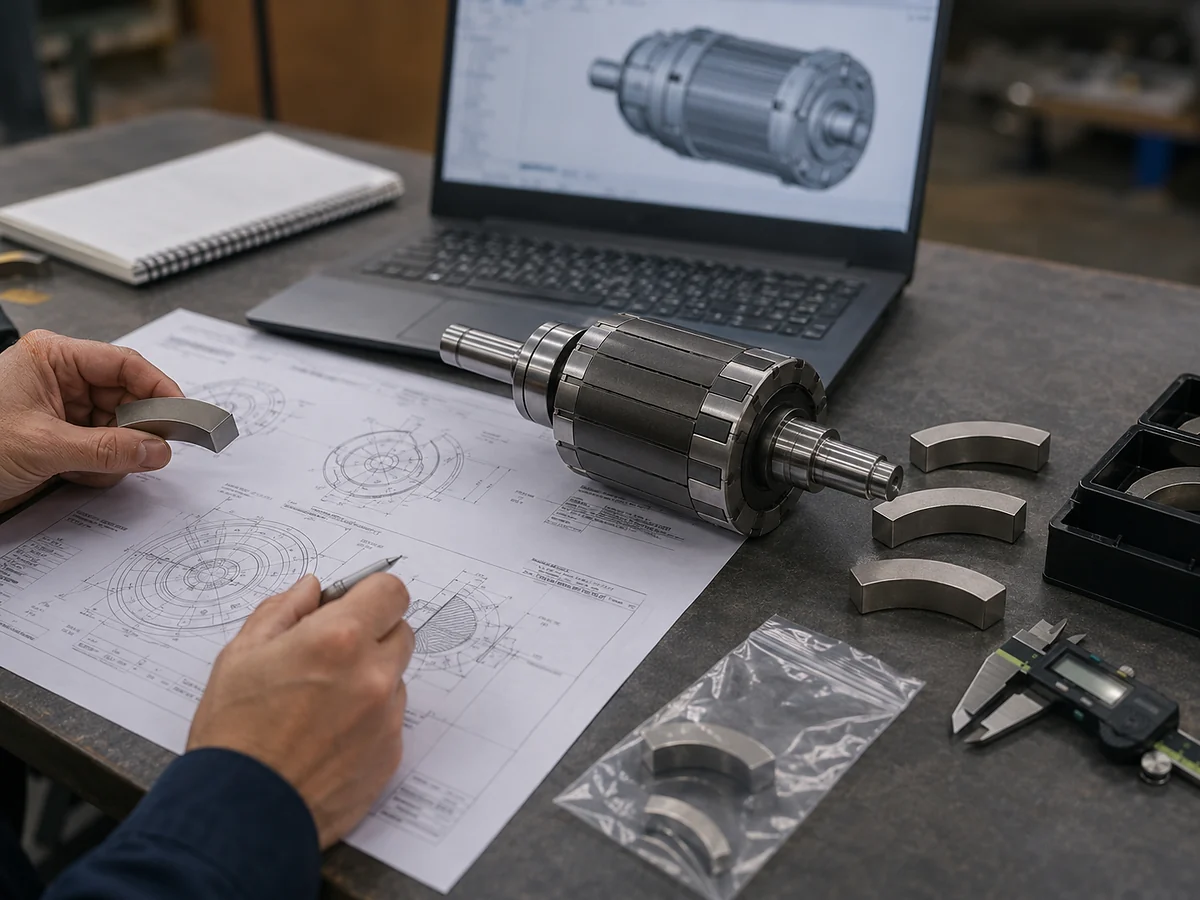
The key differences between a permanent magnet motor and an induction motor center on efficiency, performance, cost, and application. 🏆 I see permanent magnet motors offer higher efficiency, often exceeding 90%, with superior torque output and long-term energy savings. Induction motors have lower initial costs because they use standard materials. Permanent magnet motors use neodymium magnets, which increase upfront cost but deliver 4-7% higher efficiency and save about 325 kWh per year for every 1 kW installed. Osenc supplies quality neodymium magnets, supporting advanced motor designs for demanding industries.
| Feature | Permanent Magnet Motor | Induction Motor |
|---|---|---|
| Efficiency | >90% | 90–93% peak |
| Initial Cost | Higher | Lower |
| Power Density | Higher | Lower |
| Annual Savings (1kW) | 325 kWh | N/A |
Permanent Magnet Motors vs Induction Motors
Key Differences Summary
The main differences between permanent magnet motors and induction motors are efficiency, size, cost, and operational characteristics. I see these differences play a big role in how I choose the right motor for any application. Permanent magnet motors use strong magnets, like neodymium, to create a magnetic field. Induction motors use electric current in the rotor to generate their field. This leads to different strengths and weaknesses.
Here is a quick comparison:
| Feature | Permanent Magnet Motors | Induction Motors |
|---|---|---|
| Efficiency | Higher efficiency | Lower efficiency |
| Size | Generally smaller | Generally larger |
| Cost | More expensive | Less expensive |
| Operation | Requires a frequency converter (VFD) | Can operate without a VFD |
| Torque at Low Speeds | Maintains full torque | Torque decreases at low speeds |
| Common Applications | More compact mechanical packages | Common in industrial applications |
I always look at these features before making a decision. Osenc provides high-quality neodymium magnets, which are key for permanent magnet motors.
Efficiency
Permanent magnet motors deliver higher efficiency than induction motors in most cases. I have seen permanent magnet motors reach over 97% efficiency in real-world tests. Induction motors usually reach 90% to 93% at best. This difference in efficiency means permanent magnet motors save more energy over time. For example, if I use a permanent magnet motor instead of an induction motor, I can save hundreds of kilowatt-hours each year for every kilowatt installed. This is important for electric motor efficiency and energy efficiency goals.
- Permanent magnet motors: Over 97% efficiency
- Induction motors: 90%–93% efficiency
I notice that permanent magnet motors do not need extra energy to create a magnetic field in the rotor. This makes them more efficient, especially at part load and low speed. Induction motors lose some energy as heat in the rotor, which lowers their efficiency.
Power density
Permanent magnet motors offer much higher power density compared to induction motors. I find that permanent magnet motors can deliver more power in a smaller and lighter package. For example, a permanent magnet motor can weigh less than 30 pounds, while an induction motor with the same output can weigh over 500 pounds. This makes permanent magnet motors ideal for applications where space and weight matter, such as electric vehicles and robotics.
| Motor Type | Power Density Characteristics |
|---|---|
| Permanent Magnet AC Motor | More power in a smaller and lighter package due to power-dense design. |
| Induction Motor | Larger and heavier design for the same power output, resulting in lower power density. |
I always recommend permanent magnet motors when I need high performance in a compact space. Osenc’s neodymium magnets help engineers achieve this high power density in advanced motor designs.
💡 Tip: If you want a motor that saves space and weight without sacrificing performance, consider a permanent magnet motor.

Rotor losses
Permanent magnet motors have almost zero rotor losses, while induction motors experience significant rotor losses. This difference matters a lot when I look at motor efficiency and long-term performance.
- Permanent magnet motors do not need current in the rotor. This means the rotor does not heat up from electrical losses.
- Induction motors create a magnetic field by inducing current in the rotor. This process causes energy loss, especially when the motor runs at partial load.
- I see that rotor losses in ac induction motors can lead to extra heat and lower efficiency.
When I choose a motor for continuous operation, I always consider rotor losses. Less heat means less cooling needed and longer motor life. Osenc’s neodymium magnets help permanent magnet motors achieve this advantage.
🔥 Tip: If you want a motor with minimal heat and maximum efficiency, permanent magnet motors are the best choice.
Control
Permanent magnet motors require more advanced control systems than induction motors. I learned that the performance of permanent magnet motors depends on how well I manage current, voltage, speed, and rotor position.
| Motor Type | Control Requirements | Complexity Level |
|---|---|---|
| Permanent Magnet Motors | Require sophisticated control systems with precise rotor position feedback | High |
| Induction Motors | Require variable frequency drives (VFDs) for speed and torque management | Moderate, but simpler than PM motors |
Permanent magnet motors need accurate control to avoid problems like torque ripple, vibration, or overheating. I use sensors and smart controllers to keep everything running smoothly. Induction motors also need VFDs for speed and torque control, but the setup is simpler. In my experience, ac induction motors work well in basic automation, while permanent magnet motors shine in high-performance tasks.
- Permanent magnet motors depend heavily on accurate control for optimal performance.
- Poor control can lead to issues such as torque ripple, vibration, and overheating.
- Induction motors, while simpler, still require VFDs to manage their performance effectively.
Osenc supports engineers with technical advice on integrating neodymium magnets into advanced motor control systems.
Cost
Permanent magnet motors cost more upfront, but induction motors cost more over their lifetime. I always compare both initial and lifetime costs before making a decision.
| Motor Type | Initial Cost Comparison | Lifetime Cost Comparison |
|---|---|---|
| Permanent Magnet Motors | 2 to 3 times higher than induction motors | Lower due to reduced maintenance costs |
| Induction Motors | Lower initial cost | Higher lifetime costs due to energy consumption |
- Induction motors can account for up to 97% of their lifetime costs in energy usage.
- The purchase price of induction motors may only represent about 2% of their total cost of ownership.
- Permanent magnet motors, when optimized, run significantly more efficiently, especially in continuous duty applications.
I see that permanent magnet motors save money in the long run because they use less energy and need less maintenance. Osenc’s neodymium magnets help keep these motors running efficiently for years.
💰 Note: If you want lower lifetime costs and higher efficiency, permanent magnet motors are a smart investment.
Thermal
Permanent magnet motors run cooler than induction motors because they have fewer losses in the rotor. I notice this difference every time I compare the two types in real-world applications. Permanent magnet motors do not need extra current in the rotor, so they produce less heat. Induction motors generate heat in the rotor because of electrical losses. This heat can reach up to 30% of the total energy used by the motor.
Here is a quick comparison:
| Motor Type | Typical Rotor Temperature | Cooling Needs |
|---|---|---|
| Permanent Magnet Motor | 40–60°C | Less cooling required |
| Induction Motor | 60–90°C | More cooling required |
I always check the temperature of a motor during operation. High temperatures can shorten the life of the motor and increase maintenance costs. Permanent magnet motors often last longer because they stay cooler. I recommend using Osenc’s neodymium magnets for motors that need to run efficiently and stay cool, especially in demanding environments.
🌡️ Tip: Cooler motors mean less wear and longer service life. I always choose permanent magnet motors for applications where heat is a concern.
Maintenance
Permanent magnet motors require less maintenance than induction motors. I see this advantage in many industries. Permanent magnet motors have fewer moving parts and do not need brushes or slip rings. Induction motors may need regular checks for bearings, cooling fans, and electrical connections.

Here is a list of common maintenance tasks for each motor type:
- Permanent magnet motor:
- Inspect bearings every 12–24 months
- Check for demagnetization risks (heat, shock)
- Monitor controller and sensors
- Induction motor:
- Inspect bearings every 6–12 months
- Clean cooling system regularly
- Check electrical connections and insulation
- Replace worn parts as needed
I find that permanent magnet motors can run for years with minimal attention. Induction motors often need more frequent service, especially in harsh environments. Osenc supports customers with technical advice on keeping motors running smoothly and efficiently.
🛠️ Note: Less maintenance means lower downtime and reduced costs. I always recommend permanent magnet motors for critical systems where reliability matters.
Permanent Magnet Motor Basics

How Permanent Magnet Motors Work
Permanent magnet motors use strong magnets to create a constant magnetic field in the rotor, which leads to higher efficiency and better performance than induction motors. I see this design as a major advantage in many industries. The rotor contains permanent magnets, often made from neodymium, which Osenc supplies with exceptional quality and customization. When I apply current to the stator windings, the magnetic field interacts with the rotor’s magnets, causing rotation. This process eliminates the need for external excitation or slip rings.
The book “Permanent Magnet Motor Technology: Design and Applications” explains that permanent magnet motors rely on the interaction between the stator’s electromagnetic field and the rotor’s permanent magnets. I find that this setup reduces energy losses and improves efficiency. In my experience, permanent magnet motors deliver consistent torque and run cooler than other motor types.
- Permanent magnet DC motors operate like standard shunt motors but use permanent magnets for the field.
- All DC motors share similar operational principles, but permanent magnet motors stand out for their simplicity and efficiency.
Types of Permanent Magnet Motors

Brushless DC Motors
Brushless DC motors, or BLDC motors, have no brushes, which means less friction and longer lifespan. I use these motors in electric vehicles, drones, and robotics because they offer higher efficiency and quiet operation. The absence of brushes reduces maintenance and improves reliability. I often choose BLDC motors for applications that demand smooth and precise control.
Synchronous AC Motors
Permanent magnet synchronous motors synchronize the rotor speed with the stator’s magnetic field. I rely on these motors for tasks that require exact speed control, such as industrial automation and precision tools. The rotor’s permanent magnets ensure stable operation and higher efficiency. I see permanent magnet synchronous motors used in advanced manufacturing and high-performance systems.
| Motor Type | Key Features | Common Applications |
|---|---|---|
| Brushless DC Motor | No brushes, quiet, efficient | Drones, EVs, robotics |
| Permanent Magnet Synchronous Motor | Precise speed, stable operation | Industrial, automation |
Efficiency and Performance
Why higher efficiency (no rotor excitation losses)
Permanent magnet motors achieve higher efficiency because they do not require energy to excite the rotor. I notice that induction motors lose energy as heat in the rotor, while permanent magnet motors avoid this loss. The permanent magnets maintain the magnetic field without extra power, which boosts efficiency. In my experience, permanent magnet synchronous motors consistently outperform induction motors in energy savings.
- No rotor excitation losses
- Less heat generation
- Higher efficiency in continuous operation
Osenc’s neodymium magnets play a crucial role in maximizing efficiency and performance in these motors.
Part-load efficiency & low-speed torque
Permanent magnet motors excel at part-load efficiency and low-speed torque. I see them maintain high efficiency even when running below full capacity. This makes them ideal for applications where speed and load vary. Permanent magnet synchronous motors deliver strong torque at low speeds, which is essential for electric vehicles and robotics.
⚡ Tip: If you need a motor that performs well at different speeds and loads, permanent magnet motors are the best choice.
I always recommend permanent magnet motors for projects that demand higher efficiency, reliable performance, and precise control.
Cost and Materials
Permanent magnet motors cost more upfront because they use advanced magnetic materials, but they deliver higher performance and long-term savings. 🏅 I always look at the type of magnet used when I choose a motor. The three main types are NdFeB (neodymium iron boron), ferrite, and SmCo (samarium cobalt).
| Magnet Type | Cost Implications | Material Requirements |
|---|---|---|
| NdFeB | High due to rare earth materials and specialized manufacturing processes | Requires precision sintering and validated infrastructure |
| Ferrite | Low due to abundant resources and easy manufacturing | Stable, corrosion-resistant materials with high electrical resistivity |
| SmCo | Moderate, but less common due to cost and availability | Requires specific rare earth elements, often more expensive than ferrite |
NdFeB magnets stand out for their strength and efficiency. I use them in electric vehicles and energy systems because they deliver high torque and compact size. Osenc supplies top-quality neodymium magnets, which help me achieve the best results in demanding projects. However, global supply issues and export restrictions from China have raised the price of rare earth materials, making NdFeB magnets more expensive.
Ferrite magnets offer a cost-effective alternative. I choose ferrite when I need stable performance and lower costs. These magnets resist corrosion and temperature changes, which makes them reliable in harsh environments. Ferrite is easy to manufacture and works well in high-performance applications.
SmCo magnets provide good performance but cost more than ferrite. I use SmCo in situations where I need high temperature resistance and stability. These magnets are less common because they require rare earth elements and specialized production.
💡 Tip: If you want the highest efficiency and power density, choose NdFeB magnets. For budget-friendly solutions, ferrite magnets are a smart pick.

NdFeB vs Ferrite vs SmCo
- NdFeB magnets are crucial for automotive and energy sectors due to their high performance.
- Ferrite magnets are gaining attention for their cost-effectiveness and stability in high-performance applications.
- SmCo magnets, while effective, are less commonly used due to their higher costs.
I always compare these options based on project needs, budget, and required performance. Osenc’s engineering team helps me select the right magnet for every application, offering custom solutions and technical support.
Maintenance and Reliability
Permanent magnet motors require less maintenance and deliver reliable performance in industrial environments. 🔧 I see these motors run smoothly for years with minimal attention. Their design eliminates the need for brushes and slip rings, which reduces wear and tear.
- Permanent magnet motors provide reliable performance and durability in industrial applications.
- They deliver higher operational efficiencies without the need for magnetizing current, which means less heat generation.
- These motors offer higher continuous torque across a wider range of speeds compared to induction motors.
- The compact design and high torque density contribute to robust performance, making them preferable in high-energy-consuming applications.
Demagnetization risks (heat, shock, opposing fields)
I always watch for demagnetization risks. Excessive heat, physical shock, or exposure to strong opposing magnetic fields can weaken the magnets. I monitor temperature and avoid harsh impacts to keep the motor running at peak performance. Osenc’s neodymium magnets come with strict quality controls, which help reduce the risk of demagnetization.
⚠️ Note: Regular checks for temperature and physical damage help maintain motor reliability and extend service life.
I trust permanent magnet motors for critical systems where downtime is not an option. With the right materials and proper care, these motors deliver consistent results and long-term value.
Induction Motor Basics

How Induction Motors Work
An induction motor operates by using electromagnetic induction to create motion. I see this principle in action every time I work with these motors. When I apply alternating current to the stator windings, it generates a rotating magnetic field. This field induces a current in the rotor, which then produces its own magnetic field. The interaction between these fields causes the rotor to turn. I find this process efficient for many industrial tasks because it does not require physical electrical connections to the rotor.
⚡ I rely on induction motors for their simple design and robust performance. They do not need brushes or slip rings, which means fewer parts to maintain.
Types of Induction Motors
Induction motors come in several types, each suited for specific applications. I often choose the type based on the demands of the project.
Squirrel Cage
Squirrel cage motors are the most common type I use. Their rotor looks like a spinning cage, which gives them their name. I prefer these motors for pumps, fans, and conveyors because they offer reliable operation and low maintenance. The design is simple, and the motor can run for years without major service.
Wound Rotor
Wound rotor motors have a different construction. I use them when I need adjustable speed and high starting torque. The rotor contains windings connected to external resistors, which lets me control the motor’s performance during startup. These motors work well in heavy machinery and cranes.
Here is a table showing typical applications for each type:
| Type of Induction Motor | Typical Applications |
|---|---|
| Squirrel Cage Induction Motor | Pumps, fans, compressors, conveyors |
| Slip Ring (Wound Rotor) Induction Motor | Heavy machinery, cranes, hoists, elevators |
| Single-Phase Induction Motor | Household appliances like fans, refrigerators, washing machines |
| Three-Phase Induction Motor | Heavy duty industrial machinery and pumps |
| Linear Induction Motor | Maglev trains, roller coasters, automated material handling systems |
I often recommend Osenc’s products for projects that require reliable and efficient motor components.
Efficiency and Performance
Induction motors deliver solid performance in many industries. I see them reach peak efficiencies of 90% to 93% under optimal conditions. However, their efficiency drops at part load or low speed. The rotor loses energy as heat, which can account for up to 30% of total losses. I always check the cooling system to keep the motor running smoothly.
- Induction motors run best at full load.
- They can be fully turned off, which saves energy during idle periods.
- When coasting, they have negligible losses, making them ideal for applications where the motor does not run continuously.
🛠️ I choose induction motors for their lower initial cost and ability to handle tough environments. They remain the default choice for many industrial systems because of their durability and straightforward operation.
Osenc supports my work by providing high-quality magnetic materials that help improve motor reliability and efficiency.
Cost and Materials
Induction motors offer lower initial costs and use widely available materials, making them a popular choice for large-scale manufacturing. I see this advantage every time I compare motor options for factories and industrial plants. Most induction motors use steel laminations, copper windings, and aluminum rotors. These materials keep production costs down and allow manufacturers to build motors in large quantities.
I often look at the cost breakdown for induction motors. The initial investment is usually lower than permanent magnet motors. However, new lamination materials can raise upfront costs because they need specialized manufacturing. I have noticed that advanced materials improve efficiency and help motors run cooler. This leads to energy savings and longer motor life.
Here is a table that summarizes the main cost and material considerations for induction motors:
| Consideration | Details |
|---|---|
| Initial Investment Costs | New lamination materials often have higher upfront costs due to specialized manufacturing needs. |
| Long-term Benefits | Improved efficiency can lead to significant energy savings, offsetting initial costs over time. |
| Thermal Management | Advanced materials enhance heat dissipation, extending motor life and reducing maintenance costs. |
| Market Positioning | Motors with better efficiency may command premium prices, justifying higher production costs. |
| Regulatory Compliance | Investments in advanced materials help meet stringent energy efficiency standards. |
I always recommend checking the material quality before buying induction motors. High-grade steel and copper can make a big difference in performance and durability. Osenc supplies reliable magnetic materials that help improve motor efficiency and meet industry standards.
💡 Tip: Choosing motors with advanced materials can save money in the long run by reducing energy use and maintenance.

Why induction motors remain the default choice
Induction motors remain the default choice for many industries because they combine low cost, durability, and simple operation. I see factories and workshops rely on induction motors for pumps, fans, and conveyors. These motors can be fully turned off when not in use, which saves energy during idle times. I find this feature very useful in systems that do not run continuously.
Induction motors have negligible losses when coasting. This means they do not waste energy when the load drops or the motor slows down. I often choose induction motors for applications where efficiency at full load matters more than part-load performance.
Here are the main reasons I pick induction motors for most projects:
- Lower initial cost compared to permanent magnet motors
- Simple design with fewer parts to maintain
- Ability to turn off completely, saving energy
- Reliable performance in harsh environments
- Easy to source and replace due to standard sizes
I trust induction motors for heavy-duty tasks and large-scale operations. Osenc helps me select the right magnetic materials to boost motor reliability and meet strict efficiency standards.
⚙️ Note: If you need a motor that is affordable, easy to maintain, and proven in industry, induction motors are a solid choice.
Applications and Use Cases
I see that the choice between permanent magnet motors and induction motors depends on efficiency, cost, and operational needs. Permanent magnet motors work best where space, energy savings, and high performance matter most. Induction motors remain popular for their simplicity and lower upfront cost.
Permanent Magnet Motors in Practice
Electric Vehicles
I notice that electric vehicles rely on permanent magnet motors for their high efficiency and compact size. These motors deliver strong torque at low speeds, which helps cars accelerate quickly. I have seen that a permanent magnet motor can save up to 30% more energy compared to traditional designs. This makes them ideal for battery-powered vehicles, where every bit of energy counts.
Robotics and Automation
In robotics and automation, I choose permanent magnet motors for their precise control and small footprint. Robots need motors that fit into tight spaces and respond quickly to commands. Permanent magnet motors provide smooth motion and high power density, which is perfect for robotic arms and automated machines. I often recommend Osenc’s neodymium magnets for these advanced applications because they help engineers achieve reliable and efficient designs.
Consumer Electronics
I use permanent magnet motors in many consumer electronics. Devices like computer drives, electric toothbrushes, and vacuum cleaners all benefit from these motors. They run quietly and last longer, which improves the user experience. I also see them in small appliances, power tools, and even windshield wipers. Their efficiency and size make them a top choice for modern gadgets.
🚗 Quick List: Where I use permanent magnet motors most often:
- Electric vehicles
- Robotics and automation
- Computer drives
- Electric toothbrushes
- Vacuum cleaners
- Power tools
- Windshield wipers
Induction Motors in Practice

Industrial Machinery
I rely on induction motors for heavy-duty industrial machinery. These motors power conveyor belts, grinders, mixers, and production lines. Their rugged design handles tough environments and long hours. I see them used in oil and gas, refining, and manufacturing industries. Induction motors keep factories running smoothly because they are easy to maintain and replace.
HVAC Systems
For heating, ventilation, and air conditioning (HVAC) systems, I choose induction motors. They operate compressors, fans, and blowers that regulate building temperatures. I find that these motors offer reliable performance and can be fully turned off when not needed, saving energy during idle times.
Pumps and Fans
Induction motors drive pumps and fans in many settings. I use them in water treatment plants, air compressors, and environmental systems. Their ability to handle variable loads and run for long periods makes them a practical choice for these applications.
🏭 Common induction motor uses:
- Industrial fans and blowers
- Water pumps and air compressors
- Conveyor and material handling systems
- Machine tools and mixers
- Ventilation and air handling units
| Application Area | Preferred Motor Type | Why Preferred |
|---|---|---|
| Electric vehicles | Permanent magnet motor | High efficiency, compact, strong torque |
| Robotics/Automation | Permanent magnet motor | Precise control, small size |
| Consumer electronics | Permanent magnet motor | Quiet, efficient, long life |
| Industrial machinery | Induction motor | Durable, easy to maintain, cost-effective |
| HVAC systems | Induction motor | Reliable, can be fully turned off |
| Pumps and fans | Induction motor | Handles variable loads, long run times |
I always match the motor type to the job. Permanent magnet motors excel where efficiency and space matter. Induction motors shine in large-scale, cost-sensitive, or rugged environments. Osenc supports my projects with high-quality neodymium magnets, helping me deliver advanced solutions for demanding applications.
Choosing Between Permanent Magnet and Induction Motors
The best way to choose between a permanent magnet motor and an induction motor is to match your efficiency goals, budget, control needs, and environment to the strengths of each motor type. 🏁 I always start by looking at what matters most for my project. Here are the key selection factors I consider:
Key Selection Factors
Efficiency Needs
I focus on efficiency first. If I need to save energy over time, I pick a permanent magnet motor. These motors reach over 97% efficiency in many cases. I see them deliver up to 30% more energy savings compared to traditional designs. When I work on electric vehicles or robotics, I always choose permanent magnet motors for their superior efficiency. If my project runs at full load most of the time, an induction motor can still perform well, especially in industrial settings.
Budget
Budget plays a big role in my decision. Permanent magnet motors cost more upfront because they use advanced materials like neodymium magnets. I see the initial price can be two to three times higher than an induction motor. However, permanent magnet motors save money in the long run with lower energy bills and less maintenance. If I need a cost-effective solution for a large factory or a simple pump, I often choose an induction motor. Osenc helps me find the right neodymium magnets for high-performance motors when my budget allows.
Control Complexity
Control requirements shape my choice. Permanent magnet motors need advanced controllers and sensors to manage speed and torque. I use these motors in applications where precision matters, such as robotics and automation. Induction motors work with simpler control systems. I recommend them for basic automation, fans, and conveyors. If my project needs accurate speed or position control, I go with permanent magnet motors. Osenc provides technical support for integrating neodymium magnets into complex motor assemblies.
Environmental Conditions
I always check the environment where the motor will run. In food processing plants, motors must meet IP67 or IP69K ratings to handle high-pressure washdowns. I select motors with sealed housings and corrosion-resistant materials. In railway applications, motors face constant vibration and temperature swings. I choose rugged designs that can handle these stresses. For medical imaging, I use custom torque motors with non-magnetic materials to avoid interference. Osenc offers custom magnet solutions for demanding environments.
| Selection Factor | Permanent Magnet Motor | Induction Motor |
|---|---|---|
| Efficiency | Highest, up to 97% | Good at full load, 90–93% |
| Initial Cost | 2–3x higher | Lower |
| Control Complexity | Advanced, needs sensors | Simpler, basic VFD |
| Maintenance | Minimal, long intervals | Regular, more frequent |
| Environmental Fit | Customizable, compact | Rugged, standard sizes |
💡 Tip: I always match the motor type to the job, considering efficiency, cost, control, and environment.
Application-Based Recommendations
I use different motors for different sectors. Here is how I match motor types to applications:
- In food processing plants, I select motors with high IP ratings to survive washdowns. Permanent magnet motors work well when I need compact size and high efficiency.
- In railway applications, I choose motors that handle vibration and temperature changes. Induction motors offer ruggedness and reliability for these conditions.
- In automated robotics, I use high-speed servo motors with absolute encoders for precise pick-and-place tasks. Permanent magnet motors deliver the accuracy and speed I need.
- In medical imaging, I rely on custom torque motors with non-magnetic materials for MRI machines. Permanent magnet motors provide the precision required for clear images.
| Sector | Recommended Motor Type | Reason |
|---|---|---|
| Automotive | Permanent Magnet Motor | High efficiency, strong torque, compact size |
| Manufacturing | Induction Motor | Cost-effective, durable, easy to maintain |
| Consumer Electronics | Permanent Magnet Motor | Quiet, efficient, long life |
| Food Processing | Permanent Magnet Motor | Compact, meets IP ratings |
| Railways | Induction Motor | Handles vibration, temperature fluctuations |
| Robotics | Permanent Magnet Motor | Precise control, high-speed operation |
| Medical Imaging | Permanent Magnet Motor | Custom torque, non-magnetic materials |
I always look for the best fit. Permanent magnet motors excel in sectors where efficiency and performance matter most. Induction motors remain the default choice for large-scale, rugged, or cost-sensitive environments. Osenc supports my projects with high-quality neodymium magnets and custom engineering for advanced motor designs.
🚀 Note: I recommend permanent magnet motors for electric vehicles, robotics, and medical devices. I choose induction motors for heavy machinery, HVAC systems, and railway equipment.
Trends and Future Outlook

The future of electric motor technology is shaped by material innovation, smarter control systems, and stricter efficiency standards. 🚀 I see these trends changing how I select and use motors in every project.
Less rare earth / ferrite designs
Manufacturers now look for ways to reduce reliance on rare-earth materials. I notice a strong shift toward ferrite magnets because they cost much less—around 400 INR per kg compared to rare-earth magnets at 6,000 INR per kg. Ferrite magnets are also easier to source and less affected by global supply issues. This makes them a smart choice for many companies.
- Ferrite magnets lower production costs by 30-60% compared to rare-earth designs.
- They offer stable supply and help avoid geopolitical risks.
- Companies like Ola Electric and Simple Energy lead the way in India with ferrite motor technologies.
- Tesla uses rare-earth-free motors in some models, proving this approach works for electric vehicles.
I often recommend ferrite-based motors for cost-sensitive projects. Osenc supports my work by offering custom magnet solutions that fit these new designs.
Drive tech + sensorless control
I see drive technology advancing quickly. Sensorless control now allows motors to run with high precision without mechanical sensors. This reduces maintenance and improves reliability. I use new estimation methods and observer techniques, such as Kalman filters, to control motors at low speeds.
| Evidence Description | Key Findings |
|---|---|
| Novel estimation methods for sensorless control | Enhance precision and reliability without mechanical sensors. |
| Use of observers and Kalman filter techniques | Effective control at low speeds. |
| Comparison of control structures | Back EMF estimation works well at low speeds. |
These innovations help me build smarter, more efficient motor systems. I rely on Osenc’s engineering support when integrating advanced magnet assemblies for sensorless applications.
Efficiency standards pushing adoption
Governments now require motors to meet higher efficiency standards. I see regulations like the EU Ecodesign Directive 2019/1781 and China’s GB 18613-2020 driving big changes in the market.
| Regulation | Description | Impact |
|---|---|---|
| EU Ecodesign Directive 2019/1781 | Three-phase induction motors (75–200 kW) must meet IE4 standards since July 2023. | Motors use 12-18% less power, cutting CO2 emissions by 70 million tons yearly. |
| China’s GB 18613-2020 | Most motors under 375 kW must be at least IE3 compliant. | Boosts market compliance and energy efficiency. |
- Permanent magnets now play a bigger role in renewable energy, improving motor efficiency.
- The market for permanent magnet motors grows fast, driven by new technology and wider use.
- I see more investments in permanent magnet motors for wind and solar power, where high power density and efficiency matter most.
I expect these trends to continue. Osenc helps me stay ahead by providing high-quality neodymium magnets for advanced motor designs that meet new standards.
🌱 Tip: Choosing motors that meet the latest efficiency standards saves energy and supports a cleaner environment.
Relationship Between Magnetic Steel Performance And Motor Performance
1. Influence Of Remanence
For DC motors, under the same winding parameters and test conditions, the higher the remanence, the lower the no-load speed, and the smaller the no-load current; the greater the maximum torque, the higher the efficiency of the highest efficiency point.
In the actual test, the level of no-load speed and the size of the maximum torque is generally used to judge the remanence standard of the magnetic steel.
For the same winding parameters and electrical parameters, the reason why the higher the remanence is, the lower the no-load speed and the smaller the no-load current is, because the running motor has a sufficient reverse sense at a relatively low speed The generated voltage reduces the algebraic sum of the electromotive force applied to the winding.
2. The Influence Of Coercivity
During the operation of the motor, there is always the influence of temperature and reverse demagnetization. From the perspective of motor design, the higher the coercive force, the smaller the thickness direction of the magnet, and the smaller the coercive force, the greater the thickness direction of the magnet. But after the magnetic steel exceeds a certain coercive force, it is useless, because other components of the motor can not work stably at that temperature. The coercive force is sufficient to meet the demand. Taking the demand under the recommended experimental conditions as the standard, there is no need to waste resources.
3. The Influence Of Squareness
The squareness only affects the straightness of the efficiency curve of the motor performance test. Although the straightness of the motor efficiency curve has not been listed as an important index standard, it is very important for the continuous distance of the hub motor under natural road conditions. important. Because of different road conditions, the motor cannot always work at the maximum efficiency point, which is one of the reasons why the maximum efficiency of some motors is not high and the running distance is far away. For a good hub motor, not only the maximum efficiency should be high, but also the efficiency curve should be as level as possible. The lower the slope of the efficiency reduction, the better. As the market, technology and standards of in-wheel motors mature, this will gradually become an important standard.
4. The Impact Of Performance Consistency
Inconsistent residual magnetism: Even the individual with particularly high performance is not good. Due to the inconsistency of the magnetic flux in each unidirectional magnetic field section, the torque is asymmetric and vibration occurs.
Coercive force inconsistency: In particular, the coercive force of individual products is too low, it is easy to produce reverse demagnetization, resulting in the inconsistency of the magnetic flux of each magnetic steel and the motor vibration. This effect is more significant for brushless motors.
Influence Of Shape And Tolerance Of Magnetic Steel On Motor Performance
1. The Influence Of Magnet Thickness
In the case of fixed inner or outer magnetic coils, when the thickness increases, the air gap decreases and the effective magnetic flux increases. The obvious performance is that the same residual magnetism reduces the no-load speed, the no-load current decreases, and the maximum efficiency of the motor improve. However, there are also disadvantages, such as increased commutation vibration of the motor, and the efficiency curve of the motor becomes relatively steep. Therefore, the thickness of the motor magnet should be as uniform as possible to reduce vibration.
2. The Effect Of Magnet Width
For close-packed brushless motor magnets, the total cumulative gap cannot exceed 0.5 mm. If it is too small, it cannot be installed. If it is too small, the motor vibration and efficiency will be reduced. This is because the position and magnetic of the Hall element that measures the magnet position The actual position of the steel does not correspond, and the consistency of the width must be guaranteed, otherwise the efficiency of the motor is low and the vibration is large.
For brushed motors, there is a certain gap between the magnetic steel, which is reserved for the mechanical commutation transition zone. Although there is a gap, most manufacturers have strict magnetic steel installation procedures to ensure the installation accuracy in order to ensure the installation position of the motor magnetic steel. If the width of the magnetic steel is exceeded, it will not be installed; if the width of the magnetic steel is too small, it will result in misalignment of the magnetic steel, increase the vibration of the motor, and reduce the efficiency.
3. Magnet Chamfer Size And The Effect Of Non-Chamfer
Without chamfering, the rate of change of the magnetic field at the edge of the motor’s magnetic field is large, causing pulse pulsation of the motor. The larger the chamfer, the smaller the vibration. However, chamfering generally has a certain loss of magnetic flux. For some specifications, when the chamfering reaches 0.8, the magnetic flux loss is 0.5 ~ 1.5%. When the residual magnetism of the brushed motor is low, appropriately reducing the size of the chamfer is helpful to compensate for the residual magnetism, but the pulsation of the motor increases. In general, when the remanence is low, the tolerance in the length direction can be enlarged appropriately, which can increase the effective magnetic flux to a certain extent, so that the performance of the motor is basically unchanged.
I choose a permanent magnet motor for high efficiency, strong torque, and compact design. I pick an induction motor for lower cost and simple operation. Here is a quick comparison:
| Motor Type | Strengths | Limitations |
|---|---|---|
| Induction motor | Durable, low cost | Lower efficiency at low speed |
| Permanent magnet motor | High torque, efficient | Higher material cost |
For city driving, I use a permanent magnet motor for better torque. On highways, I turn off the induction motor for peak efficiency. When I need aggressive acceleration, I activate both motors. Osenc supports my projects with reliable neodymium magnets. I see new technology making motors smarter and more efficient every year.
FAQ
What is the main difference between permanent magnet motors and induction motors?
Permanent magnet motors use magnets in the rotor for higher efficiency. Induction motors rely on induced current.
I see permanent magnet motors save up to 30% more energy in electric vehicles.
Why do permanent magnet motors cost more?
I often pay 2–3 times more upfront for these motors, but I save money on energy and maintenance over time. Permanent magnet motors use rare-earth materials like neodymium, which increase the price.
Where should I use permanent magnet motors?
I recommend permanent magnet motors for electric vehicles, robotics, and compact devices. They deliver strong torque, high efficiency, and fit tight spaces. Osenc’s neodymium magnets help me achieve reliable designs.
Can induction motors run without a controller?
Induction motors can operate directly from the power supply.
I use them in fans, pumps, and industrial machines where simple control works best.
How often do I need to maintain these motors?
Permanent magnet motors need less frequent maintenance—every 12–24 months. Induction motors require checks every 6–12 months.
I inspect bearings, cooling systems, and electrical connections to keep motors running smoothly.
What are the risks of demagnetization in permanent magnet motors?
Excessive heat, shock, or strong opposing fields can weaken magnets.
I monitor temperature and avoid impacts. Osenc’s strict quality controls help reduce this risk.
Which motor type is better for high temperatures?
Induction motors handle high temperatures better than most permanent magnet motors.
I choose induction motors for environments above 90°C, such as steel mills or foundries.
How do I choose the right motor for my application?
I match efficiency, budget, control needs, and environment to each motor’s strengths.
I use permanent magnet motors for high performance and induction motors for cost-sensitive, rugged jobs. Osenc supports my selection with expert advice.
I’m Ben, with over 10 years in the permanent magnet industry. Since 2019, I’ve been with Osenc, specializing in custom NdFeB magnet shapes, magnetic accessories, and assemblies. Leveraging deep magnetic expertise and trusted factory resources, we offer one-stop solutions—from material selection and design to testing and production—streamlining communication, accelerating development, and ensuring quality while reducing costs through flexible resource integration.