Material Check | Brass and Magnets
Quick Answer: Is Brass Magnetic?
Solid brass is essentially non-magnetic. In normal use, a static hand magnet does not stick to a solid brass part.
Brass is mainly a copper-zinc alloy, and the Copper Development Association describes brasses as copper-zinc alloys and essentially non-magnetic.
For a quick shop-floor test, this means one simple thing: if a magnet sticks strongly to a brass-looking part, the part is probably not solid brass all the way through. It may contain steel, iron, a ferromagnetic insert, a backing plate, a screw, or another magnetic component.
But a magnet test cannot prove the exact alloy. It can only help screen for strong ferromagnetic material.
Does Brass Stick to Magnets?
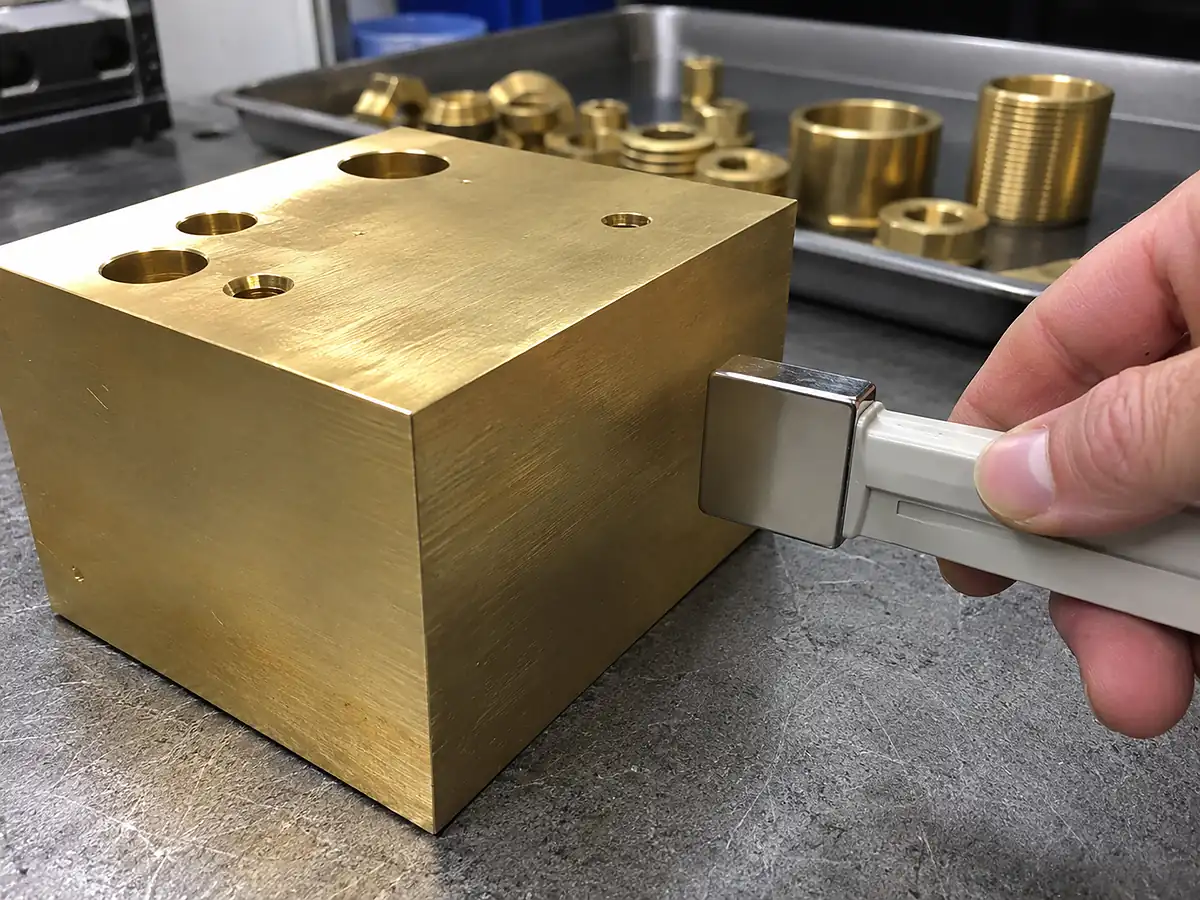
No, solid brass does not normally stick to magnets.
If a neodymium magnet, ferrite magnet, or other static magnet is placed against solid brass, there is usually no clear attraction. That is why brass is often treated as a non-magnetic metal in practical engineering work.
However, the result changes if the “brass” part is only brass-colored, brass-plated, or assembled with another material.
| Magnet test result | What it may mean | What to check next |
|---|---|---|
| Magnet does not stick | The part may be solid brass or another non-magnetic metal. | Confirm alloy by supplier document, PMI, XRF, OES, or other material verification if the material matters. |
| Magnet sticks strongly | There may be steel, iron, or another ferromagnetic material inside or behind the part. | Check plating, inserts, screws, backing plates, and hidden structure. |
| Magnet sticks weakly or only in one area | Mixed material, local insert, contamination, or nearby magnetic part may be present. | Test different areas and inspect the full assembly. |
| Magnet does not stick, but material still matters | Magnet test is not enough for alloy confirmation. | Request material certificate or use proper material identification. |
This distinction is important for procurement. A non-magnetic result does not automatically prove brass, because copper, aluminum, some stainless steels, and other non-ferrous metals may also fail a simple magnet test. Magnet-based sorting can narrow possibilities, but it cannot provide definitive alloy identification.
Why Is Brass Usually Non-Magnetic?
Brass is usually non-magnetic because it does not behave like strong ferromagnetic materials.
Strong magnetic attraction is normally associated with materials such as iron, cobalt, nickel, and some related alloys. These materials can show strong magnetic effects because their internal magnetic domains can align.
Brass does not show that kind of strong attraction in normal magnet tests. For most engineering and purchasing decisions, it is treated as non-magnetic.
Solid brass is essentially non-magnetic and is not normally attracted to a static magnet.
This wording is safer than saying “brass has no magnetic response at all,” because very weak material responses may exist at a physics level, but they are not useful for ordinary holding, pickup, or magnetic fixture design.
Why Does a Brass-Looking Part Sometimes Attract a Magnet?
If a brass-looking part attracts a magnet, the most likely explanation is that the part is not solid brass.
Common causes include:
- Brass-plated steel.
- Brass-colored coating over steel.
- Steel screws or fasteners.
- A steel insert inside the part.
- A ferromagnetic backing plate.
- Nearby steel in the assembly.
- Dirt, plating damage, or mixed scrap contamination.
This is common in decorative hardware, fittings, knobs, fasteners, and assemblies where the visible surface does not tell the whole material story.
For engineers, the key lesson is simple: test the complete structure, not only the visible surface.
Can a Magnet Test Prove That a Part Is Brass?
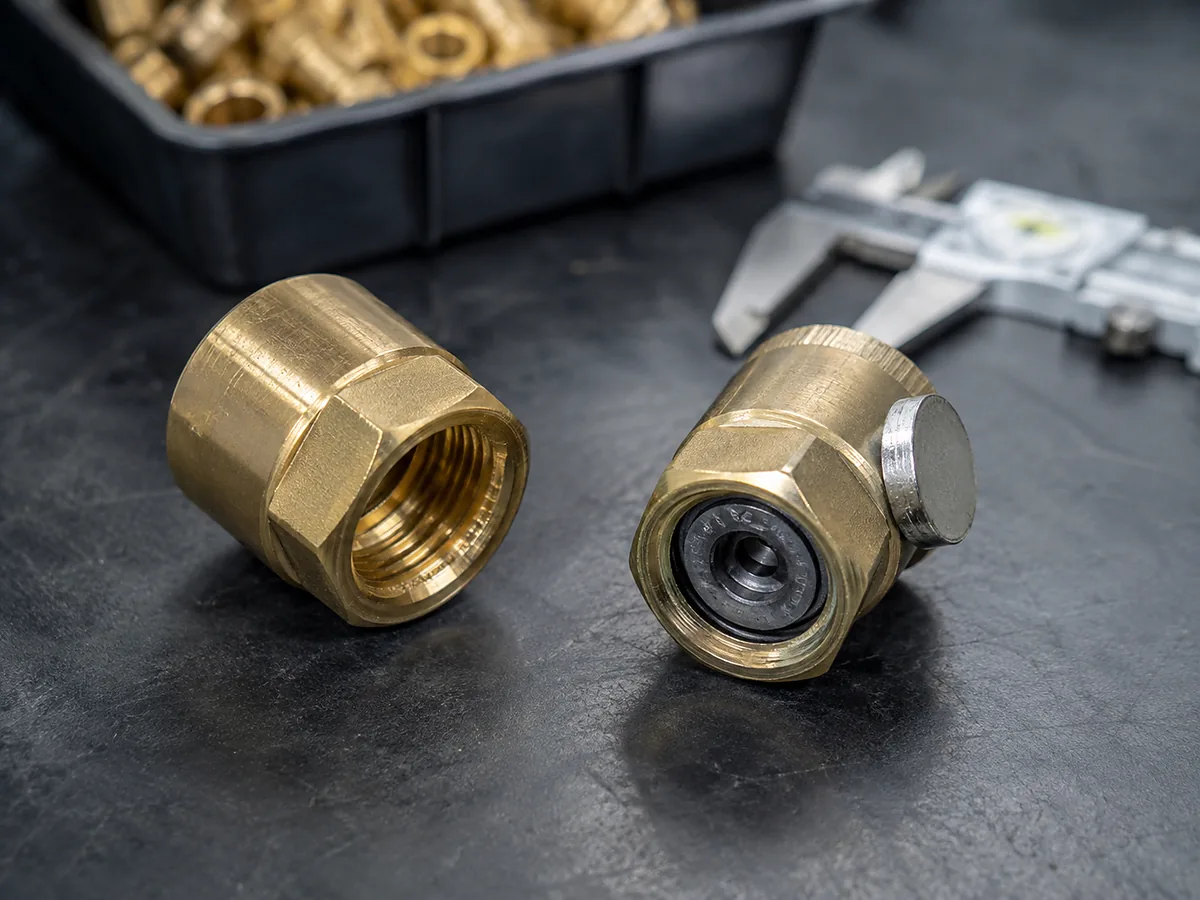
No. A magnet test cannot prove that a part is brass.
It can only tell you whether the part shows strong attraction to a magnet. If it sticks strongly, there is probably ferromagnetic material present. If it does not stick, the part may be brass, but it could also be copper, aluminum, zinc alloy, some stainless steels, or another non-magnetic material.
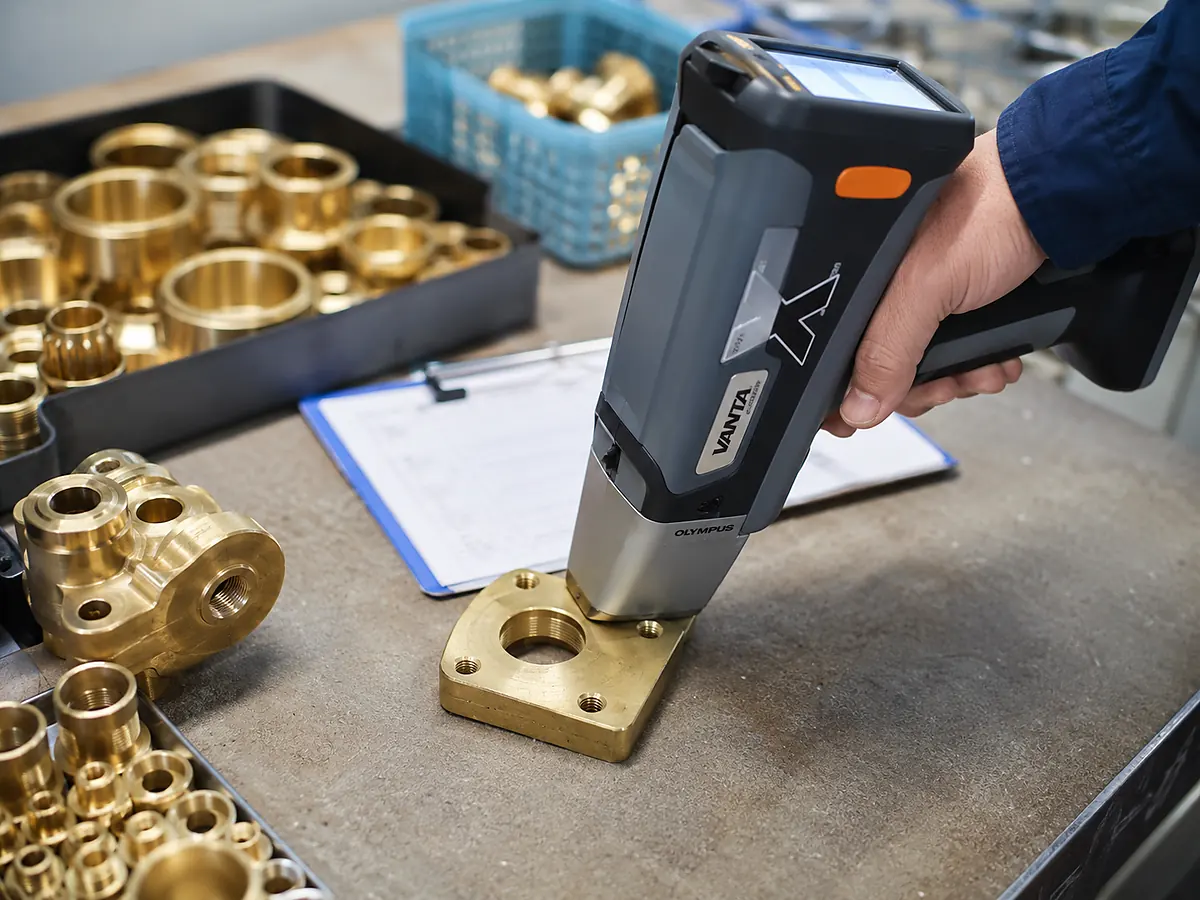
If the exact alloy matters, use proper material verification. In industrial work, positive material identification methods such as XRF or LIBS are used to identify metal and alloy composition.
For purchasing and quality control, this means a magnet test is a screening tool, not a material certificate.
What Happens When Brass Is Near a Strong Neodymium Magnet?
If the magnet and brass are static, solid brass normally will not be pulled like steel.
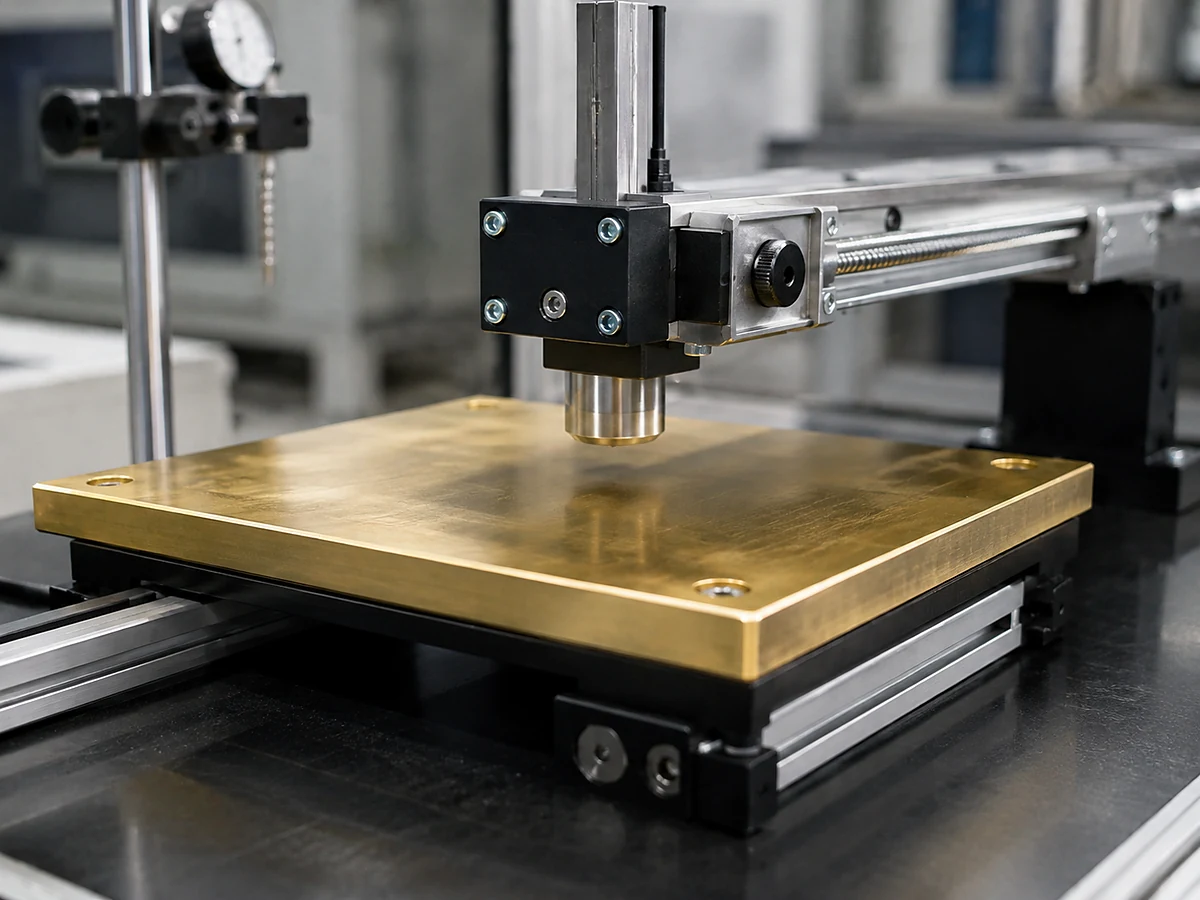
But if a strong magnet moves near brass, or the magnetic field changes quickly, brass can interact with the changing field because it is electrically conductive. In that case, eddy currents may be induced in the metal, and those currents can create magnetic damping or drag.
This is not the same as ordinary magnetic attraction.
Normally no useful holding force.
Possible eddy-current drag, depending on speed, magnet strength, geometry, and conductivity.
Possible induced-current effects, depending on frequency and design.
Do not assume brass is “invisible” to every magnetic system. Also do not assume it can act like steel in a magnetic holding design.
Is Brass a Good Target Material for Magnetic Holding?
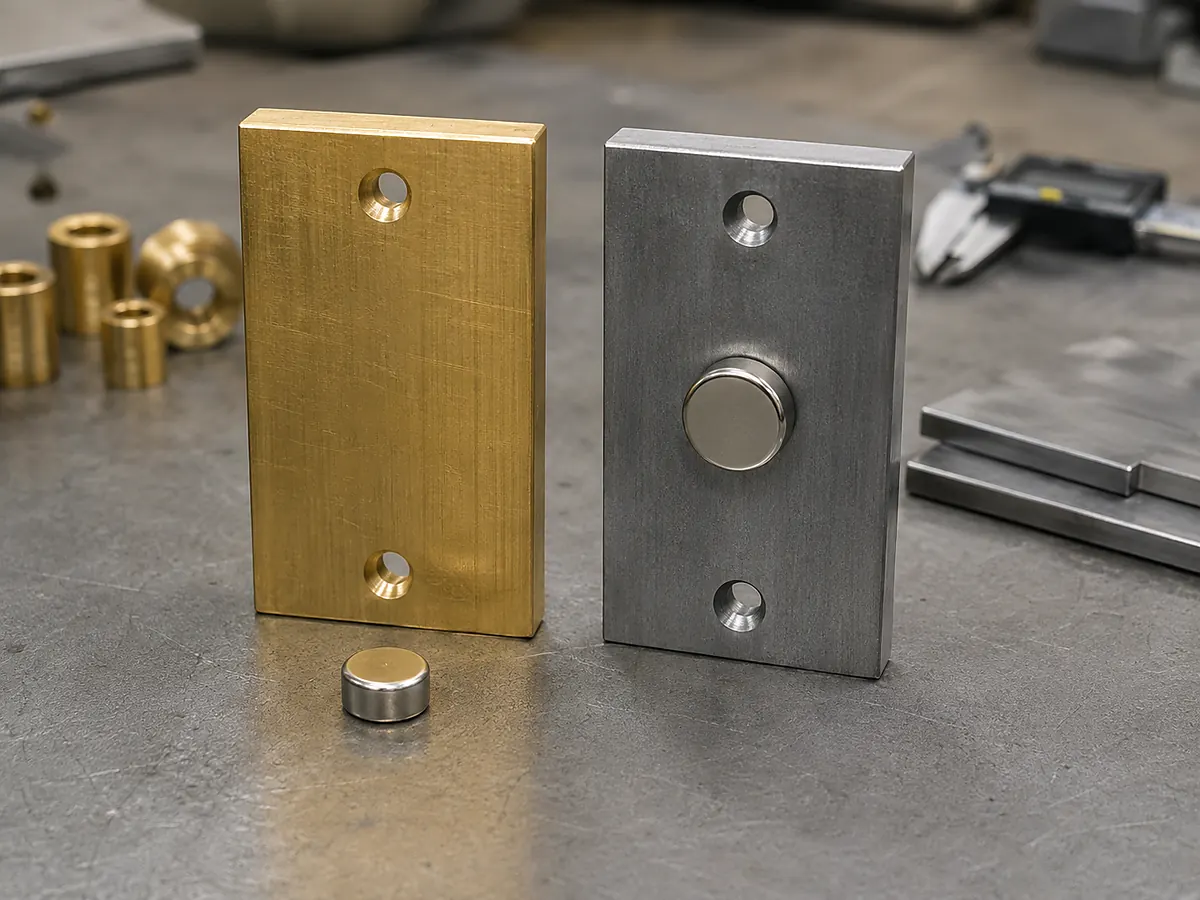
No. Brass is not a good target material if you need a magnet to hold, clamp, lift, or attach with useful force.
A permanent magnet needs a suitable magnetic circuit. For simple holding applications, the target side is usually a ferromagnetic material such as steel. Brass does not provide the same strong attraction path.
If your product uses a brass cover, brass shell, brass nut, brass bushing, or brass decorative surface, you may need one of these design changes:
| Design goal | Brass alone works? | Better engineering path |
|---|---|---|
| Magnetic holding | Usually no | Add a steel target plate or ferromagnetic insert. |
| Decorative brass surface with hidden magnetic function | Sometimes | Keep brass as the visible layer, but design the magnetic path through steel. |
| Non-magnetic spacer or cover | Often yes | Confirm thickness, working gap, and assembly tolerance. |
| Sensor or encoder application | Depends | Review magnetic field path, target material, and sensing distance. |
| Moving magnet near brass | Depends | Check eddy-current effects if speed or changing field matters. |
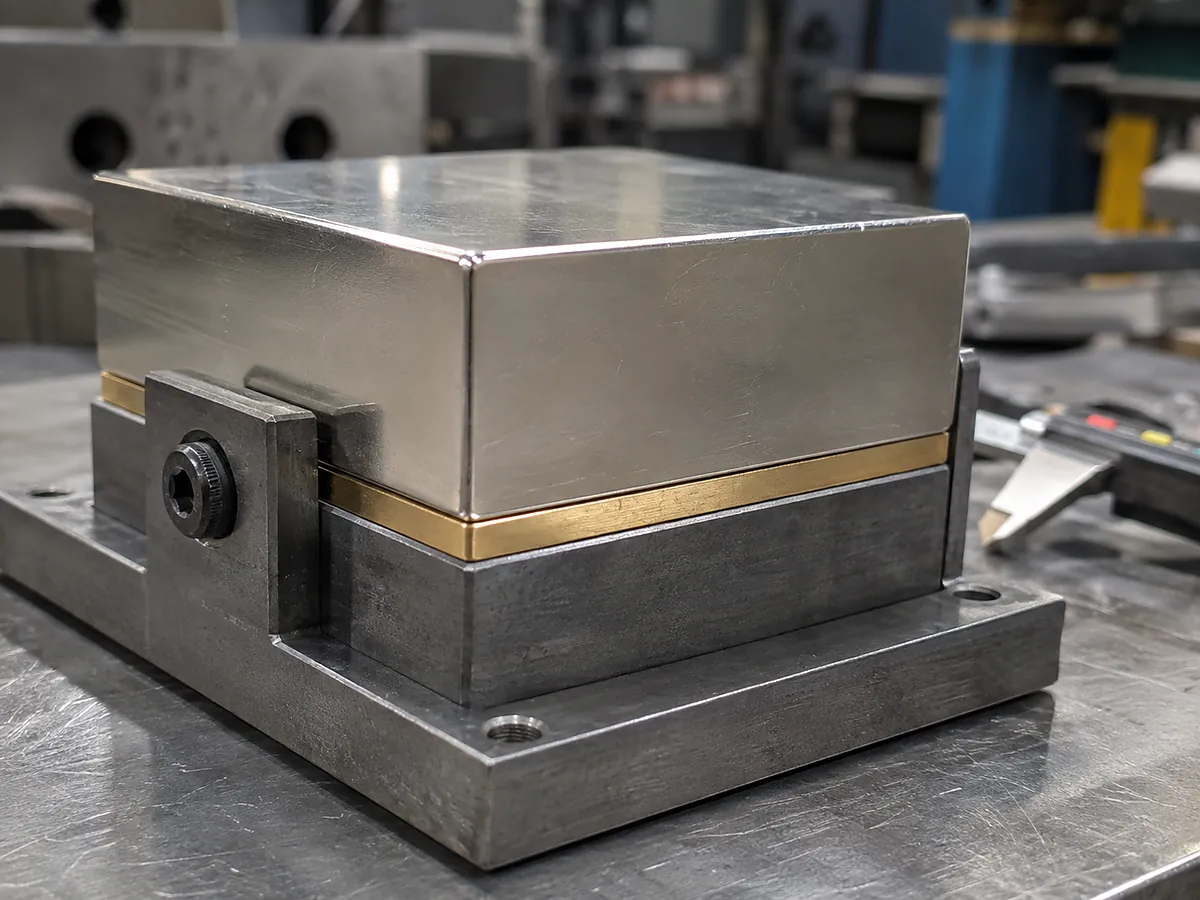
The working gap matters. Even a thin non-magnetic layer between a magnet and a steel target can reduce useful holding force. The final effect depends on magnet size, grade, pole direction, target material, brass thickness, coating, adhesive layer, and assembly geometry.
What Should Engineers Check When Brass Is Used in a Magnetic Assembly?
When brass appears in a magnetic assembly, the first question should not be “Is brass magnetic?” The better question is:
What role does the brass play in the magnetic circuit?
Use this checklist before choosing a magnet:
| Check item | Why it matters |
|---|---|
| Is the brass the target surface? | If yes, magnetic holding may be weak or ineffective. |
| Is there steel behind the brass? | The magnet may actually be attracting the steel behind the brass. |
| How thick is the brass layer? | Thickness can increase working gap and reduce force. |
| Is the brass moving near the magnet? | Moving conductive metal may create eddy-current drag. |
| Is the magnet used for holding, sensing, torque, coupling, or positioning? | Different magnetic functions need different design checks. |
| What is the available space? | Magnet size and shape may be limited by the assembly. |
| What is the working temperature? | Magnet grade and coating may need review. |
| Is the part exposed to humidity, chemicals, or outdoor conditions? | Coating and corrosion protection may affect the final design. |
| Is the target force measured at a specific gap? | Pull force without test conditions can be misleading. |
For custom magnetic assemblies, Osenc can review custom magnet requirements, drawings, samples, target materials, working distance, magnetization direction, and assembly structure before recommending a magnet or magnetic assembly. This helps reduce trial-and-error when brass, steel, coatings, and air gaps are all part of the design.
Brass vs Other Metals in Magnet Tests
A magnet test is useful, but only as a rough screening step.
| Material | Normal static magnet response | Practical note |
|---|---|---|
| Solid brass | Usually no attraction | Non-magnetic in normal engineering use. |
| Copper | Usually no attraction | Also non-ferromagnetic; magnet test cannot separate copper from brass. |
| Aluminum | Usually no attraction | Moving magnets may create eddy-current effects. |
| Carbon steel | Strong attraction | Common magnetic target material. |
| Nickel | Magnetic | Can show strong attraction. |
| Some stainless steels | Varies | Some grades are magnetic, some are weakly magnetic or nearly non-magnetic. |
| Brass-plated steel | Strong attraction possible | Magnet may be attracted to the steel under the brass-colored surface. |
This is why the magnet test should be followed by material verification if alloy identity matters. If the application needs a strong magnet, start from the magnetic function first, then choose the right neodymium magnet, target material, and assembly layout.
What Information Should You Send for a Magnet or Magnetic Assembly RFQ?
If your design includes brass and magnets, send more than the magnet size.
A good RFQ should include:
- The magnet’s purpose: holding, sensing, positioning, coupling, torque transfer, separation, or decoration.
- Drawing or sketch of the assembly.
- Whether brass is the target, cover, spacer, bushing, nut, shell, or decorative layer.
- Brass thickness and distance between magnet and target.
- Target material behind or near the brass.
- Required holding force, torque, sensing distance, or working field.
- Magnet size limits and available space.
- Magnetization direction or pole layout if known.
- Temperature range.
- Humidity, chemical exposure, outdoor exposure, or corrosion risk.
- Coating preference if already specified.
- Expected sample quantity and batch quantity.
- Test method or acceptance requirement, if available.
If the project is still early, send the application goal and a simple sketch. Osenc can help evaluate whether the design needs a neodymium magnet, a steel target, a modified gap, a different magnetization direction, a coating adjustment, or a complete magnetic assembly. For holding designs, pot magnets may also be useful when a steel cup and defined mounting structure are appropriate.
FAQ About Brass and Magnets
Is brass magnetic?
Solid brass is essentially non-magnetic. A static hand magnet does not normally stick to solid brass.
Does brass stick to magnets?
No, not if it is solid brass. If a brass-looking part sticks strongly to a magnet, check for steel, iron, hidden inserts, screws, or a ferromagnetic backing part.
Why is my brass item magnetic?
It may not be solid brass. It may be brass-plated steel, brass-colored hardware, a mixed-metal assembly, or a part with hidden steel components.
Can a magnet test tell if something is real brass?
No. A magnet test can help screen for strong ferromagnetic material, but it cannot confirm the exact alloy. Use supplier documents, PMI, XRF, OES, or other material verification when the alloy matters.
Can brass block magnetic fields?
Do not treat brass as a static magnetic shield. Conductive metals can interact with changing magnetic fields, but shielding design depends on frequency, field type, thickness, geometry, and the full system.
Can brass affect a neodymium magnet assembly?
Yes, depending on its role. Brass may act as a non-magnetic spacer, cover, or decorative part, but it can increase the working gap and reduce holding force if steel is behind it. If the magnet or field is moving, eddy-current effects may also matter.
Need Help With a Magnet Design That Includes Brass?
If your product uses brass near a magnet, Osenc can help review the magnetic path before you commit to samples.
Send your drawing, sketch, material list, target force, working gap, and assembly purpose. Osenc can help evaluate whether you need a custom neodymium magnet, a steel target insert, a different magnetization direction, a coating adjustment, or a complete magnetic assembly.