






Engineering Guide | Permanent and Temporary Magnets
Quick Answer: Temporary Magnet vs Permanent Magnet
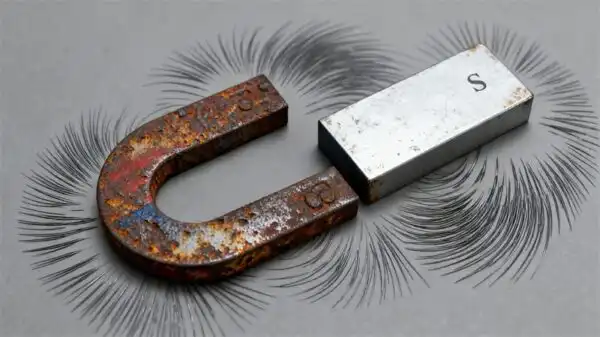
A temporary magnet only behaves like a magnet while it is inside an external magnetic field or while electric current is applied. A permanent magnet keeps its magnetism after the magnetizing field is removed, unless heat, reverse magnetic field, corrosion, impact, or other damaging conditions reduce its performance.
For engineering and sourcing decisions, the practical question is not only “which one is stronger?” It is whether the magnetic force must stay on continuously, be switched on and off, be removable in use, fit inside a limited space, survive temperature and corrosion, and remain stable during assembly.
What Is the Core Difference Between Temporary and Permanent Magnets?
The core difference is magnetic retention. Temporary magnetic materials can become magnetized under an external magnetic field, but they normally lose most of that magnetism after the field is removed. Permanent magnets are made from materials that can retain magnetization for long-term use.
In practical product design, this difference affects power use, control method, safety behavior, assembly size and long-term stability.
| Decision point | Temporary magnet concept | Permanent magnet concept |
|---|---|---|
| Magnetic retention | Usually depends on an external field or current. | Retains magnetism after magnetization. |
| Typical material behavior | Soft magnetic materials such as iron can magnetize and demagnetize easily. | Hard magnetic materials resist demagnetization. |
| Power requirement | Electromagnets require current during operation. | No continuous power is needed to keep the magnetic field. |
| Control | Can be switched or controlled when designed as an electromagnet or hybrid system. | Passive and always magnetic unless shielded, moved, or used in a switchable assembly. |
| Engineering risk | Requires electrical, thermal and control review if current is used. | Requires grade, coating, temperature, corrosion, force and assembly review. |
Examples of Temporary Magnets and Permanent Magnets
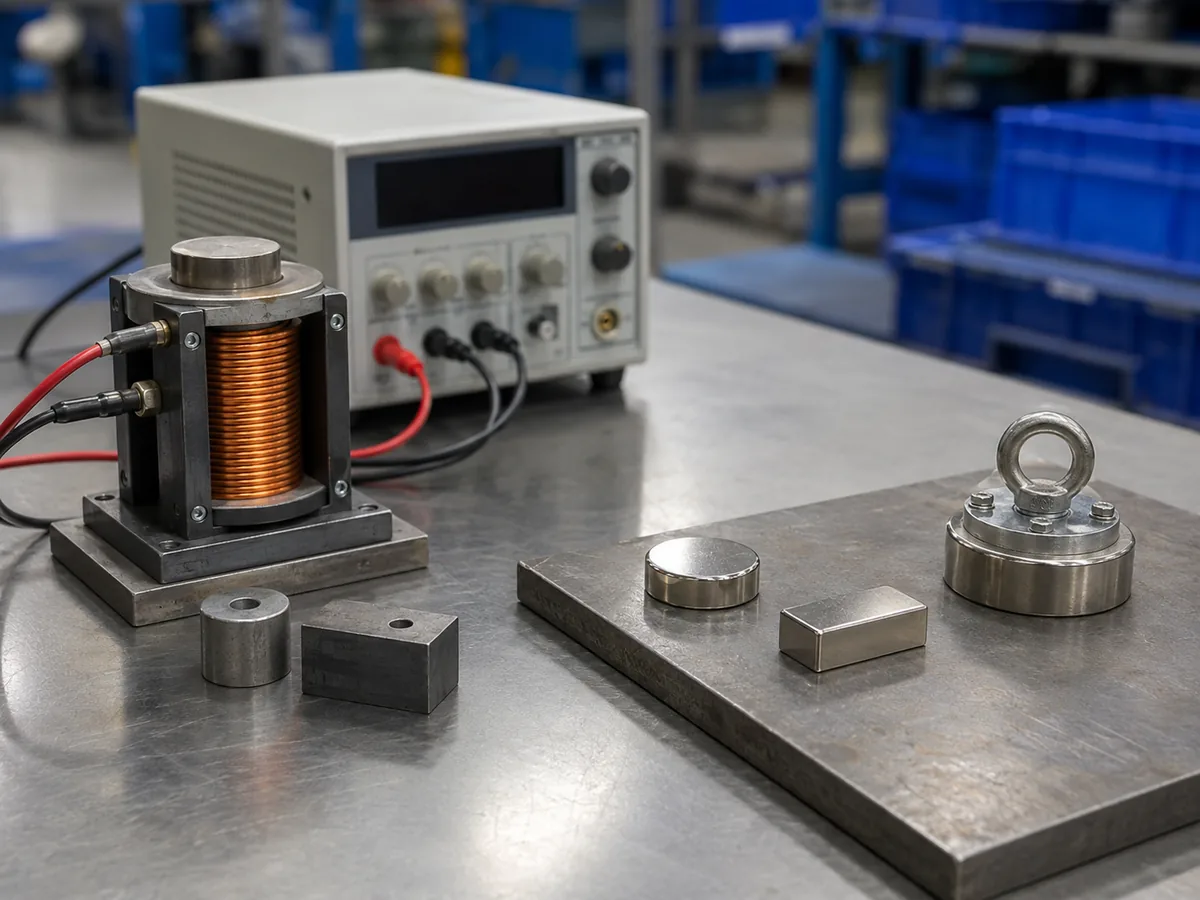
Examples of temporary magnets usually include iron nails, paper clips, soft iron cores and electromagnets. These can show magnetic behavior when exposed to a magnetic field or electric current, but they are not normally selected as long-term standalone magnets.
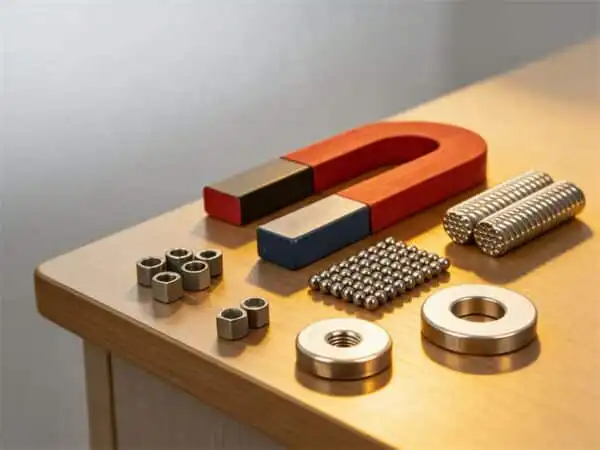
Examples of permanent magnets include neodymium magnets, ferrite magnets, samarium cobalt magnets and AlNiCo magnets. In many compact industrial products, neodymium magnets are selected when high magnetic performance is needed in limited space.

A removable magnetic product is not automatically a temporary magnet. For example, rubber coated magnets, shuttering magnets and pot magnets often use permanent magnets inside an assembly that can be repositioned, protected, switched, or mechanically released.

Temporary Magnet vs Permanent Magnet: Engineering Comparison
For B2B projects, the difference should be evaluated through application conditions, not only textbook definitions. The table below shows the questions that usually matter during sourcing or design review.
| Question | Temporary magnet, electromagnet, or soft magnetic part | Permanent magnet or permanent magnetic assembly |
|---|---|---|
| Does the magnetic force need to turn off? | Often suitable when active control is required. | Needs mechanical separation, shielding, a switchable structure, or an alternative design. |
| Is power available? | Electromagnetic designs require electrical power and thermal review. | No power is required for the magnetic field itself. |
| Is space limited? | Coils, cores, control boards and heat paths may increase size. | NdFeB magnets can provide high force density in compact spaces. |
| Will temperature change? | Coil heat and insulation limits must be reviewed. | Grade stability, irreversible loss risk and coating durability must be reviewed. |
| Is the contact surface ideal? | Performance depends on core, pole face and current. | Performance depends strongly on air gap, surface flatness, pole layout and housing. |
Where Each Type Is Usually More Suitable
A temporary magnetic design is usually considered when the magnetic function must be switched, adjusted, released or controlled by current. Typical examples include relays, lifting electromagnets, solenoids, magnetic locks and some test fixtures.
A permanent magnet is usually considered when the product needs compact passive force, continuous magnetic field, low power use, simple assembly or long-term holding. Examples include sensors, encoders, motors, couplings, magnetic holders, separators and compact magnetic assemblies.

In many industrial applications, the final design is not simply a single magnet. It may include a permanent magnet, steel yoke, housing, coating, adhesive, fastener, protective cover, pole arrangement and inspection requirement.
How to Choose Between Permanent and Temporary Magnetic Solutions
Start with the function. If the magnetic field must be actively switched on and off, an electromagnet, electro-permanent magnet or mechanically switchable assembly may need evaluation. If the magnetic field should remain available without power, a permanent magnet or permanent magnetic assembly is usually the first path to review.

Key decision factors
- Required holding force, torque, sensing field or separation effect.
- Available space for magnet, housing, coil, fastener or pole structure.
- Working distance, air gap, contact surface and target material.
- Operating temperature, corrosion exposure and cleaning environment.
- Assembly method, adhesive, press-fit, screw fixing or overmolding requirement.
- Whether the product must fail-safe when power is lost.
- Sample quantity, validation path and expected production volume.

RFQ Checklist Before Asking for a Custom Magnet or Magnetic Assembly
To reduce sample iterations, provide practical application details before asking for a quote. A magnet grade alone is not enough to confirm whether a design will work.

| RFQ input | Why it matters |
|---|---|
| Drawing, sketch, sample photo or assembly space | Confirms size, tolerance, magnetization direction and manufacturability. |
| Required force, torque, field value or sensing distance | Connects magnet design to real function instead of grade guesswork. |
| Working temperature and exposure environment | Supports grade, coating and corrosion-risk review. |
| Target material, air gap and contact surface | Greatly affects usable force in magnetic holders and assemblies. |
| Assembly method and nearby components | Helps prevent chipping, polarity errors, interference and installation problems. |
| Sample quantity and production expectation | Supports realistic cost, tooling and validation planning. |
How Osenc Can Help With Magnet Selection
Osenc mainly focuses on custom neodymium magnets and magnetic assemblies. The most relevant work is usually permanent magnet selection, magnetization direction, coating choice, magnetic circuit review, simulation support, assembly structure and testing support.
For projects involving electromagnets, electro-permanent magnets or switchable magnetic systems, Osenc can help evaluate the magnetic structure, application requirements and whether a permanent-magnet, electromagnet or hybrid solution is more suitable. Osenc should not be treated as a broad electromagnet catalog supplier.
If your project needs compact magnetic force, custom geometry, high-grade NdFeB, micro magnets, large magnets, special coating, or an assembled magnetic solution, review the related Osenc pages for neodymium magnets, micro magnets, neodymium magnet coating and quality management.
FAQ
What is the main difference between a temporary magnet and a permanent magnet?
A temporary magnet normally shows magnetism only while it is influenced by an external magnetic field or electric current. A permanent magnet retains magnetism after it has been magnetized, unless application conditions cause loss or damage.
Are electromagnets temporary magnets?
An electromagnet can be considered a controlled temporary magnetic system because its magnetic field depends on electric current. When the current is removed, the field normally disappears or drops sharply, depending on the core material and design.
Are rubber coated magnets temporary magnets?
No. Rubber coated magnets usually contain permanent magnets inside a protective rubber-covered assembly. They may be removable in use, but the magnetic source is still normally a permanent magnet.
When should I choose a permanent magnet instead of an electromagnet?
Choose a permanent magnet when you need passive continuous magnetic force, compact size, no power consumption for the field and simpler assembly. If active switching or adjustable force is essential, an electromagnet, electro-permanent magnet or switchable assembly should be reviewed.
Can Osenc help choose between permanent magnets and switchable magnetic systems?
Yes. Osenc can review the magnetic structure, working conditions and application requirements to help evaluate whether a permanent-magnet, electromagnet or hybrid solution is more suitable, while Osenc’s main focus remains custom permanent magnets and magnetic assemblies.
References
Selected background references for the magnetic concepts discussed in this article:
Need Help Choosing a Custom Magnet or Magnetic Assembly?
Send Osenc your drawing, working distance, target force, temperature, coating requirement and assembly space. Osenc can help review whether a custom permanent magnet, magnetic assembly or alternative magnetic structure is more suitable for your project.
Request an Engineering Review