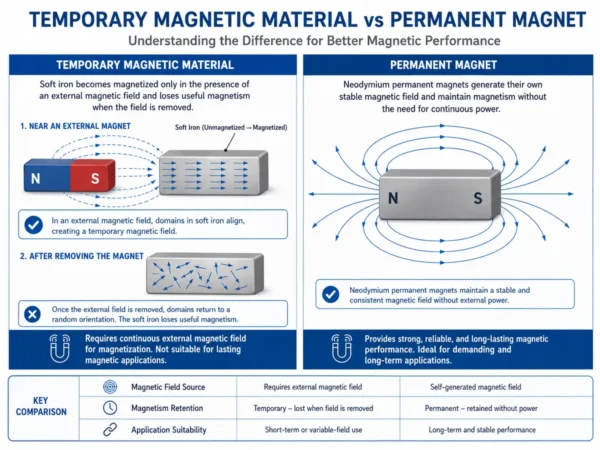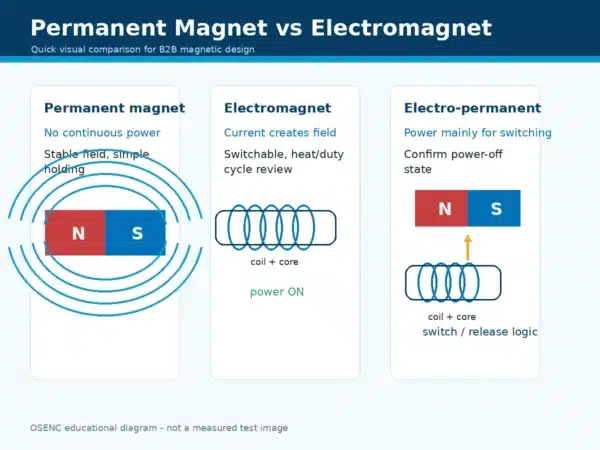







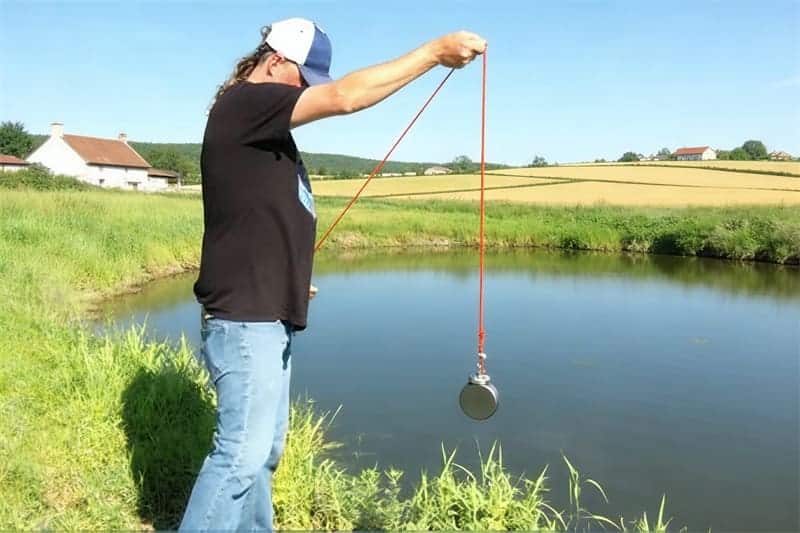
Magnet fishing is an outdoor activity that uses a strong magnet to try and grab magnetic (ferrous) metal objects from rivers, canals and lakes. In simple terms, a fishing magnet is a compact assembly of Powerful neodymium rare earth magnets, often built as single-sided discs or neodymium fishing cup magnets, that you drag along the bottom when searching in outdoor waters for ferromagnetic objects. If you are wondering what is Fishing Magnet and how it works, this guide from Osenc will walk you through the basics before you choose your first kit.
What is the right poundage fishing magnet?
Before you start your magnet-fishing adventure, one of the most crucial things to do is to select the appropriate poundage fishing magnet. A weak magnet will not pick up any worthy finds, and a powerful magnet is not only heavy and costly but also difficult to manage. That is why the knowledge of the pull force and the way it is actually used in the real circumstances of the underwater conditions is necessary for both beginners and professionals.
There are no simple choices of which magnet is the largest or the strongest when it comes to picking out a magnet. It depends on various factors, including magnet grade, contact surface, environment, and the nature of the metal you are attempting to recover. The quality brands such as Osenc, which have been known to make good and professionally-tested neodymium magnets, develop products to provide real performance- not mere poundage. This assures you that when you invest in a magnet, you have the same and predictable output on lakes, rivers, bridges, docks, and even complex underwater environments.
A properly selected poundage magnet not only increases your success rate, but it also increases your safety, saves time, lessens strain on your rope and gear, and enables you to enjoy your magnet-fishing experience much more. Be it in the case of lost tools, historic artifacts, or heavy scrap metal, the knowledge of how poundage works will provide you with the right assurance to select the desired magnet for your underwater adventure.
Below is a breakdown of all the main considerations, such as strength, size, metal reaction, environment, technique, and how brands such as Osenc maximize each of these factors to enable you to maximize the performance of your magnet. Using this information, you can choose a magnet that suits your requirements, your conditions, and your ability level- to make each magnet-fishing experience both powerful and rewarding.
What factors determine the poundage of a fishing magnet?
We now understand the basic concept of magnet fishing, so to have a real pulling force of a magnet, we have to purchase a larger magnet. The number of factors that influence the amount of weight that a magnet can actually hold when held up by the bottom of the water is quite numerous.
Magnet Grade
Fishing magnets in the neodymium alloys are graded on the basis of strength. Grade, e.g., N52, pulls harder than a smaller grade, e.g., N35.
Osenc is selling magnets between N35 and N52 and checking each order to ensure that the actual pull is what it says. They use certified suppliers of their magnets, and therefore, the strength remains the same. To make sure that even N52 magnets remain strong with time and do not lose power when dealing with difficult pulls, their engineers will shape the magnetization curve of each grade.
Magnet Size and Surface Area
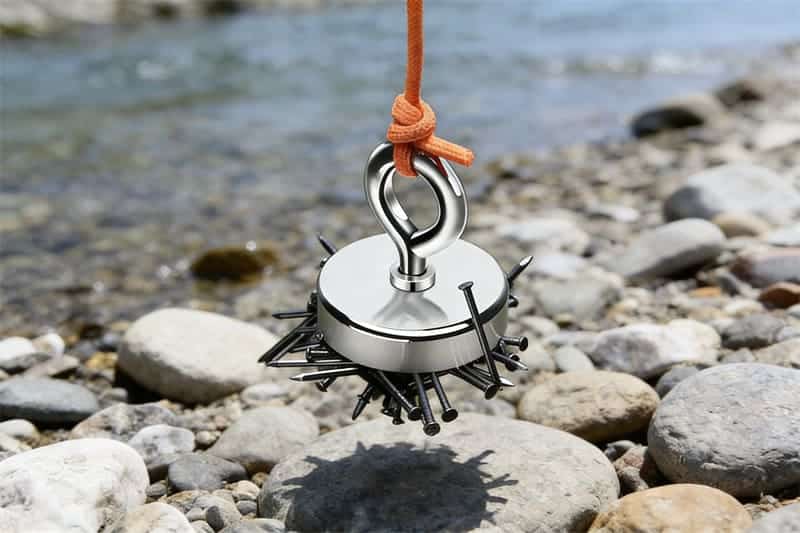
A larger surface area magnet is able to seize metal more strongly. The larger the contact, the stronger the grip.
The magnets at Osenc can be cut and resized to various sizes and diameters, and thicknesses, and they produce double-sided magnets that occupy a larger portion of the murky water surface. CNC machining maintains the shape accuracy to ensure the magnet is flat on the object. Their 360-degree magnets are multi-polar magnets that are magnetized to stretch the working surface over the bottom to enable hooking of irregularly shaped objects.
Contact Surface Quality:
A smooth and flat surface allows a magnet to cling. The presence of rough or rough objects diminishes this contact and the weakening of the pull.
Osenc finishes its magnets with nickel, copper, epoxy, and zinc to maintain the surface corrosion-free. These layers can take salt tests and perform in muddy rivers and saltwater. The magnets are also polished to minimize swellings so that they can make contact with rusty or uneven objects under water.
Air Gap and Interference
The air gap is the distance between the target and the magnet. Salt, algae, and small rocks may create cracks that make the pull weak.
The 360° full magnetization and two-sided designs of Osenc maintain high attraction despite partial hindrance of contacts. This reduces the adverse impact of silt, mud, sand, algae, and debris. They also do special designs, such as yo-yos and heavy-duty industrial designs that remain effective in harsh conditions underwater.
Water current
Rapid currents introduce resistance, which can loosen the grip of a magnet. In powerful currents, a larger poundage of the magnet is required in order to keep abreast.
Strong magnets up to 3500 lbs achieved by Osenc are designed to work in fast rivers and deep water. The housings, shells of hardened steel, and confusion of eye-bolts make the magnet firm in the event of the heavy pulls in the rough water. They test durability and stress tests to ensure that the magnet and eye-bolt can withstand sideways load, drag, and unexpected changes of current.
Pull angle
The draw force is influenced by the angle at which the magnet is being pulled. Pulling is straight up giving the greatest attraction. The rope is kept tight so that the magnet can perform better in other environments.
Osenc provides customizable eye bolts to ensure you can manage the direction of pull by installing either center or dual-side bolts. This assists in maintaining the pull in an upright position where fishing is done off bridges or high places. Their 360° magnets mitigate the loss of force due to angled pulls, providing consistent attraction in inconvenient circumstances.
Target metal properties
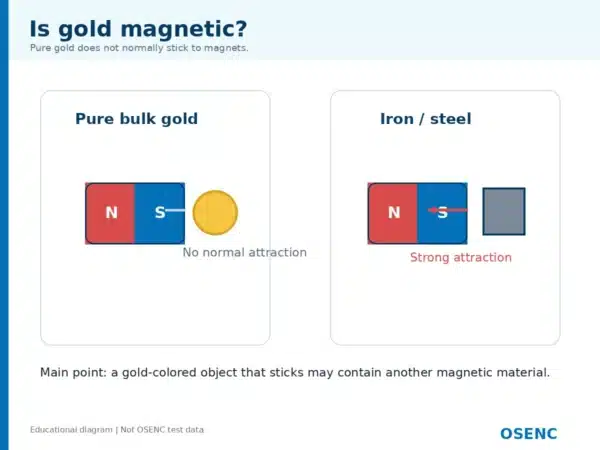
Not every metal is attracted to a magnet. Pulls are strong in steel and iron, weak in aluminum and certain alloys. Shapes of odd form can be in contact with the magnet to a partial amount, reducing effectiveness.
Osenc puts magnets that have greater magnetic penetration to help get buried iron or steel under mud, which is partially submerged. Multi-directional magnetization aids in attaching itself to irregular shapes, pipes, tools, and rusted ferrous items. All the magnets are tested under actual conditions with mixed metal debris in order to perform well on real objects in the ocean, such as scrap steel, tools, metal plates, and machine parts.
How to Choose the Right Fishing Magnet (Fishing Magnet Buying Guide)
Knowing these practical things that affect the real strength of a fishing magnet will enable you to make much better decisions and make informed decisions before you get into the water.
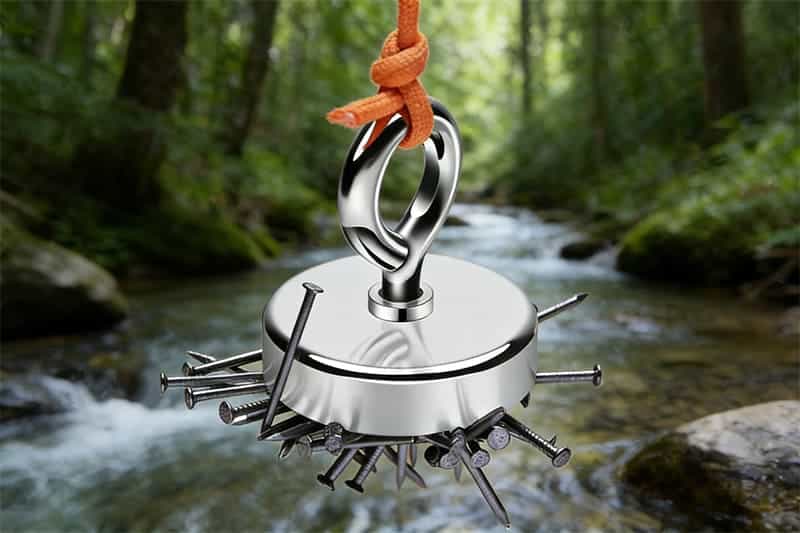
When people compare products online, they often start with a simple Magnet Fishing Kit or Double Side Magnet Fishing Kit and then look at branded options such as high-quality fishing magnets at Magnetar Magnets, FINDMAG Neodymium Fishing Magnets or Brute Magnetics, 1700 Pound magnet. Many ads simply call them powerful fishing magnets. In reality these powerful fishing magnets, strong neodymium magnets, kits, and accessories are promoted as the World’s Most Trusted Fishing Magnets and among the strongest fishing magnets on the market, but real-world performance still depends on the grade, design and safety of the system you choose.
Assessing the magnet grade, size, coating, and underwater environments will allow you to select a magnet that perfectly fits your environment, as well as retrieval objectives. Not only will this boost your success rate, but it will make underwater exploration a much safer, smoother, and more rewarding experience.
What is the proper way to select a fishing magnet?
Magnet fishing is an investigative, adventurous, and puzzling activity. The correct fishing magnet can result in a massive change to the capture in lakes, rivers, and even murky ponds. But what sort of a fishing magnet is the one to use in this expedition? The pulling strength, magnet coating, water conditions, and goals of retrieving a fishing magnet, as well as the budget, are all factors that can be used to determine the suitability of a fishing magnet to be used in the activity.
Pulling strength
The maximum pulling force that the neodymium magnet can support in the fishing magnet is directly proportional to the grade and size of the neodymium magnet; the higher the grade of the neodymium magnet or the larger the magnet, the greater the pulling power. When you want to move large iron objects like bicycles, safes, etc., then you should use a very strong pulling magnet, which is typically one of 800 pounds or greater. But when it comes to something smaller, like tools or coins, then a smaller pulling force (approximately 300-500 pounds) should typically work.
For very ambitious treasure hunters, some e-commerce listings advertise 1500 Lbs Pulling Force Heavy Duty Magnets for Fishing or an extra-strong neodymium double-sided magnet as a Heavy-duty fishing magnet. They are pitched as the best and high-quality double sided magnet fishing magnets, but you still need a balanced setup that matches your rope strength and local conditions rather than chasing only the largest numbers.
Osenc is available in grades of neodymium between N35 and N52 and offers customers the opportunity to select the precise pull strength required when undertaking light or heavy underwater drills. Osenc has precise pull-testing, size customization, and this means that every magnet can provide stable and consistent performance even in harsh water currents.
Magnet Coatings
A majority of fishing magnets are coated in 3 layers (nickel-copper-nickel) to discourage rust and breakages. In case you often fish in or have to fish in salt water, then it is a good idea to use magnets with an extra layer, like epoxy, that may have extra protection against corrosion. That is why Osenc provides its customers with its own coatings.
Osenc offers various coating solutions, such as nickel, zinc, and epoxy, specifically crafted to enhance corrosion resistance and increase the life of the product in aggressive or salty waters. Their multi-layered industrial finishes are highly durable, and they do not wear out, rust, or damage the surface in cases of repeated underwater applications.
Water depth
The performance of fishing magnets can be influenced by water depth, intensity of currents, and bottom topography.
Even a lighter magnet will do even in case you are working in shallow and still water. However, in the deeper or less calm water, a robust magnet of the greatest size possible will assist you in better fishing. Assessing the water conditions that you are going to be fishing in will make the magnet fishing smooth. Here, professional advice on the use of fishing magnets in practice is available.
Osenc is producing fishing magnets in single-sided, double-sided, and 360-degree all-directional configurations, which enables the user to select which style proves more effective in different water depths and currents. Heavy-duty to 3500 lbs will mean good operation, even in a rapid river or where deep getting is needed.

Metal type
Not every metal is attracted by magnets, and even those that are made of ferrous metal possess variances in attraction. Iron and steel are the best targets as they tend to be very magnetic, and things that are composed of aluminum or brass will not be attached to fishing magnets. Being aware of the kind of objects that your target waters frequently possessed in the past will assist you in making a selection of a magnet with the appropriate pull and control balance.
Osenc has a stringent magnetic force evaluation and testing of all fishing magnets to create a uniform performance on ferrous metals such as steel and iron. Their magnets are designed to be powerful in their holding capability, including on unusual-shaped objects, to enable them to achieve as much success as possible in retrieving a victim in any uncertain underwater conditions.
When you are a beginner, you had better begin with an easy-to-work-with and light magnet, not too hard to manipulate, but with enough pulling power to make you used to this entertaining method of fishing. The in-between user might be required to have a stronger pulling power of a fishing magnet to attempt more daring pulls. And skilled persons must adjust the advanced fishing magnets, e.g., two-sided fishing magnets or fishing magnets with a very powerful pulling force, to enhance successful treasure hunting. Purchasing a magnet that fits into your experience, you can have fun in the process of fishing and at the same time be safe.
To serve all types of experience, Osenc offers customizable fishing magnets, including lightweight beginner models of 360 degrees and heavy-duty industrial magnets that are used by professionals. Giving the choice of single or double eyebolts and OEM branding, Osenc assists the user in selecting the magnets according to their skill level and retrieval objectives.
Budget
Although there exist cheap fishing magnets that can be used for recreational fishing, the high-quality and more professional magnets tend to be more costly. New users or those who use it occasionally do not have to spend a lot of money initially. Considering that you will be magnet fishing multiple times or need to fight the opposing fishing grounds, purchasing a neodymium magnet of high quality that is of good durability will not disappoint you. The healthy mix between quality and price is amiable to our cash pockets.
Online you will also see multi-purpose magnetic hooks marketed as perfect for hanging or lifting heavy objects up to 95 lbs or as “The ultimate magnet for organizing your fishing tackle, lures, pliers, boat, truck and car”. These accessories can be useful around the garage or boat, but they are not a replacement for a well-designed fishing magnet, just as Fishing weights and sinkers are the ticket for regular rod-and-line fishing. Choosing undersized gear just because it looks convenient is one of the main reasons you see dramatic Magnet Fishing GONE WRONG videos online.
Osenc has a lean manufacturing process and an efficient supply chain, which enables the company to provide exceptionally low prices on bulk yet uphold high-quality standards. Although a customer will require one unit or very high production, Osenc will offer the high-value magnets at competitive prices without compromise on performance.
All of the above can be considered to have a successful and enjoyable magnet fishing experience. Magnet fishing is primarily a voyage as much as it is an exploration; therefore, ensure that the magnets are worth the adventure. And also bear in mind that your area is in favor of this sport, since there are some areas with specific regulations and prohibitions of magnet fishing.
Is magnet fishing legal?
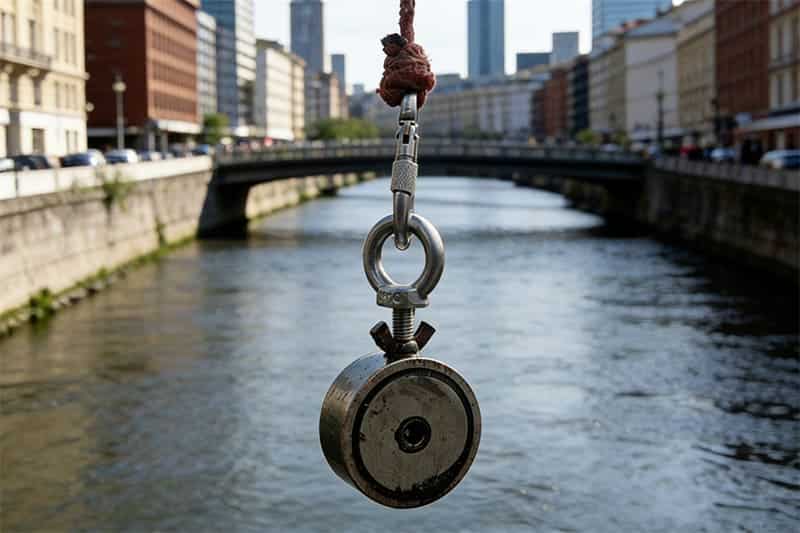
Magnet fishing is a novel water adventure that is gaining prominence. Nevertheless, laws regarding magnet fishing differ to a great extent in different countries, particularly in Europe and North America. The practice has raised safety and environmental issues, which compel the government officials to keep an eye on the practice.
The following is the overview of the legal status of magnet fishing in various countries and regions, as per the local laws and guidelines.
Europe
UK: The UK has strict rules. Most large waterways (including canals and river trusts) do not permit magnet fishing. In the privately owned waters, it is permitted on the condition of the permission of owner.
Germany: There are laws in each state in Germany. Open water fishing and magnet fishing are often unwelcome unless authorized. This is primarily to prevent any dangerous objects and the destruction of historic objects.
France: In France, most regions must be granted access to magnet fishing. The government encourages citizens to obtain a license and verify with the local authorities to prevent legal issues.
Netherlands: In the Netherlands, magnet fishing is not popular due to the safety risk of unexploded ordnance. It is not outright prohibited as in the UK or France; however, it has to be done with caution and according to the local legislation.
North America
United states
Magnet fishing is not prohibited by federal law. The local rules can be either state or local. Property ownership and owner authorization of private waters are also regulated. There are also local rules that could apply to some of the state-controlled waters.
Canada: Like the U.S., Canada has no national restrictions on magnet fishing. Fishing is allowed in the common waters to most people, but they should avoid interfering with the private property, local warning signs, and industrial heritage areas.
| US state regulations on magnet fishing | ||
| State | Legality of Magnet Fishing | Conditions or Restrictions |
| South Carolina | Prohibited | Taking artifacts on waterways is illegal, as it is a state law. |
| Georgia | Permitted | Allowed on public waterways; prohibited on private property without the owner’s permission. |
| Indiana | Permitted | Both the private and the public land require permission from the owner of that land. |
| Louisiana | Permitted | In the case of privately owned land, permission should be obtained from the owner. |
| Michigan | Permitted | Permission has to be obtained on private property as well as partially public land. |
| New York | Permitted | You can do it on the condition that you have the permission of the landowner or the right authorities. |
| North Dakota | Permitted | Permission is required from property owners on both private and public lands. |
| Oregon | Permitted with Permit | You need to obtain a permit from the Department of State Lands, and you need to register the magnets with the State Marine Board. |
| Other States | Generally Allowed | In private property, you are permitted to take magnets, although you should not enter sensitive sites like historical places. |
In many states, magnet fishing is permitted, although you have to ensure that it is not conducted along historical locations or conservation zones. For more specific local regulations, visit the sites of state natural resources departments and other local governments.
Fishing everywhere in a magnet is dangerous. Some of the potential issues are unexploded war-related bombs, environmental degradation, damage to historic heritage, and property rights. It can also be safe and legal with the permission of the private landowners, and without violation of local rules.
Conclusion
The process of selecting the correct fishing magnet lies not only in choosing the most powerful one but also in knowledge of the actual conditions and the specifics of the environment, the type of metals you are looking to encounter, and the type of water you are going to fish in. When these factors are matched appropriately, your experience will become easier, less risky, and more valuable. Such useful conditions allow good brands such as Osenc to design magnets that perform well, with balanced performance, reliable pull, and long periods. You can be a novice in the shallow waters or an expert in the deeper waters, but you can always improve your collections by stopping and assessing the environment and choosing a suitably rated magnet, which results in improved collections, reduced casualties, and a more rewarding magnet-fishing experience.
FAQs
Why are fishing magnets good for the Recovery of Metals?
Fishing magnets assist you in locating lost metal in water. A very powerful magnet is applied to the rod rather than a fishing line and hook to extract iron metal, which is captured fast and well.
What is the best fishing magnet?
Neodymium magnets are more often than not of the rare type. They are extremely powerful, hence have the capacity to pull heavy metals in water.
Why is magnet fishing prohibited in some locations?
Some places prohibit it due to its insecurity, such as the discovery of hazardous materials like explosives. It may also destroy the environment or historic places.
What are the regulations of magnet fishing?
In every region, rules vary. They typically consist of the state laws, local regulations, environmental protection laws, and property laws. Details of the exact rules may be found on the local government website.
What is the minimum age limit for magnet fishing?
There is no universally accepted “minimum age” for magnet fishing. Instead, it depends heavily on where you are (country / local jurisdiction), and many places have no explicit age laws; safety recommendations typically emphasize adult supervision for minors.