






Quick Answer: Permanent Magnet Motor vs Induction Motor
A permanent magnet motor is usually the better choice when high efficiency, compact size, torque density and precise control matter most. An induction motor is usually the better choice when lower upfront cost, rugged construction, easy sourcing and standard industrial replacement matter more.
The right answer depends on the full system: duty cycle, speed range, load profile, controller, cooling, working temperature, magnet material, maintenance capability and lifecycle cost.
| Question | Usually Better Choice | Why It Matters |
|---|---|---|
| Highest efficiency or torque density | Permanent magnet motor / PMSM | Rotor magnetic flux is supplied by magnets, which can reduce rotor electrical losses and allow a smaller package. |
| Lowest upfront cost | Induction motor | No rare-earth magnets are required and standard frames are widely available. |
| Variable speed, compact automation or servo control | Permanent magnet motor | High torque density and accurate control can justify the controller and magnet cost. |
| Pumps, fans, compressors and conveyors | Often induction motor | Standard induction motors remain practical when the duty is rugged, available and cost-sensitive. |
| High temperature or fault-sensitive operation | Depends | PM motors need magnet grade and demagnetization review; induction motors still need insulation, bearing and cooling review. |
Permanent Magnet Motor vs Induction Motor: Quick Comparison
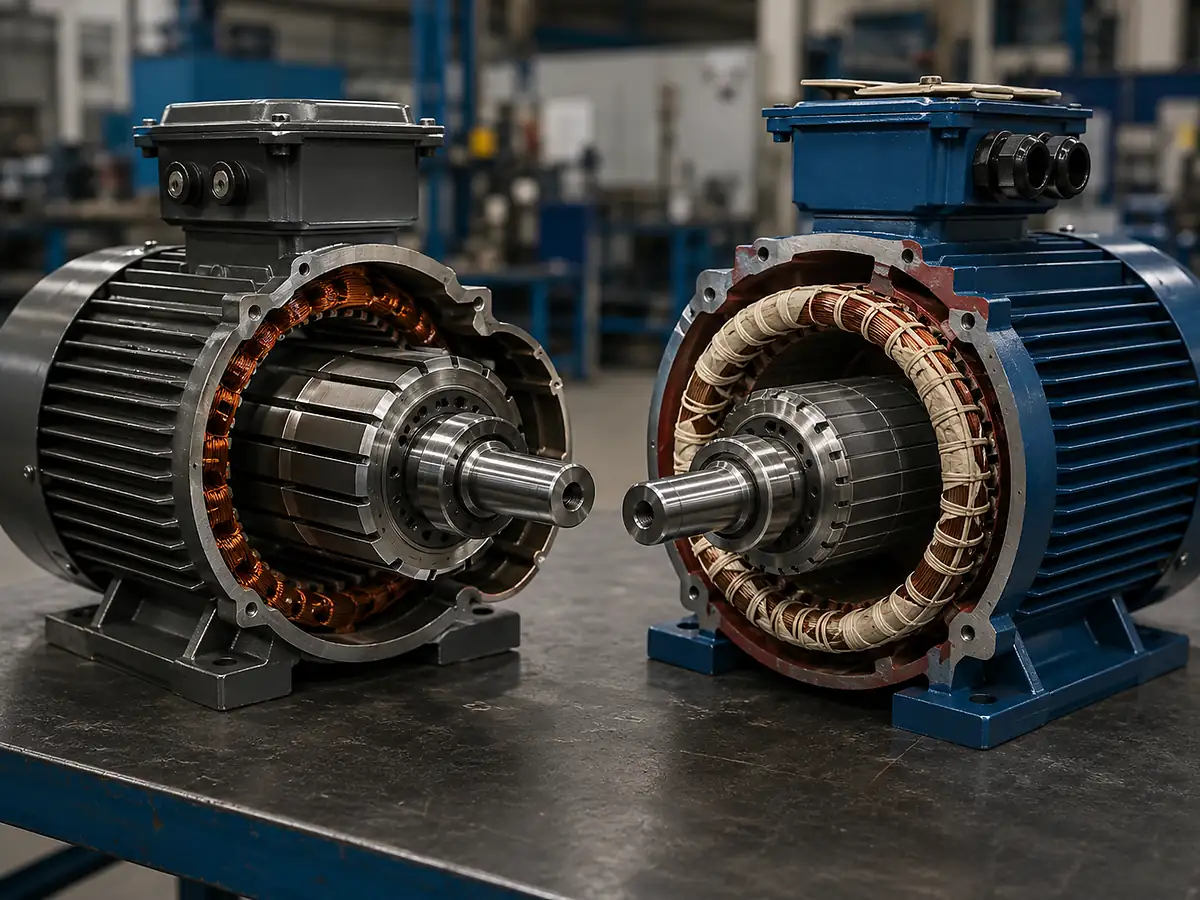
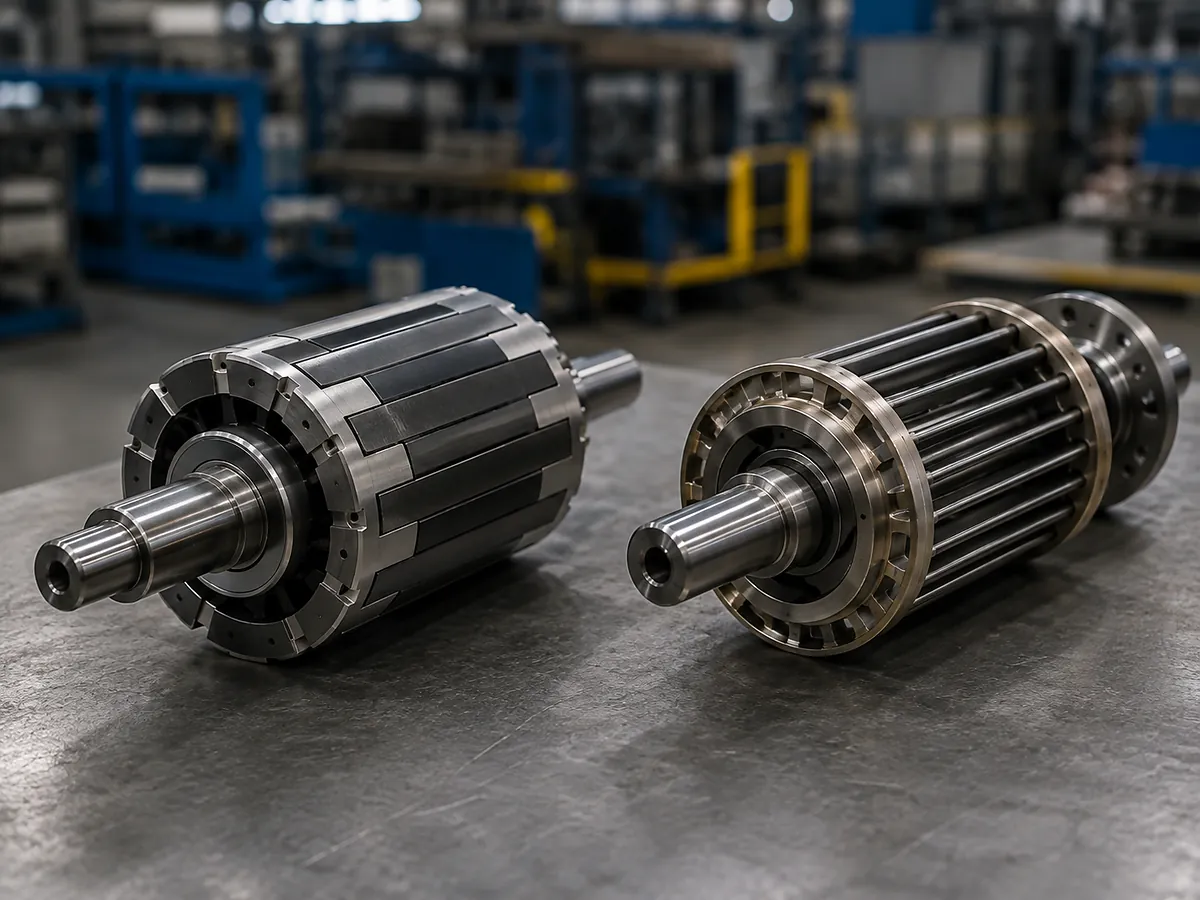
The core difference is the rotor field source. A permanent magnet motor uses permanent magnets in the rotor. An induction motor uses electromagnetic induction: the stator field induces current in the rotor, and the interaction produces torque.
| Factor | Permanent Magnet Motor | Induction Motor |
|---|---|---|
| Rotor design | Uses permanent magnets, often NdFeB, ferrite or SmCo depending on design goals. | Uses conductive rotor bars or windings where current is induced by the stator field. |
| Efficiency behavior | Often strong at part load and in compact high-performance designs. | Can be efficient near rated load, but rotor losses and slip matter. |
| Control | Usually requires accurate drive control and rotor-position or sensorless control strategy. | Can be simple in fixed-speed duty; VFDs are common for speed control. |
| Material risk | Magnet cost, supply, coating and demagnetization margin must be reviewed. | Avoids permanent magnet cost, but still depends on lamination, conductor, insulation and cooling quality. |
| Best fit | EVs, robotics, servo systems, compact drives and high-efficiency machines. | Pumps, fans, conveyors, HVAC, compressors and general industrial machinery. |
Efficiency, Rotor Losses and Duty Cycle
Permanent magnet motors can reduce rotor electrical losses because the rotor magnetic field is supplied by magnets. Induction motors use rotor current, so rotor losses and heat must be considered during efficiency comparison.
This does not mean every permanent magnet motor is automatically cheaper to run. Efficiency must be evaluated at the real operating points: startup, rated load, partial load, low speed, idle periods, cooling conditions and controller behavior.
PMSM, PM AC Motor and 3-Phase Permanent Magnet Motor
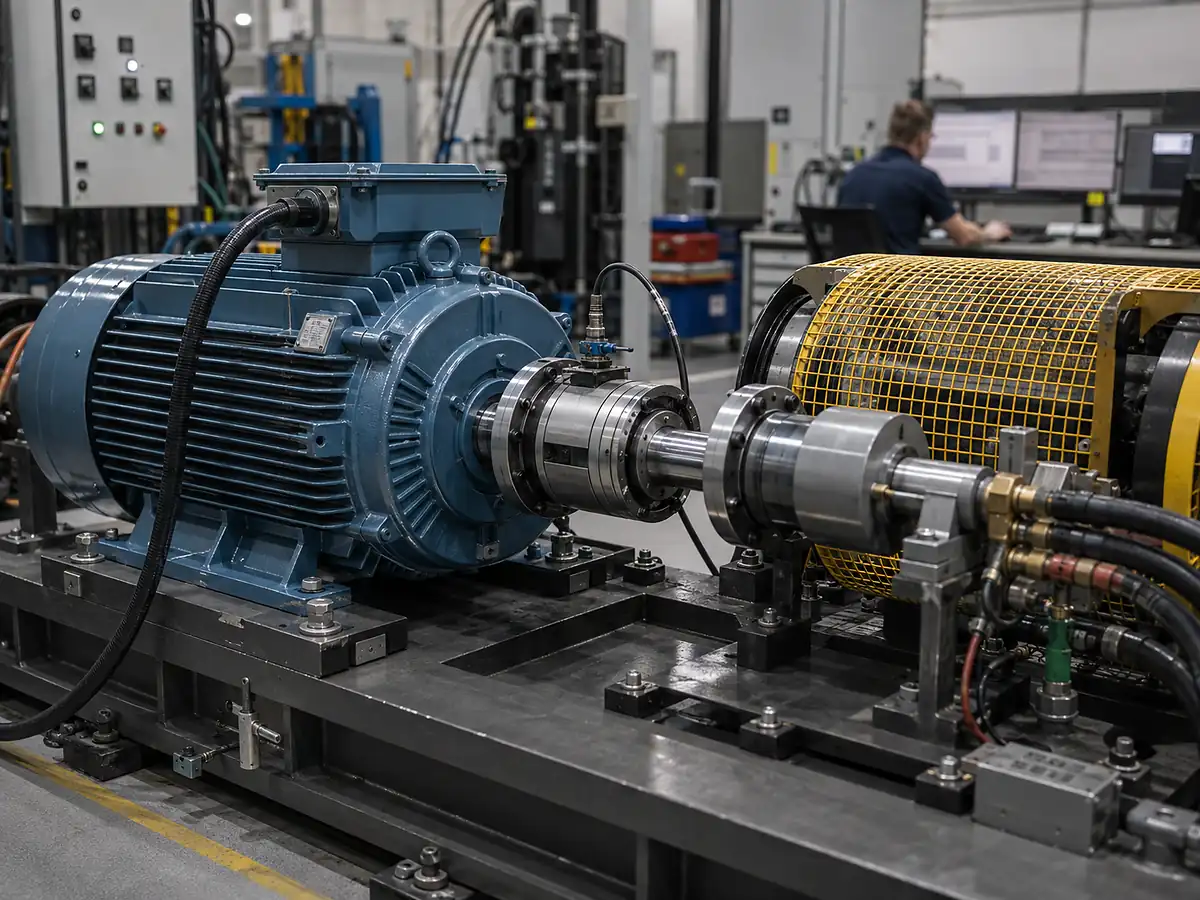
Many buyers searching this topic also compare PMSM, permanent magnet AC motor and 3-phase permanent magnet motor. In practice, these searches often refer to motor families where permanent magnets are used in the rotor and the stator is driven by AC power through a controller. A PMSM runs synchronously with the stator rotating magnetic field, while an induction motor normally runs slightly below synchronous speed because slip is needed to induce rotor current and torque.
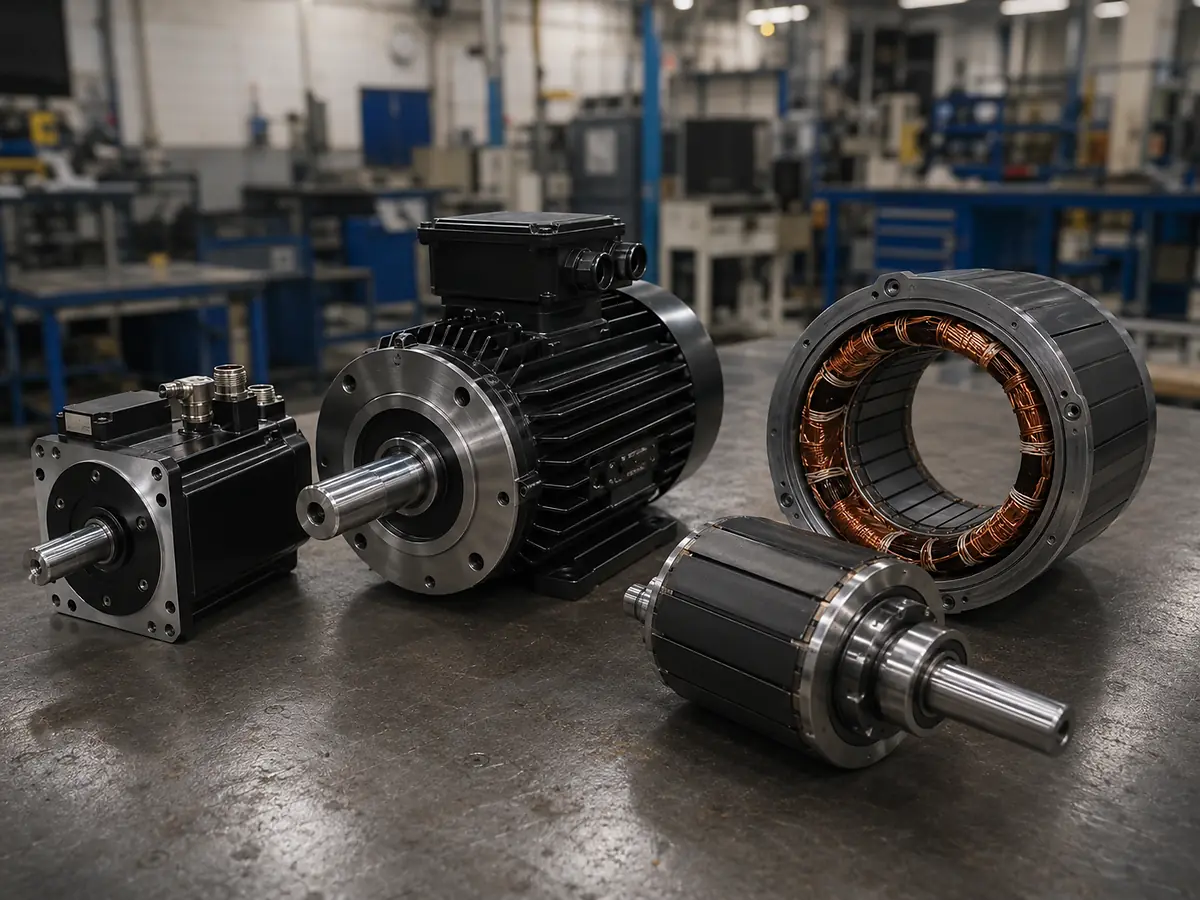
- PMSMHigh efficiency, precise speed control and strong torque density when matched with the right drive.
- BLDC motorCommon in compact motion systems, tools, fans and electronics where electronic commutation is used.
- PM AC motorA broad buyer term that often overlaps with PMSM and other permanent-magnet AC drive designs.
Cost: Purchase Price vs Lifecycle Cost
Induction motors usually win on initial price because they do not need permanent magnets and are widely produced in standard industrial designs. Permanent magnet motors cost more when rare-earth magnets, precision rotor assembly and advanced control are required.
For continuous-duty or space-constrained equipment, the higher initial cost of a permanent magnet motor may be justified by energy savings, smaller package size, higher torque density or better motion control. For simple, rugged and cost-sensitive equipment, an induction motor may remain the more practical choice.
Thermal and Demagnetization Risk
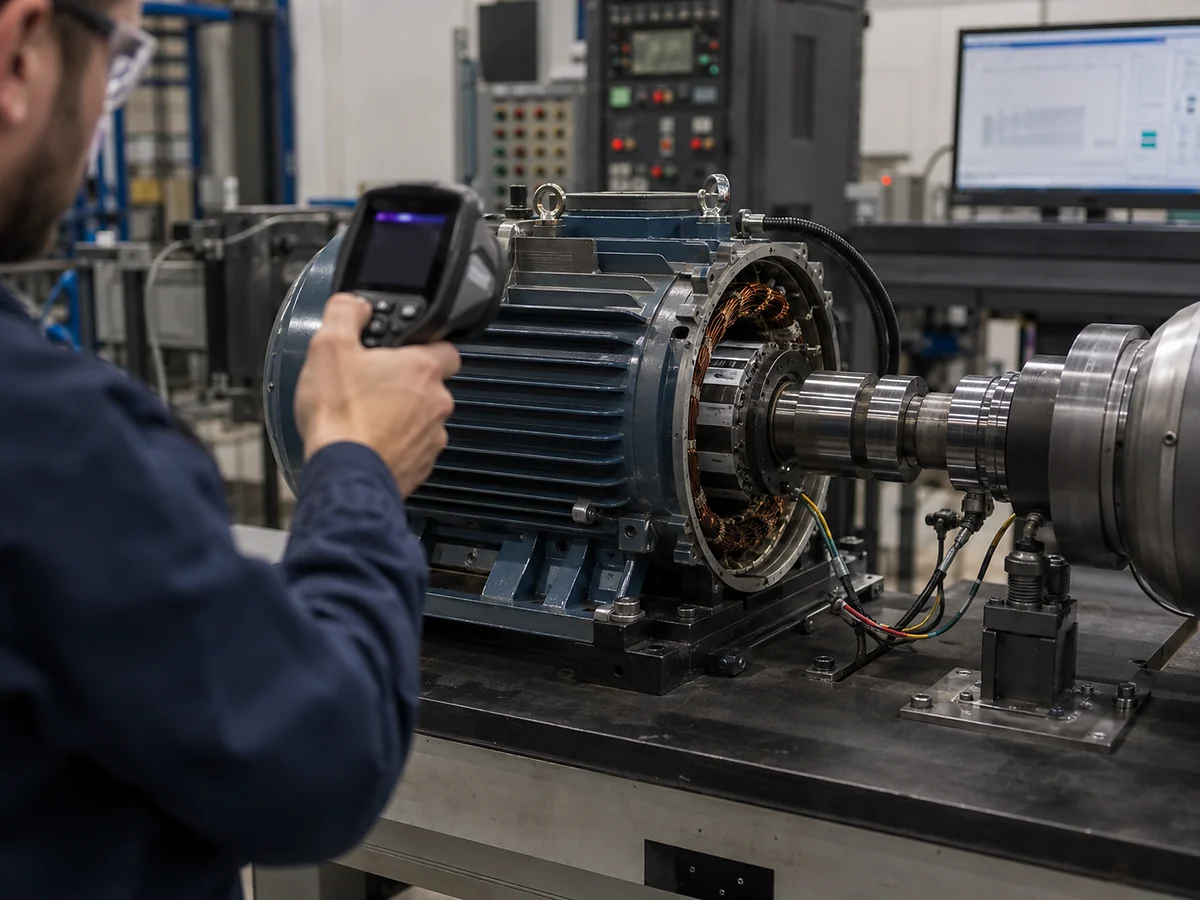
Permanent magnet motors need a thermal review because magnet performance can weaken if the wrong grade is used or if operating temperature, opposing fields, mechanical stress or fault conditions exceed the design margin. Rotor demagnetization is an important fault mode in permanent magnet AC machines, and thermal behavior is a major part of high-power-density motor development.
Induction motors also need thermal review. Their reliability depends on winding insulation, bearings, cooling paths, enclosure, dust, load stability and duty cycle. Heat is not only a permanent magnet motor issue; the difference is that PM motors add magnet-grade and demagnetization review to the normal motor reliability checklist.
Application-Based Recommendations
| Application | Common Choice | Selection Logic |
|---|---|---|
| Electric vehicles and compact traction drives | Permanent magnet motor / PMSM | High torque density, compact size and efficiency can be valuable. |
| Robotics, servo systems and automation | Permanent magnet motor | Precise control, fast response and compact design often matter. |
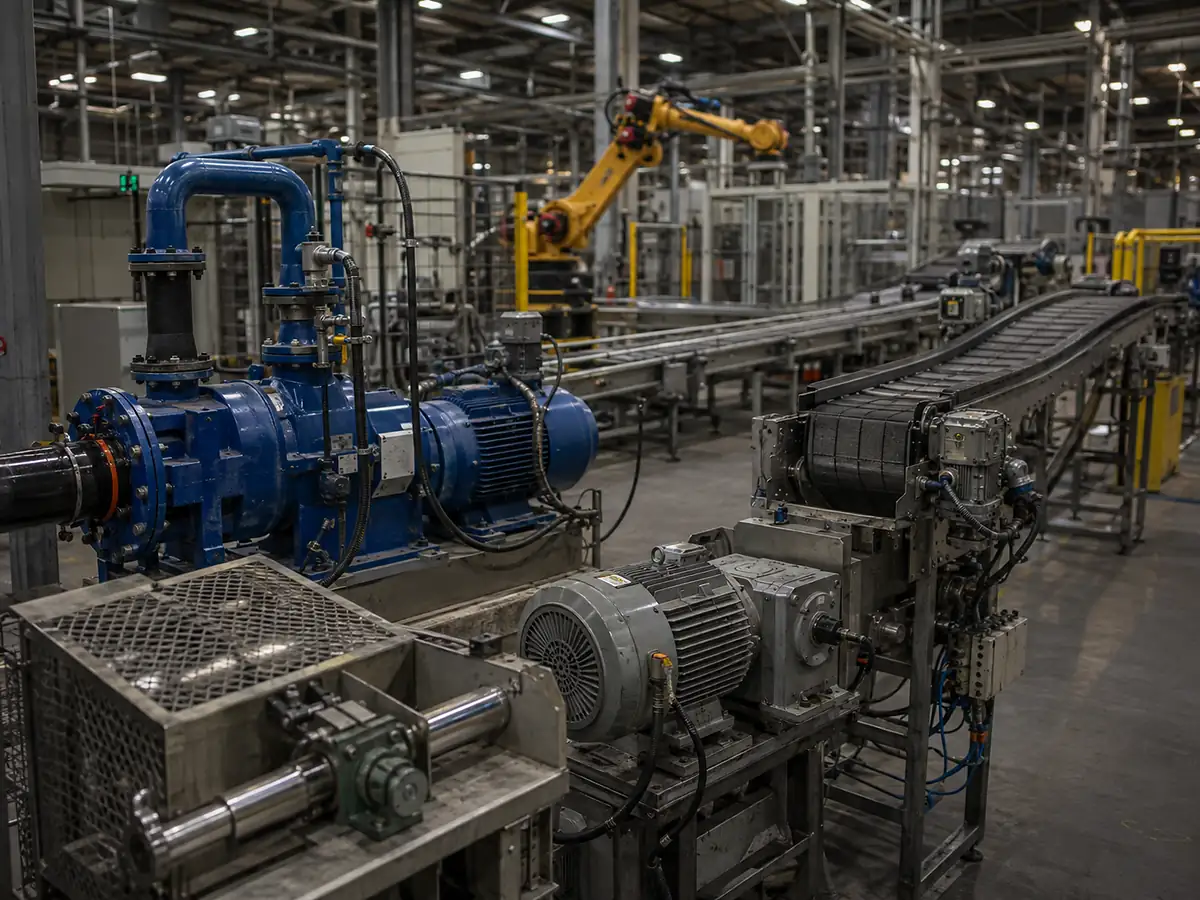
| Pumps, fans, compressors and HVAC | Often induction motor | Ruggedness, standard availability and lower upfront cost may dominate. |
| Conveyors and general industrial machinery | Often induction motor | Easy sourcing, maintenance familiarity and standard frames are useful. |
| High-efficiency custom equipment | Depends | Compare lifecycle energy cost, motor size, controller, duty cycle and magnet risk. |
How Motor Magnet Design Affects PM Motor Performance
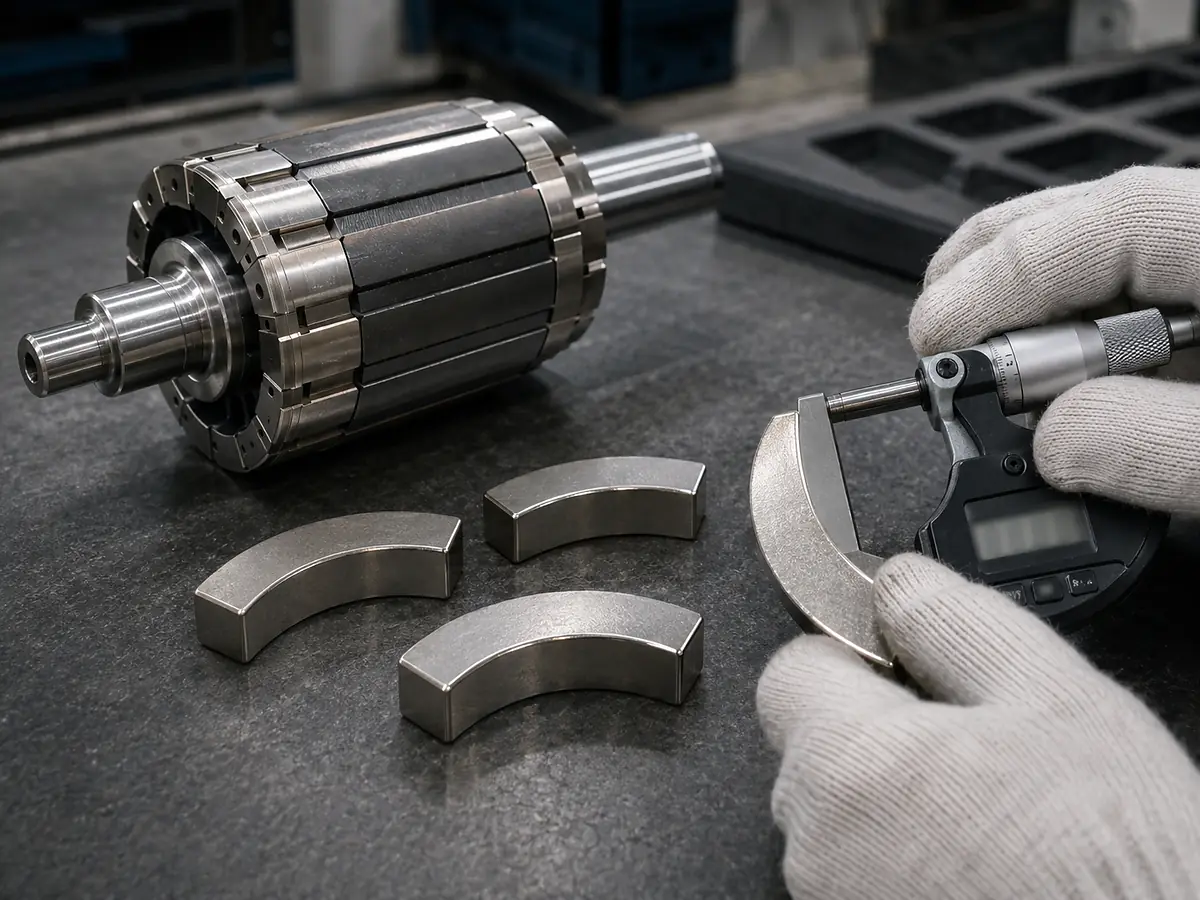
For permanent magnet motors, the magnet is not just a material choice. The motor designer must review magnetic grade, remanence, coercivity, temperature class, coating, shape, tolerance, magnetization direction, air gap, rotor retention and assembly method.
Magnet grade and coercivity
Higher magnetic strength can help torque density, but the grade must match the motor temperature and demagnetizing field risk. Higher coercivity may be needed when the motor faces high temperature, fault current, aggressive field weakening or demanding duty cycles.
Shape, tolerance and air gap
Arc magnet thickness, width, chamfer and length tolerance can influence flux distribution, air gap uniformity, cogging torque, vibration, assembly yield and coating damage risk.
Osenc can support custom motor magnet requirements including NdFeB magnet grade selection, coating review, magnetization direction, arc magnet shape, rotor assembly tolerance and sample-to-production communication.
How to Choose: A Practical Decision Flow
- Define torque, power, speed range and duty cycle.
- Compare efficiency at real load points, not only rated load.
- Include motor, controller, cooling, maintenance and downtime cost.
- Check working temperature, enclosure, dust, corrosion and vibration.
- For PM motors, review magnet grade, coating and demagnetization margin.
- For induction motors, review insulation, bearings, cooling and frame availability.
RFQ Checklist for Custom Motor Magnets
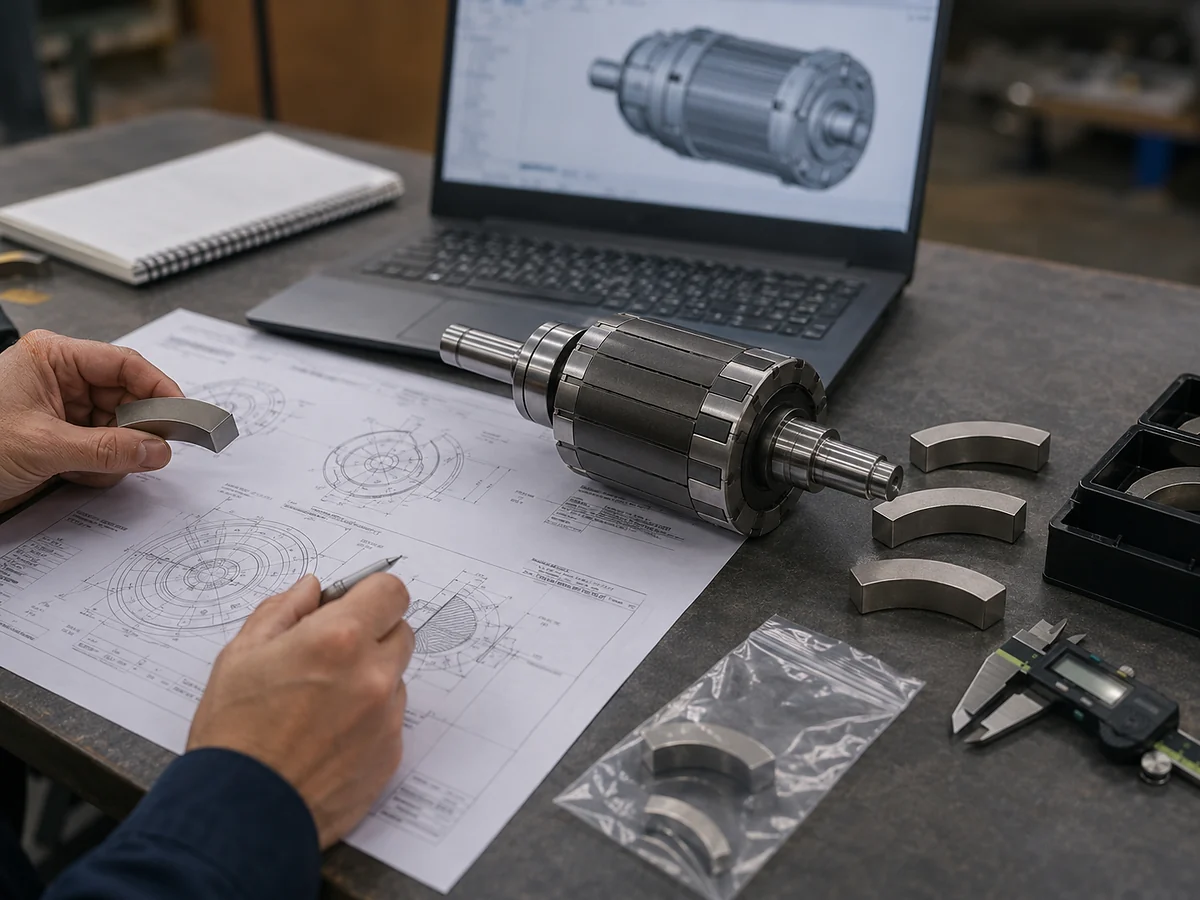
If your project uses permanent magnets in a rotor, prepare the information below before asking for a custom quotation. This helps reduce back-and-forth and makes the magnet design discussion more realistic.
- Motor type: PMSM, BLDC, PM DC, generator or custom assembly.
- Target torque, power, speed range and duty cycle.
- Working temperature and peak temperature exposure.
- Magnet material preference: NdFeB, SmCo or ferrite.
- Drawing, sample, rotor slot geometry or target magnet shape.
- Magnetization direction, coating, tolerance and inspection needs.
- Prototype quantity, production quantity and delivery target.
- Any corrosion, washdown, vibration or safety constraints.
Need Custom Magnets for a Permanent Magnet Motor?
Osenc can provide custom magnet solutions based on your drawing, sample, application environment, performance target and test requirements. Share your motor type, rotor design, magnet shape, grade target, coating requirement and working temperature so the magnet design can be reviewed properly.
Contact Osenc for Motor Magnet SupportPermanent Magnet Motor vs Induction Motor FAQ
What is the main difference between a permanent magnet motor and an induction motor?
A permanent magnet motor uses magnets in the rotor to create the rotor magnetic field. An induction motor uses current induced in the rotor, so it normally operates with slip. This changes efficiency, torque density, cost, control needs and thermal behavior.
Is a permanent magnet motor more efficient than an induction motor?
Often, yes, especially in compact, variable-speed or part-load applications. The final result still depends on motor design, controller, cooling, load profile and operating hours.
Why are induction motors usually cheaper?
Standard induction motors do not require rare-earth permanent magnets and are available in many standard industrial frames. Their lower purchase price can be attractive when size and part-load efficiency are not the main constraints.
Do induction motors have permanent magnets?
Standard induction motors do not use permanent magnets. Their rotor magnetic field is produced by electromagnetic induction from the stator field.
Which motor type is better for EVs or robotics?
Permanent magnet motors or PMSMs are often preferred when high torque density, compact size, low-speed torque and precise control are important. Some systems still use induction motors to reduce rare-earth dependence or balance cost and operating behavior.
What information should I send for custom motor magnets?
Send the motor type, target torque or power, speed range, working temperature, rotor drawing, magnet shape, tolerance, magnetization direction, coating requirement, corrosion risk and prototype or production quantity.