






Gradi dei magneti
Magnet grades help you compare material strength, but they do not tell the full story by themselves. For NdFeB magnets, grade is only the starting point. Real performance still depends on geometry, air gap, coating thickness, steel contact condition, and temperature exposure.
Risposta rapida: spiegazione dei gradi magnetici
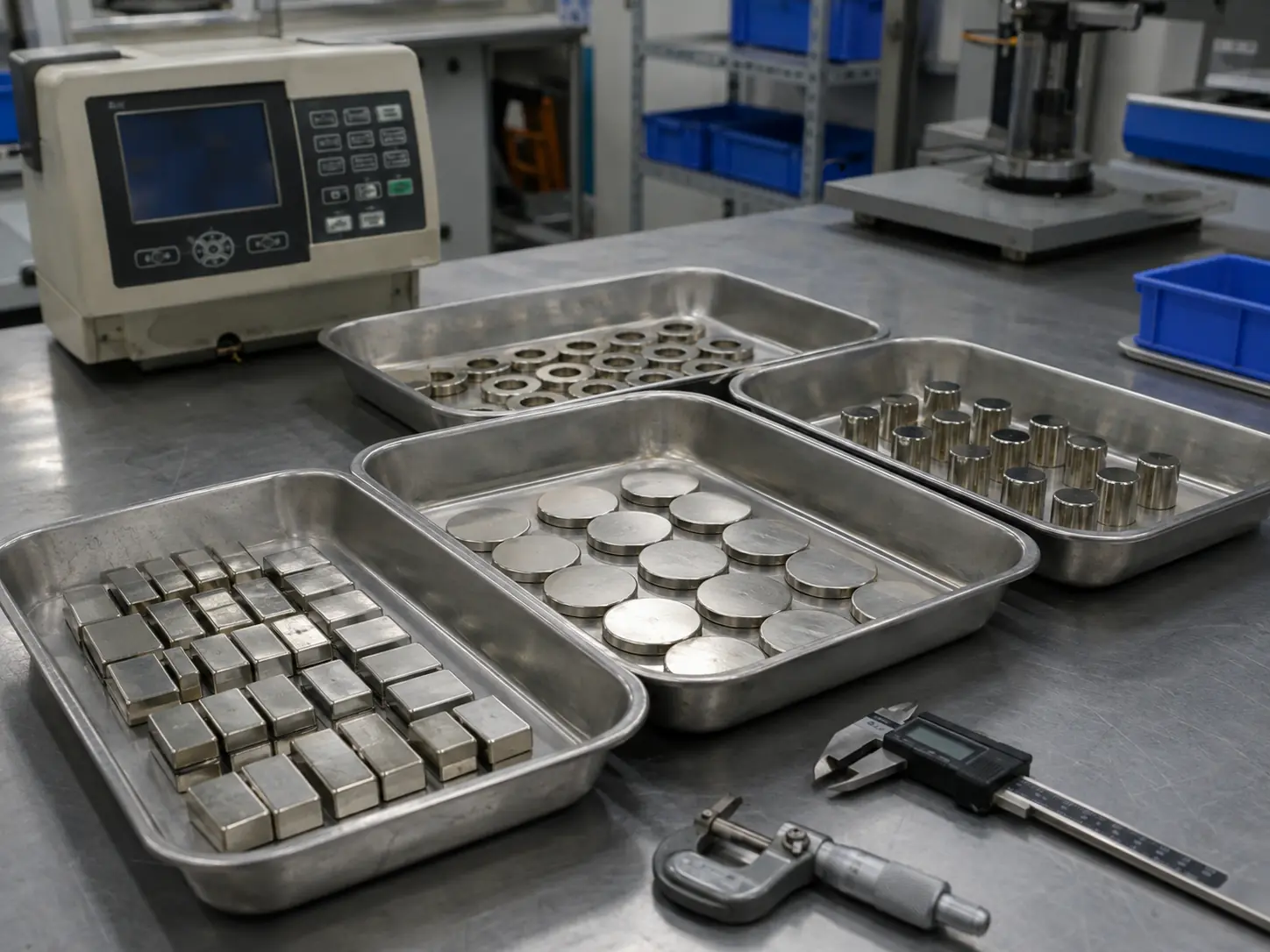
Neodymium magnets are usually graded by their (BH)max, or maximum energy product, commonly shown in MGOe. A higher grade, such as N42, N45, or N52, normally indicates stronger magnetic material at the same volume. However, actual holding force depends heavily on air gap, contact area, steel thickness, alignment, surface condition, and operating temperature.
If you see suffix letters such as M, H, SH, UH, EH, oppure AH, those describe the classe di temperatura. They do not mean the magnet is stronger than a standard grade with a higher N-number. They mainly indicate higher resistance to irreversible demagnetization in hot working conditions.
Cosa sono i gradi magnetici?
For neodymium magnets, a grade such as N35, N42, N45, or N52 identifies the material performance band. The number is linked to the material’s (BH)max range. As a general rule, a higher number means the material can deliver more magnetic energy for the same magnet volume.
That said, grade is not the same as pull force. Two magnets with the same grade can behave very differently if the geometry, steel surface, air gap, or testing method changes. This is why we always treat grade as the first filter, then verify the application with actual samples or a defined test method.
Tabella dei gradi dei magneti al neodimio
The chart below is a quick purchasing reference for commonly used neodymium magnet grades.
| Grado | Typical (BH)max Range | Temperatura operativa massima tipica | Indicazione pratica per la selezione |
|---|---|---|---|
| N35 | 33–35 MGOe | ≤ 80 °C | Good baseline for standard applications. |
| N42 | 40–42 MGOe | ≤ 80 °C | Strong all-round choice for many designs. |
| N45 | 43–46 MGOe | ≤ 80 °C | Useful when you need more strength without jumping to N52. |
| N50 | 47–51 MGOe | ≤ 80 °C | High performance with a little more sourcing flexibility. |
| N52 | 49–52 MGOe | ≤ 80 °C | Best choice when space is tight and maximum strength matters. |
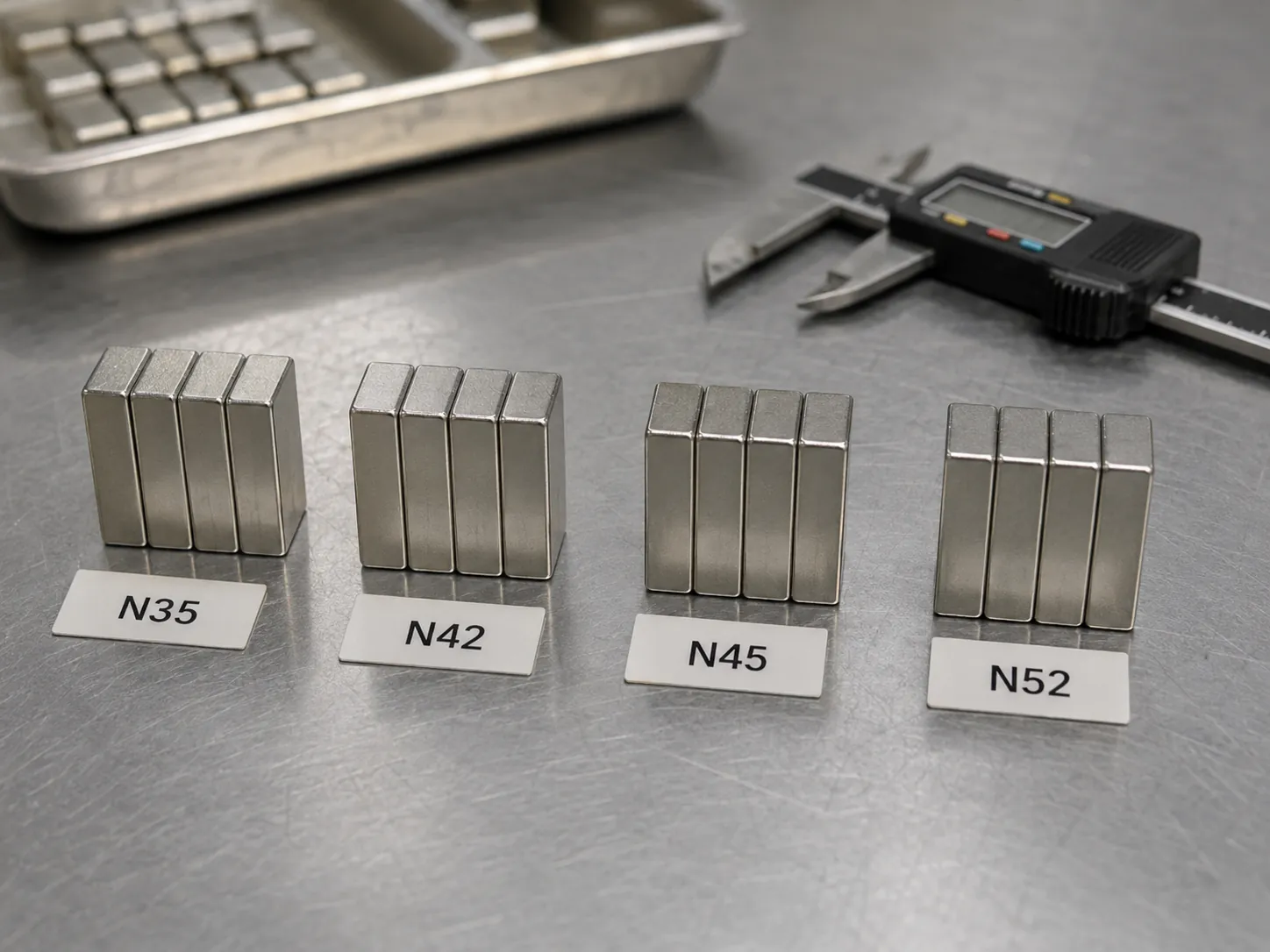
Come scegliere il grado di magnete al neodimio adatto all’applicazione
When we help customers select a magnet grade, we do not start by asking for the highest number. We start with the real working condition.
| Your Situation | Recommended Route | Motivo |
|---|---|---|
| General use with no meaningful heat | N35 or N42 | Cost-effective and sufficient in many applications. |
| Small space, high force target | N48 to N52 | Higher material strength helps when volume is limited. |
| Unknown or elevated temperature | Move up the temperature suffix first | Heat exposure often causes more trouble than grade choice. |
| Noticeable air gap or surface coating | Reduce gap or increase contact area first | Gap loss can cancel the gain from several grade steps. |
- If space is tight: choose a higher grade such as N48–N52.
- If air gap exists: reduce the gap before paying for a higher grade.
- If temperature is uncertain: move up the temperature class and validate with samples.
Come leggere una tabella dei gradi dei magneti al neodimio
Three values matter most when you compare magnet materials:
- (BH)max – the main strength indicator behind the Nxx grade.
- Br (Remanence) – how much flux density the material can produce after magnetization.
- Hcj (Intrinsic Coercivity) – resistance to demagnetization, especially under heat or opposing magnetic fields.
In real projects, we often see performance loss caused by air gap. A paint layer, tape, adhesive, spacer, or coating build can reduce real holding force more than buyers expect.
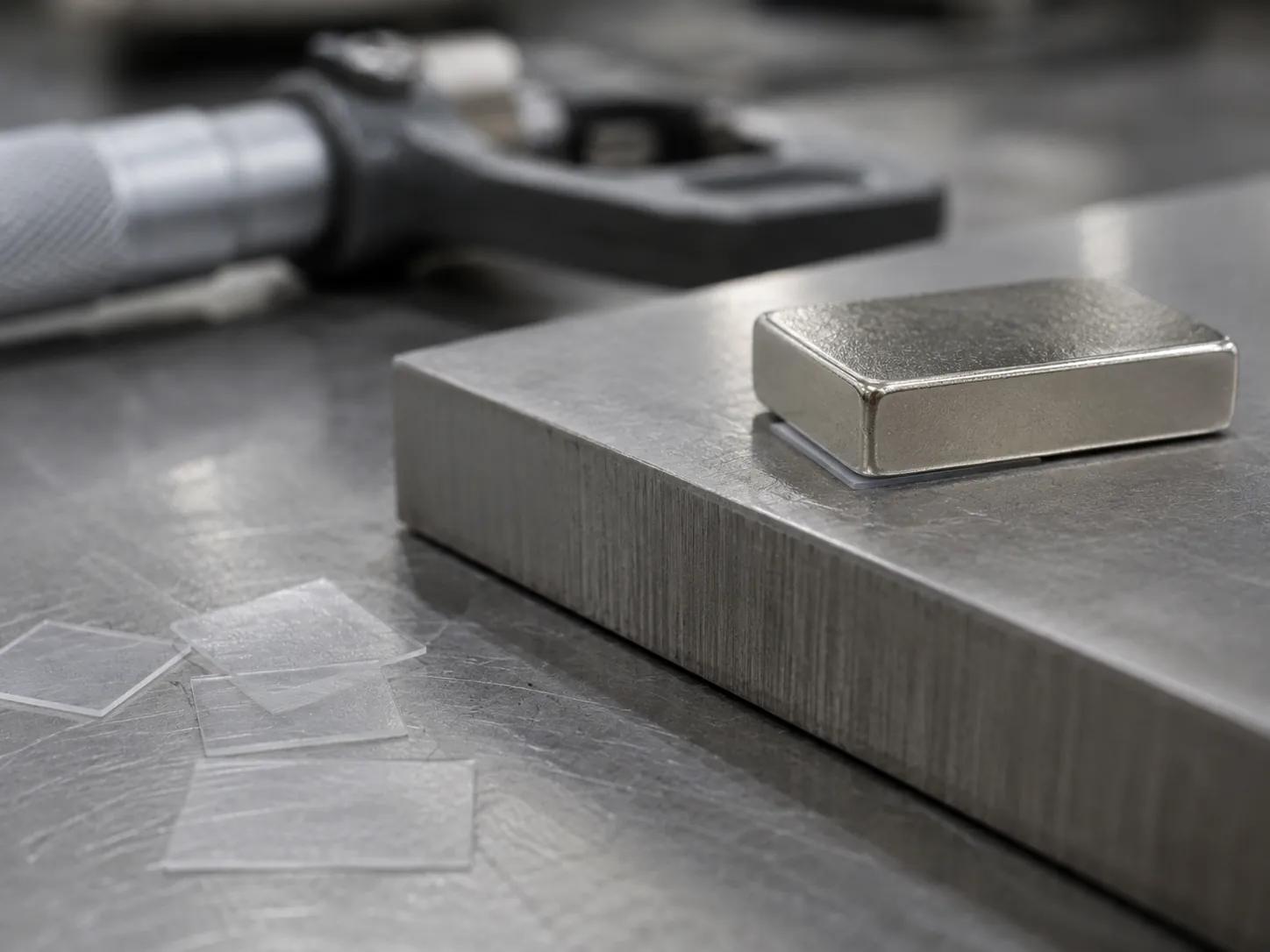
N45 e N52: qual è la differenza?
N45 typically falls in the 43–46 MGOe range, while N52 normally sits around 49–52 MGOe. With the same size and shape, N52 usually performs better. But a larger N45 magnet can still beat a smaller N52 if the added volume improves the magnetic circuit.
This is why grade comparison only makes sense when geometry and test condition stay consistent. For engineering decisions, the practical question is not “Which number is bigger?” but “Which combination of grade, size, and working condition gives the target result at the best cost?”
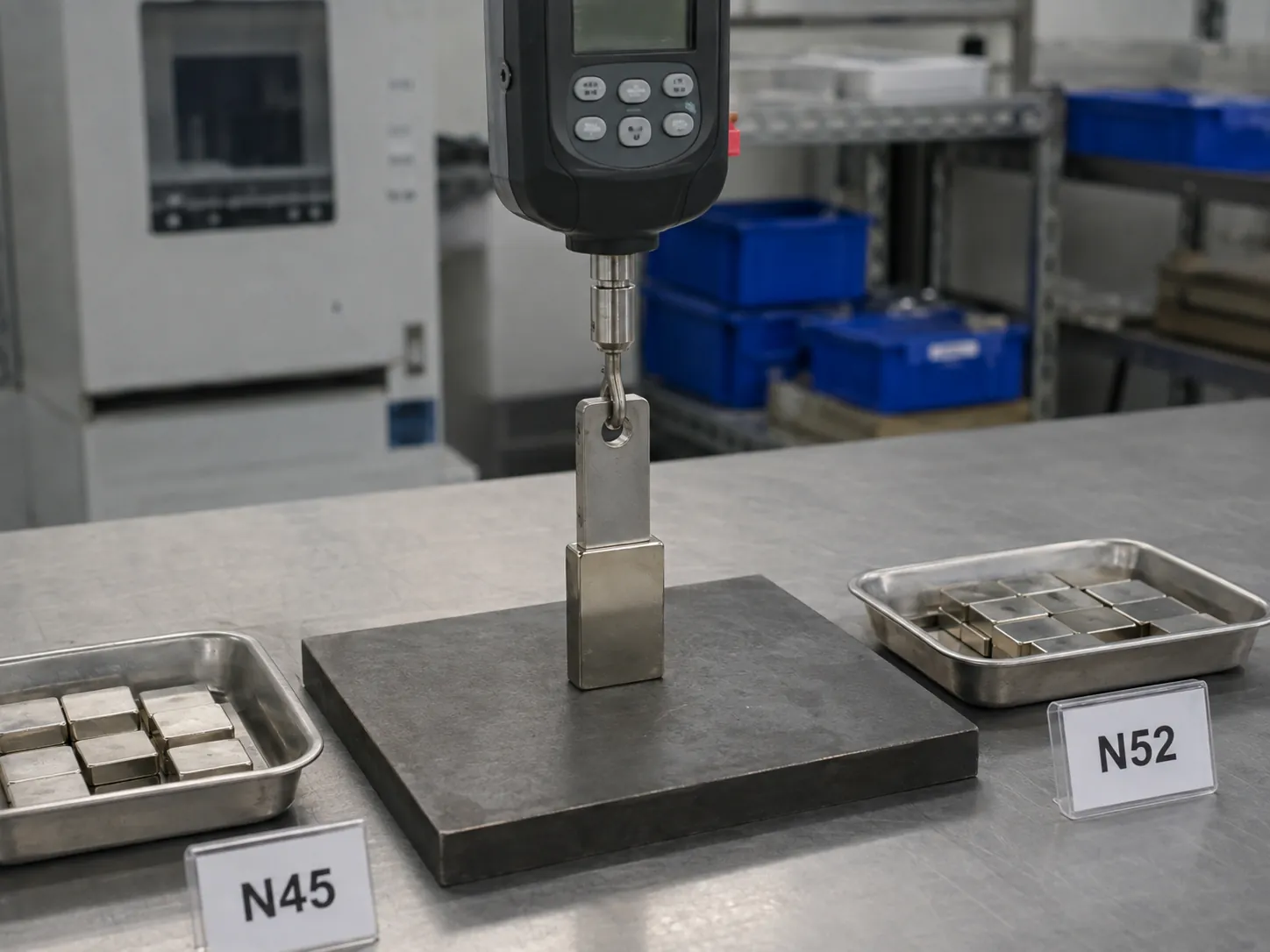
Magneti N50 vs N52
N50 and N52 are both high-performance grades. In real procurement, N50 can be a smart option when availability or pricing is better, especially if the design still meets the target with a small geometry adjustment. If the space is fixed and you need the strongest material commonly available, N52 remains the safer choice.
In che modo i gradi dei magneti influiscono sulla forza del magnete?
Grade matters because it reflects the material strength of the NdFeB itself. However, it does non automatically equal real pull force in your application. Real performance depends on:
- Dimensioni e forma del magnete
- Traferro
- Coating or spacer thickness
- Steel thickness and flatness
- Contact area
- Allineamento
- Direzione di distacco
Under ideal pull-test conditions, the jump between grades may look impressive. In actual use, the performance gap often shrinks once rough surfaces, paint, thin steel, or stand-off distance are introduced.
Forza di distacco e forza di taglio (perché il magnete scivola)
Forza di distacco
This is the force needed to pull the magnet vertically away from the steel surface. It is the most common test method and usually gives the highest number.
Forza di taglio
This is the force needed to slide the magnet laterally along the steel surface. It is usually much lower because friction and surface condition dominate the result.
For real assemblies, a magnet may feel strong in vertical pull but slide too easily in lateral loading. If the application sees vibration or side load, you often need more contact area, more friction, or a mechanical stop.
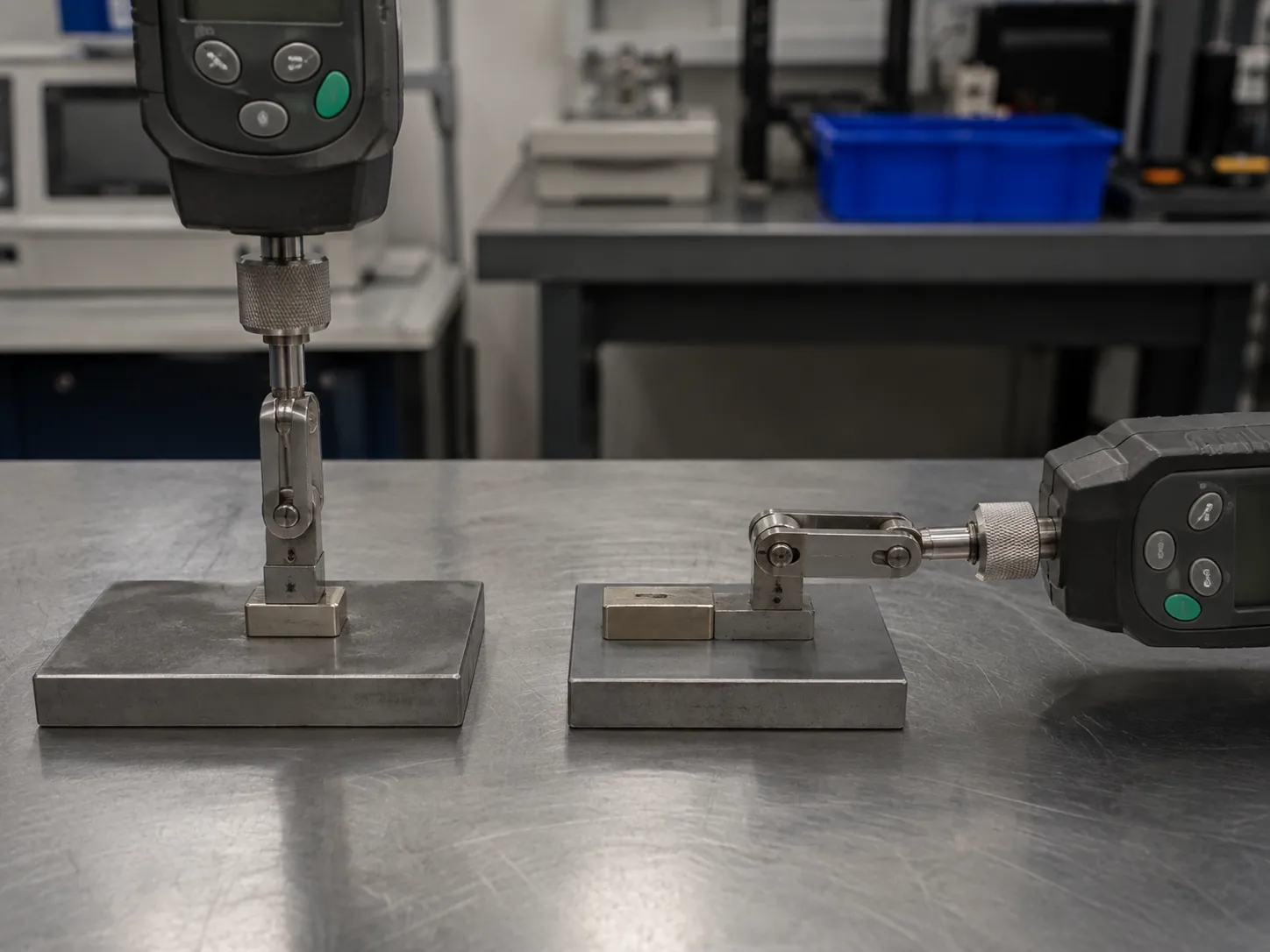
Configurazione tipica per la prova della forza di distacco (utilizzata dalla maggior parte dei fornitori)
When you compare pull-force data from different suppliers, confirm that the test method is actually comparable. These details change the result:
- Steel plate thickness: a thick steel plate typically gives a stronger result than thin sheet metal.
- Steel surface condition: clean and flat performs better than rough, painted, or coated surfaces.
- Air gap: even a 0.2 mm gap can reduce force noticeably.
- Contact area and alignment: partial contact or misalignment lowers the result.
- Pull direction: vertical pull and lateral shear should never be mixed into one number.
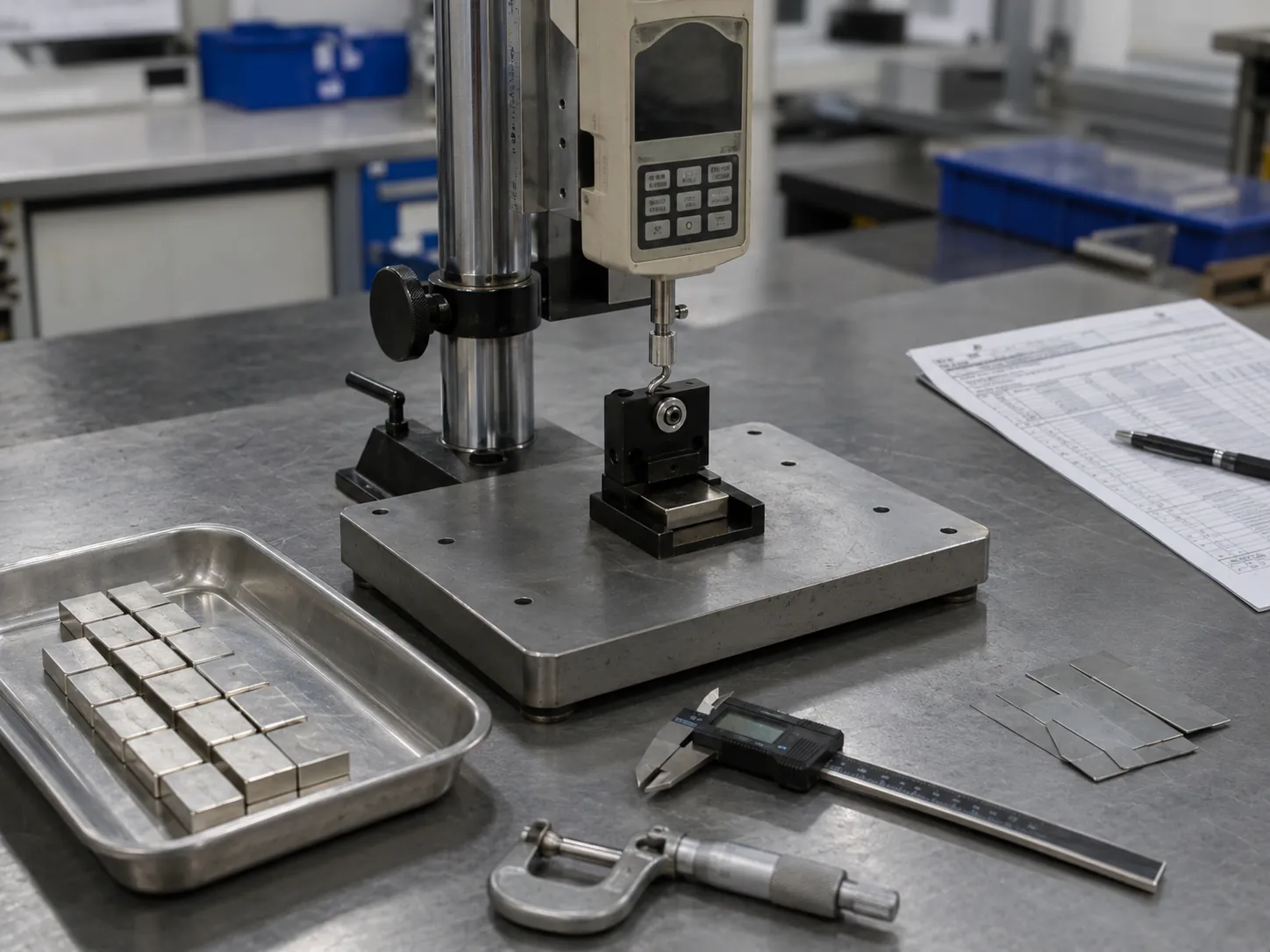
What to Confirm from Your Supplier
- Steel plate thickness and material
- Surface condition and coating status
- Air gap or spacer condition
- Direzione di distacco
- Test fixture or holder design
- Sample geometry and coating
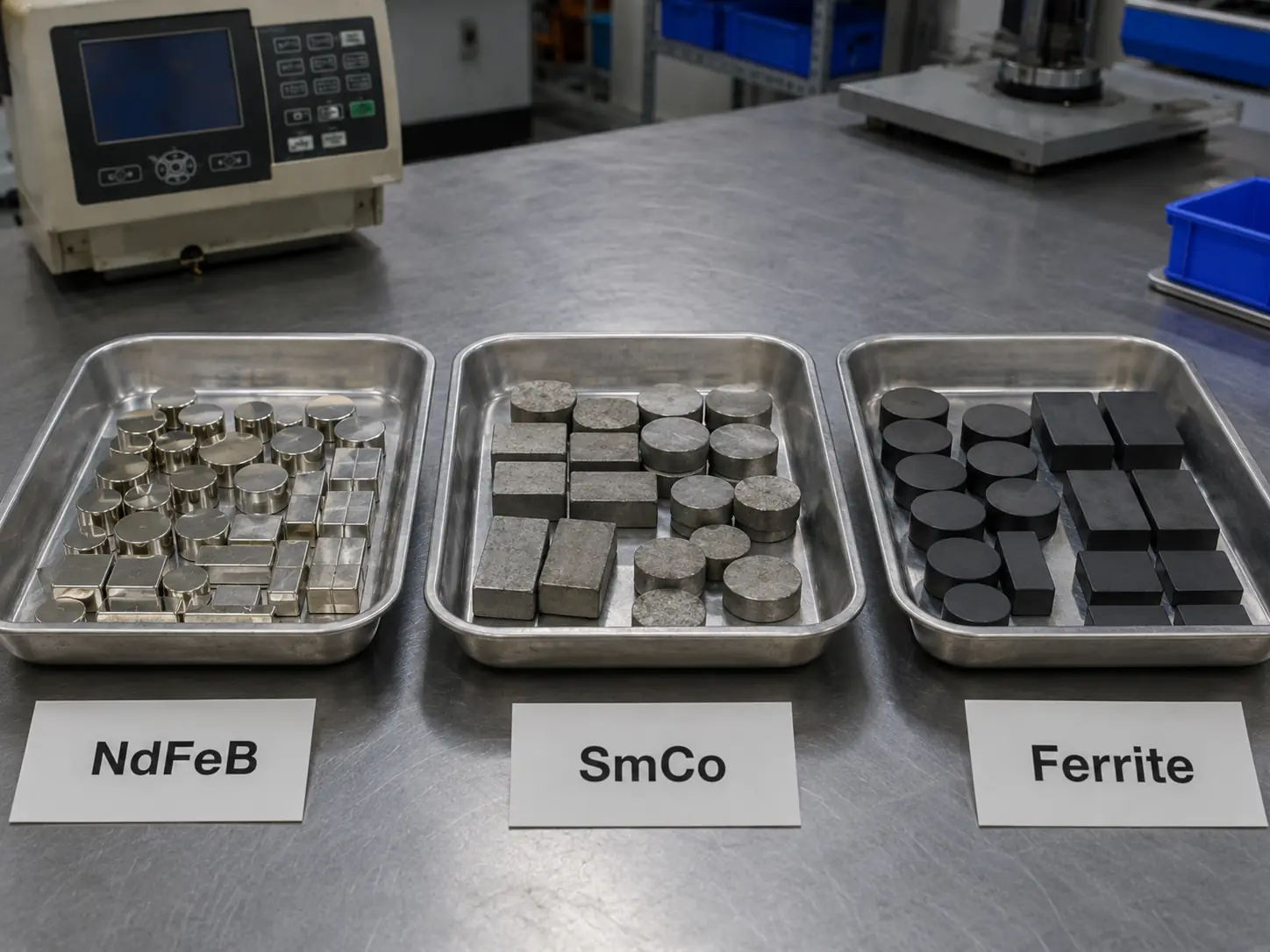
Do All Magnets Use the Same Grade System?
No. Ferrite, SmCo, and NdFeB do not share one universal grade system. The naming conventions and performance emphasis differ between material families. In practical sourcing, start from your application requirements first, then choose the correct magnet family and grade.
NdFeB vs SmCo vs Ferrite: Which Magnet Family Should You Choose?
| Materiale | Intensità | Resistenza alla temperatura | Resistenza alla corrosione | Costo | Impiego più adatto |
|---|---|---|---|---|---|
| NdFeB | Alta | Moderato | Low without coating | Moderato | Compact designs that need strong force. |
| SmCo | Alta | Molto elevata | Alta | Alta | High-temperature or demanding industrial environments. |
| Ferrite | Moderato | Moderate to high | Buona | Bassa | Cost-sensitive applications where ultimate force is not required. |
Extra Letters on Neodymium Magnet Grades
Suffix letters such as M, H, SH, UH, EH, e AH mainly indicate higher resistance to heat-related demagnetization.
| Suffisso | Temperatura operativa massima tipica | Quando utilizzarlo |
|---|---|---|
| M | ≤ 100 °C | Mild heat with a small safety margin. |
| H | ≤ 120 °C | Warm environments near motors or appliances. |
| SH | ≤ 150 °C | Higher heat in enclosed operating conditions. |
| UH | ≤ 180 °C | High-heat industrial applications. |
| EH | ≤ 200 °C | Very high heat where stronger demag resistance is required. |
| AH | ≤ 230 °C | Extreme heat. Confirm by datasheet and application testing. |
If your magnet sits near a heat source and the real peak temperature is uncertain, do not gamble. Move up at least one temperature class and validate with samples.

FAQ
What does N52 mean on a magnet?
N52 indicates a high-grade NdFeB material whose maximum energy product typically falls in the 49–52 MGOe range. It is one of the highest commonly available neodymium grades, but actual performance still depends on geometry and testing conditions.
Is N42SH stronger than N52?
No. N42SH does not mean stronger than N52. The N42 part is the strength band, while SH refers to the temperature grade. N52 normally has stronger base material, while SH indicates better heat resistance.
Perché il magnete sembra più debole dopo l’installazione?
The most common reasons are air gap, paint, adhesive, rough contact surfaces, thin steel, poor alignment, or excessive temperature. The issue is often the installation condition, not the grade alone.
Quale condizione di prova della forza di distacco devo confrontare?
Compare data only when the steel plate thickness, surface condition, pull direction, air gap, and magnet geometry are clearly defined. Otherwise, the numbers are not directly comparable.
Need Help Choosing the Right Magnet Grade?
OSENC helps buyers match grade, geometry, coating, magnetization direction, and testing method to the actual working condition. If you send us your drawing, target force, operating temperature, and contact condition, we can recommend a more reliable solution faster.
- Custom NdFeB magnets and magnetic assemblies
- Support for grade selection and sample validation
- Application-focused recommendations instead of generic catalog advice