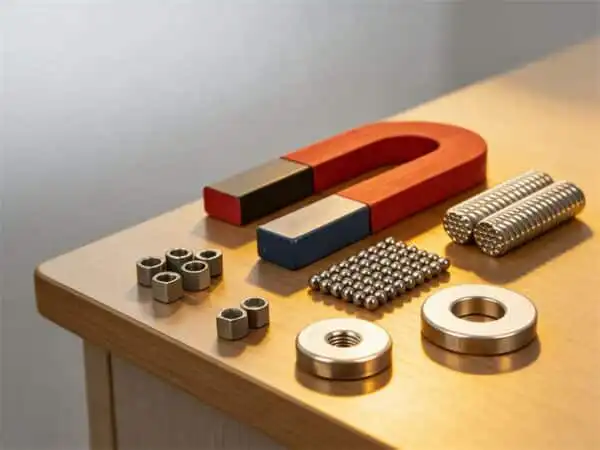
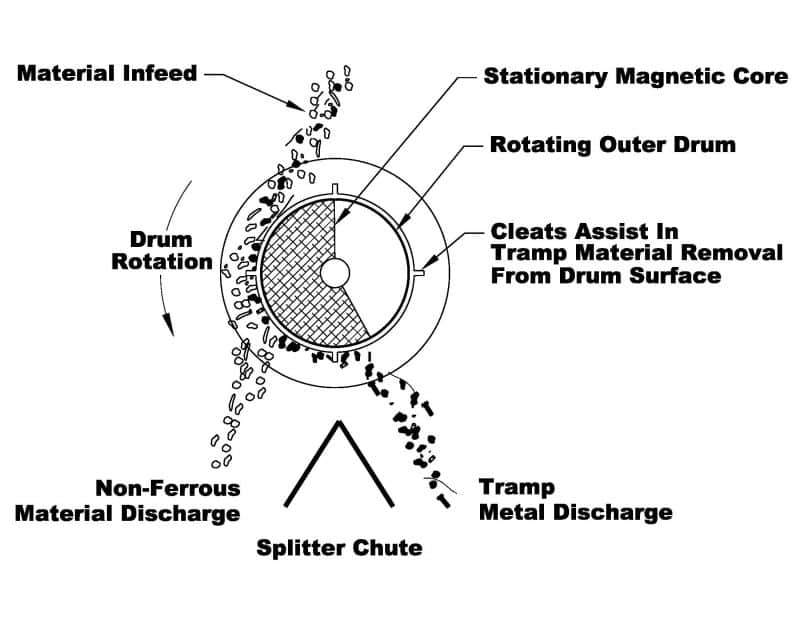
A magnetic drum separator uses a stationary magnetic assembly inside a rotating shell. As feed passes through the magnetic field, responsive particles are attracted to the shell and carried to a separate discharge. The rest of the feed follows a different path. When the shell moves beyond the active magnetic sector, the captured material can release into its own outlet.
What rotates inside a magnetic drum separator?
The outer shell rotates around the fixed magnetic assembly. The assembly creates a magnetic field over part of the drum circumference, so the field can capture particles in one sector and the rotating shell can carry them to another. A splitter, chute, or tank discharge separates the streams, depending on the machine layout.
How the separation happens
- Present the feed. A chute, conveyor, or tank guides material through the separation zone. Feed distribution matters because a deep or uneven layer can keep some particles farther from the shell.
- Capture magnetic material. Iron and other sufficiently magnetic particles are drawn toward the shell. Weakly magnetic material may require a different separator design or additional separation stages.
- Carry the captured particles. The shell transports the captured fraction while the rest of the feed follows its own route under gravity or with the slurry flow.
- Release into a separate outlet. As the shell leaves the active field, held particles detach. A correctly positioned splitter or discharge chute keeps the two streams apart.
How dry and wet drums differ
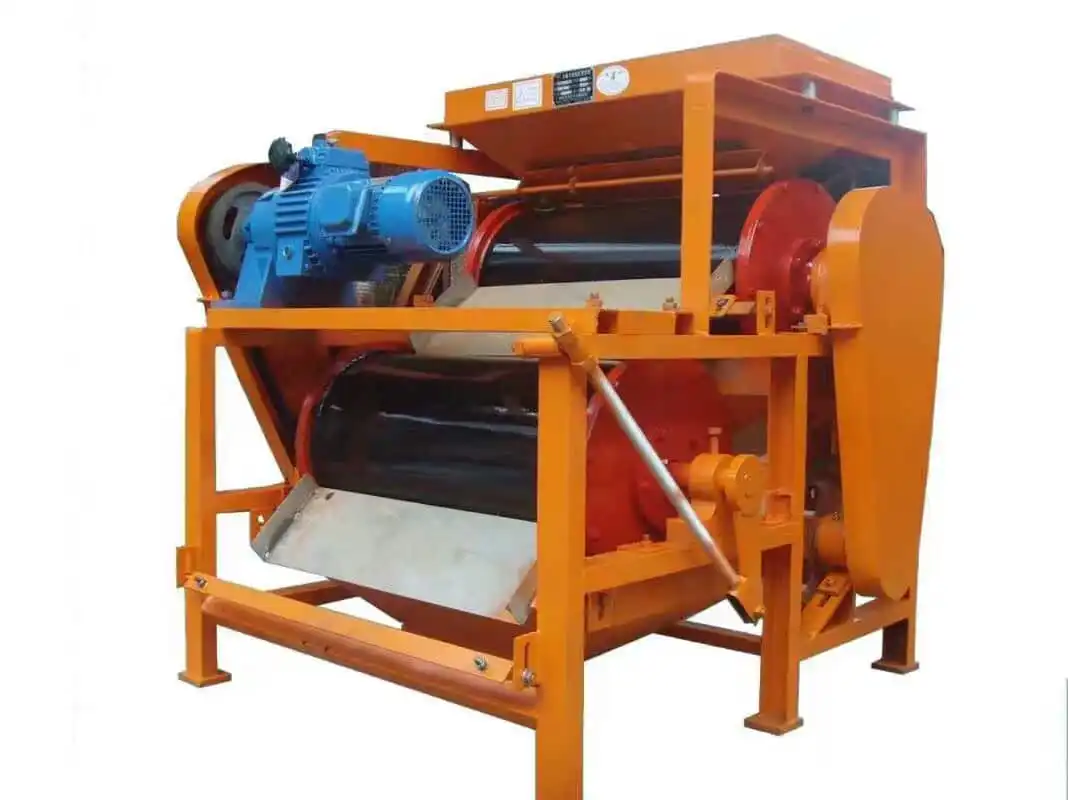
Dry drums for bulk solids
A dry drum processes material such as granules, flakes, or other free-flowing bulk solids. The feed is presented near the shell, captured material follows the shell through the magnetic sector, and the other fraction falls toward a separate outlet. Check how bed depth, particle size, feed rate, and moisture affect how consistently particles reach the magnetic zone.
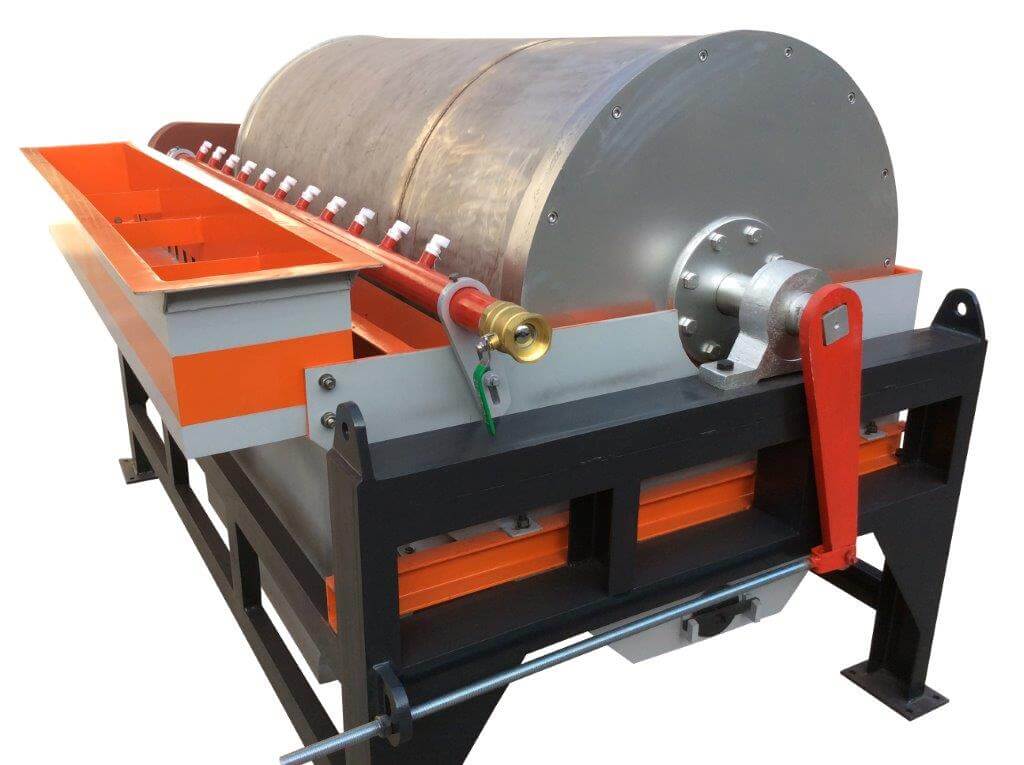
Wet drums for slurry
A wet drum works with a tank that guides slurry past the magnetic sector. Responsive solids attach to the shell and are carried out of the slurry toward the concentrate discharge. Other solids leave with the slurry through the tailings or overflow route, depending on the tank design. Check solids concentration, slurry flow, particle size, and the target mineral’s magnetic response.
What determines separation performance?
Start with the material you want to remove or recover. Its magnetic response, particle size, distance from the drum, and exposure to the field all affect capture. Drum speed and discharge geometry also affect where the two streams land. A surface field reading alone cannot tell you how much material the drum will recover from a production feed.
To evaluate a drum, use representative feed at the intended operating rate. For contaminant removal, measure how much of the target material remains in the cleaned stream. For mineral or media recovery, measure both the share of the target recovered and its concentration in the recovered stream.
Common questions
Does the drum remove every kind of metal?
A conventional magnetic drum can capture materials that respond sufficiently to its field, including many iron and steel particles. Nonmagnetic metals such as aluminum and copper generally require a different separation method.
What information is needed to compare drum configurations?
Start with the feed material, target contaminant or mineral, particle-size range, throughput, and whether the feed is dry or in slurry. Use those inputs to compare the layouts on the magnetic drum separator product page.
Technical sources