Stop visible scratches and tarnish on exposed sliding magnets. OSENC custom Ni-Cu-Ni-Cr chrome coated neodymium magnets add a hard metallic surface with ±0.05 mm finished tolerances and 1-piece sampling.
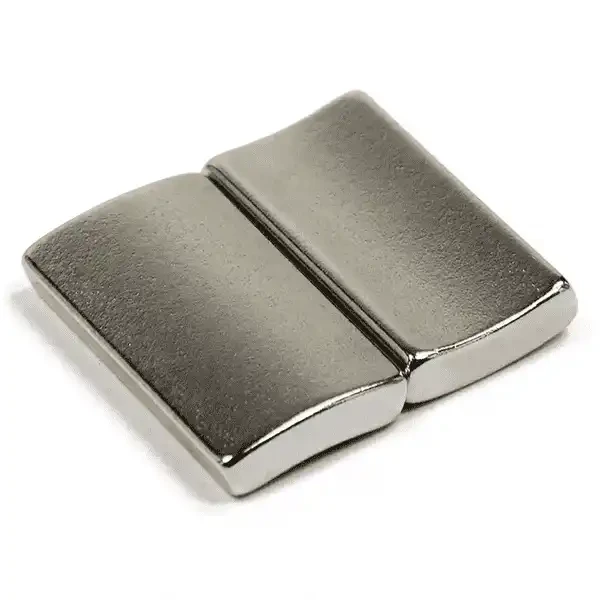
Choose chrome for exposed, sliding indoor magnets; switch for saltwater, static budgets, or gold finishes.
| Twój cel | Kluczowy wybór | Standardowe zastosowanie | Kiedy wybrać wyższy wariant lub zmienić rozwiązanie | Kontrola przed zamówieniem |
|---|---|---|---|---|
| Stop scratches on exposed sliding magnets. | Chrome or standard Ni-Cu-Ni? | Bright Ni-Cu-Ni-Cr (~15 µm) handles frequent touching, sliding, and dry indoor wear. | Przejdź na Ni-Cu-Ni for static hidden parts, or PVD TiN for gold ceramic wear. | Approve a Bright or Black Chrome finish sample before production. |
| Hit ±0.05 mm fits without assembly jamming. | Standard ±0.10 mm or precision ±0.05 mm? | Standard ±0.10 mm after plating fits clearances above 0.15 mm cleanly. | Specify ±0.05 mm precision grinding when housing clearance stays tight. | Mark “after plating” dimensions and 0.2–0.3 mm chamfers on drawings. |
| Prevent rust in wet or coastal assemblies. | Chrome plating or sealed polymer barrier? | Ni-Cu-Ni-Cr suits dry indoor air and routine handling reliably. | Przejdź na Epoksyd lub plastic overmolding for saltwater, immersion, or harsh chemicals. | Confirm humidity, chemical contact, and required ASTM B117 test hours. |
| Pass EU RoHS, REACH, and micro-flux targets. | Trivalent Cr³⁺ or non-magnetic conformal coat? | Trivalent Cr³⁺ Ni-Cu-Ni-Cr meets EU RoHS Cr⁶⁺ bans on magnets ≥ 2 mm. | Przejdź na Parylen C for < 1 mm micro-magnets or medical pinhole-free sealing. | Request finished-part RoHS/REACH declarations and confirm skin-contact nickel limits. |
OSENC controls every chrome plated neodymium magnet to finished plated dimensions across N35–N52, H, and SH grades.
| Specyfikacja | Możliwości OSENC | Uwarunkowania techniczne |
|---|---|---|
| Plating Stack & Surface | ||
| Struktura powłoki | NdFeB + Ni + Cu + Ni + Cr | Ni-Cu-Ni seals the core; Cr gives wear and luster. |
| Typical Total Thickness | ~15 µm (12–20 µm range) | Sub-layer microns are controlled in project process records. |
| Chromium Hardness Ref. | 800–1,000+ HV (bulk Cr ref.) | Functional magnet plating, not 50–500 µm shaft hard chrome. |
| Surface Finishes | Bright Chrome, Black Chrome | Final gloss matches the approved project limit sample. |
| Maksymalna temperatura pracy | N 80 °C · M 100 °C · H 120 °C · SH 150 °C | Thermal limit follows NdFeB grade, not chrome plating. |
| Geometry & Drawing Interfaces | ||
| Shapes & Size Range | Disc, Block, Ring, Cylinder, Arc, Countersunk (0.2–200 mm) | Holes, slots, and chamfers are machined before plating. |
| Tolerancje wykonania | ±0.10 mm std / ±0.05 mm precision | Measured after plating; tighter specs reviewed from drawings. |
| Edge Chamfer & Build | 0.2–0.3 mm chamfer; OD +2× / ID −2× build | Reduces edge buildup and protects corners from chipping. |
| Magnesowanie | Osiowe, średnicowe, przez grubość, wzdłuż długości, wzdłuż szerokości, wielobiegunowe | Orientation is locked before pressing and sintering. |
| Common Quote Sizes & Zero-Gap Steel Pull Anchors | ||
| Disc D10 × 3 mm | N35 ~1.3–1.6 kg · N42 ~1.6–1.8 kg · N52 ~1.9–2.1 kg | Direct vertical pull on thick mild steel, zero gap. |
| Disc D12 × 3 mm | N35 ~1.8–2.0 kg · N42 ~2.3–2.5 kg · N52 ~2.8–3.1 kg | Direct vertical pull on thick mild steel, zero gap. |
| Disc D20 × 5 mm | N35 ~5.4–5.8 kg · N42 ~6.5–7.0 kg · N52 ~8.0–8.6 kg | Also quoted in D5×2, D15×5, D25×5, D30×5 mm. |
| Custom Blocks | 10×5×2, 15×10×3, 20×10×5, 30×10×5 mm | Quoted directly from drawings and target pull force. |
| Quality, Compliance & Orders | ||
| Akceptacja powierzchni | 0 blister / 0 peeling / 0 exposed NdFeB | Functional faces allow zero deep scratches or edge chips. |
| Warunki badania w mgle solnej | 5% NaCl at 35 °C (ASTM B117) | Exposure hours follow order specs, not blanket promises. |
| Compliance & Delivery | Trivalent Cr³⁺ RoHS/REACH; 1-pc MOQ; ~25-day lead | Finished-part declarations verify 0% Cr⁶⁺ and SVHC < 0.1%. |
Electroplating adds 2× coating thickness to outer surfaces and shrinks inner bores by 2×. On a D15 × 5 mm disc, ~15 µm per face adds +0.030 mm to OD and thickness.
That +0.030 mm buildup consumes 30% of a ±0.05 mm window before grinding tolerance starts. Add these four callouts to every RFQ drawing:

Chrome sits between low-cost Ni-Cu-Ni and gold PVD TiN for silver wear resistance. Standard nickel costs least for sealed indoor parts, while PVD TiN serves extreme gold ceramic wear.
| Comparison Metric | Chrome (Ni-Cu-Ni-Cr) | Standard Nickel (Ni-Cu-Ni) | PVD TiN (over Ni-Cu-Ni) |
|---|---|---|---|
| Process & Stack | Electroplated Ni-Cu-Ni + Cr | Electroplated Ni-Cu-Ni | Vacuum PVD TiN (2–4 µm) + Ni base |
| Typowa grubość | ~15 µm (12–20 µm range) | 15–21 µm standard | 2–4 µm direct / 14–28 µm duplex |
| Surface Hardness | 800–1,000+ HV (bulk Cr ref.) | 400–600 HV | 2,000–3,000 HV ceramic |
| Visual Finish | Bright mirror-like silver / Black Chrome | Jasny lub półjasny srebrny | Warm 18K metallic gold |
| Wear & Corrosion | High rubbing life; micro-cracks limit marine use | Dry indoor barrier; softer under sliding | Extreme wear; line-of-sight rack marks |
| Cost & Best Fit | Moderate premium; exposed latches, balls, displays | Lowest cost (1.0×); hidden indoor parts | Highest batch cost; gold high-wear parts |
Need help comparing chrome, nickel, or PVD TiN coated magnets for your tolerance stack?
Verify finished dimensions, plating integrity, and polarity before chrome plated magnets enter assembly lines.
Fast receiving checks catch transit scratches and polarity errors before parts get glued or press-fitted.

Most field issues stem from edge impact, missing plating allowances, or unprepared smooth chrome faces.

OSENC manufactures custom chrome coated magnets in Dongguan with 1-piece sampling, ~25-day production, and IATA export packing.

Direct engineering answers on chromium magnetism, plating stackups, tight tolerances, European compliance, and quoting inputs.
No. Pure chromium is non-ferromagnetic, and the thin chrome topcoat barely affects magnet strength.
Bare sintered NdFeB corrodes rapidly, so a Ni-Cu-Ni underlayer seals the core beneath chrome.
Plating adds roughly 0.030 mm to outer dimensions and shrinks inner bores by 0.030 mm.
Yes, when you specify trivalent Cr³⁺ chrome plating on your quotation and purchase order.
Send six core specifications so our engineers lock tolerances, plating stack, and inspection terms upfront.
Share your finished dimensions, tolerance, grade, and finish target for a fast engineering review. Ben and the OSENC engineering team convert your inputs into a controlled production specification for 1-piece sampling and volume runs.
Submit specifications through our web contact form, and send 2D/3D CAD files via email reply or WhatsApp.