Techniczny poradnik porównawczy
Magnes trwały czy elektromagnes: które źródło pola magnetycznego wybrać do danej konstrukcji?
Jeśli porównuje się magnes trwały z elektromagnesem, podstawowa różnica jest następująca: magnes trwały wytwarza pole magnetyczne bez ciągłego zasilania elektrycznego, natomiast konwencjonalny elektromagnes wytwarza je, gdy przez cewkę płynie prąd. W praktyce projektowej należy przede wszystkim ustalić, czy potrzebne jest stałe pole magnetyczne, pole załączane elektrycznie, regulowana siła czy określony stan podtrzymania po wyłączeniu zasilania.
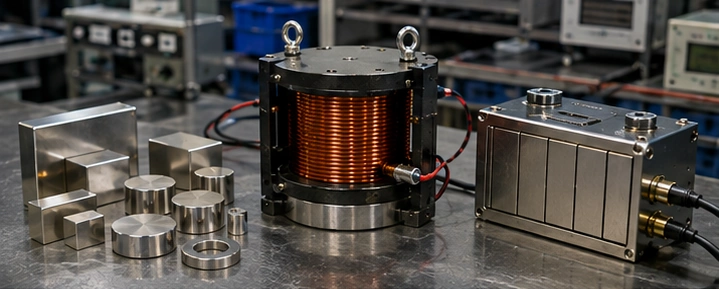
Magnes trwały a elektromagnes — szybkie porównanie
W projekcie inżynierskim należy porównać trzy rozwiązania: magnes trwały, konwencjonalny elektromagnes i magnes elektropermanentny. Każde z nich może być właściwe, jeśli odpowiada wymaganiom dotyczącym odległości roboczej, sterowania, warunków zasilania, materiału docelowego i stanu bezpiecznego.
| Czynnik | Magnes trwały | Konwencjonalny elektromagnes | Magnes elektropermanentny |
|---|---|---|---|
| Zasilanie wymagane do utrzymania siły magnetycznej | Brak zasilania ciągłego | Zwykle wymaga zasilania ciągłego | Zasilanie jest zwykle wykorzystywane głównie do przełączania lub zwalniania, zależnie od konstrukcji |
| Sterowanie polem magnetycznym | W normalnym użytkowaniu brak możliwości regulacji elektrycznej | Możliwość przełączania i często regulacji natężeniem prądu | Możliwość przełączania, ale sposób sterowania zależy od konstrukcji |
| Zachowanie po wyłączeniu zasilania | Utrzymuje pole magnetyczne | Po odłączeniu zasilania zwykle traci siłę trzymania | Po przełączeniu może zachować siłę trzymania, zależnie od konstrukcji |
| Ryzyko nagrzewania | Brak nagrzewania cewki | Należy sprawdzić nagrzewanie cewki i cykl pracy | W wielu konstrukcjach podczas podtrzymywania wydziela się mniej ciepła, jednak układ przełączający nadal wymaga analizy |
| Najlepsze zastosowanie | Stałe przytrzymywanie, detekcja, kompaktowe zespoły, zastosowania niewymagające zasilania | Chwytanie i zwalnianie w trybie włącz/wyłącz, sortowanie, sterowanie automatyką | Podtrzymywanie przy niższym ciągłym poborze mocy lub kontrolowane zwalnianie |
| Główne ryzyko | Niewłaściwa klasa, kształt, powłoka, szczelina powietrzna lub kierunek magnesowania | Przegrzanie, niewystarczająca moc, niebezpieczne zachowanie przy zaniku zasilania | Błędne zrozumienie logiki przełączania lub stanu zwolnienia |
Czym jest magnes trwały?
Magnes trwały to materiał magnetyczny, który może utrzymywać pole magnetyczne bez ciągłego zasilania elektrycznego. Do powszechnie stosowanych materiałów na magnesy trwałe należą neodym, ferryt, SmCo i Alnico.
W typowych projektach B2B OSENC najczęściej koncentruje się na magnesy neodymowe wykonywane na zamówienie oraz zespołach magnetycznych. Mogą to być mikromagnesy, duże magnesy, magnesy wysokich klas, magnesy o nieregularnych kształtach, wirniki silników, sprzęgła magnetyczne, układy Halbacha oraz inne projektowane zespoły.
Magnes trwały jest zwykle lepszym punktem wyjścia, gdy konstrukcja wymaga stabilnej siły magnetycznej na niewielkiej przestrzeni i nie wymaga przełączania elektrycznego.

Czym jest elektromagnes?
Konwencjonalny elektromagnes wytwarza pole magnetyczne dzięki przepływowi prądu elektrycznego przez cewkę. W wielu konstrukcjach siłę magnetyczną można włączać i wyłączać, sterując przepływem prądu.
Dzięki temu elektromagnes sprawdza się w zastosowaniach wymagających zwalniania, sterowania czasowego, sortowania, podnoszenia, chwytania lub realizacji funkcji automatyki.
Trzeba jednak uwzględnić cewkę, zasilanie i nagrzewanie. Istotny jest cykl pracy, ponieważ ciągłe zasilanie może powodować wzrost temperatury i spadek wydajności, jeśli konstrukcja nie została prawidłowo zwymiarowana.

Czym jest magnes elektropermanentny?
Magnes elektropermanentny różni się od konwencjonalnego elektromagnesu. W wielu konstrukcjach łączy elementy z magnesów trwałych z elektrycznym układem przełączającym.
Oznacza to, że energia elektryczna może służyć głównie do przełączania stanu magnetycznego lub zwalniania detalu, zamiast do ciągłego podtrzymywania siły trzymania. Dokładny sposób działania zależy od konstrukcji produktu.

Czym różni się pole magnetyczne?
Magnes trwały wytwarza pole magnetyczne dzięki właściwościom materiału i jego namagnesowaniu. Jego użyteczne pole zależy od klasy magnesu, wymiarów, kształtu, kierunku magnesowania, układu biegunów, grubości powłoki, szczeliny roboczej oraz otaczającego obwodu magnetycznego.
Elektromagnes wytwarza pole magnetyczne dzięki przepływowi prądu. Pole to zależy od konstrukcji cewki, natężenia prądu, liczby zwojów, materiału rdzenia, powierzchni biegunów, nagrzewania oraz dostępnego źródła zasilania.
Dlatego porównanie pola magnetycznego nie powinno opierać się wyłącznie na “typie magnesu”. Mały magnes trwały znajdujący się w bezpośrednim kontakcie może działać skuteczniej niż niewłaściwie dobrany elektromagnes. Dobrze zaprojektowany elektromagnes może być lepszym rozwiązaniem, gdy pole trzeba włączać, regulować lub wyłączać w celu zwolnienia detalu.

Kiedy wybrać magnes trwały?
Magnes trwały należy wybrać, gdy pole magnetyczne ma być stale dostępne bez zasilania.
Jest to powszechne rozwiązanie stosowane w czujnikach, enkoderach, silnikach, sprzęgłach magnetycznych, uchwytach mocujących, urządzeniach kompaktowych, zespołach wirników oraz wielu niestandardowych zespołach magnetycznych.
| Wymaganie | Dlaczego magnes trwały może być odpowiednim rozwiązaniem |
|---|---|
| Brak możliwości ciągłego zasilania | Magnes działa bez zasilania elektrycznego. |
| Kompaktowa konstrukcja | NdFeB może zapewnić wysokie parametry magnetyczne przy ograniczonej przestrzeni. |
| Wymagane stabilne pole magnetyczne | Przydatne w wykrywaniu, pozycjonowaniu i przytrzymywaniu. |
| Mniejsze ryzyko nagrzewania | Podczas normalnego przytrzymywania cewka nie generuje ciepła. |
| Prosty montaż | Mniejsza liczba elementów elektrycznych może ograniczyć złożoność systemu. |
Jeśli konstrukcja wymaga częstego zwalniania, regulacji siły, zdalnego przełączania lub kontrolowanego stanu rozmagnesowania, lepsze może być inne rozwiązanie.
Kiedy elektromagnes jest lepszym wyborem?
Elektromagnes jest często lepszym rozwiązaniem, gdy pole magnetyczne musi być sterowane przez maszynę, układ elektryczny lub operatora.
Może być przydatny w systemach pick-and-place, separatorach, zamkach, zautomatyzowanych układach przytrzymywania, mechanizmach zwalniających, przyrządach testowych oraz w zastosowaniach, w których pole musi zmieniać się podczas pracy.
| Wymaganie | Dlaczego elektromagnes może być odpowiednim rozwiązaniem |
|---|---|
| Wymagane jest sterowanie włączaniem i wyłączaniem | Prąd może sterować aktywacją pola magnetycznego. |
| Przydatna jest regulacja siły | Natężenie prądu można regulować w granicach założeń projektowych. |
| Zwalnianie jest częścią procesu | W wielu konstrukcjach odłączenie zasilania układu umożliwia zwolnienie. |
| Istotna jest synchronizacja automatyki | Działanie magnetyczne można powiązać z czujnikami i układem sterowania. |
| Wymagane jest sterowanie biegunowością | W odpowiednich konstrukcjach kierunek prądu w cewce może wpływać na kierunek pola. |
Należy uwzględnić napięcie, natężenie prądu, stabilność zasilania, temperaturę cewki, cykl pracy, przestrzeń montażową oraz stan układu w razie awarii.
Kiedy warto zastosować magnes elektropermanentny?
Magnes elektropermanentny może być odpowiednim rozwiązaniem, gdy projekt wymaga przytrzymywania magnetycznego bez ciągłego zasilania podczas podtrzymywania.
Może to być przydatne w niektórych zastosowaniach związanych z mocowaniem przedmiotów obrabianych, zaciskaniem, automatyzacją lub manipulowaniem. Może być również przydatne tam, gdzie istotne jest zachowanie po zaniku zasilania.
| Pytanie | Dlaczego ma to znaczenie |
|---|---|
| Czy układ jest przełączany impulsowo, wymaga zasilania do utrzymania, czy zasilania do zwolnienia? | Określa logikę sterowania. |
| Co się dzieje po zaniku zasilania? | Kluczowe dla bezpieczeństwa i projektowania procesu. |
| W jaki sposób sterowane jest zwolnienie? | Wpływa na czasy działania automatyki i planowanie rozwiązań awaryjnych. |
| Jaki materiał jest wymagany dla elementu przyciąganego? | Siła magnetyczna zależy od obwodu magnetycznego. |
| Jaka szczelina powietrzna jest dopuszczalna? | Nawet niewielkie szczeliny mogą zmniejszyć użyteczną siłę trzymania. |
Bez tych informacji nabywca może wybrać niewłaściwy system magnetyczny, nawet jeśli nominalna wartość siły wydaje się atrakcyjna.
Jakie czynniki techniczne decydują o wyborze?
W praktyce wybór zależy od całego układu magnetycznego, a nie tylko od nazwy magnesu.
| Czynnik techniczny | Dlaczego ma to znaczenie | Co należy ustalić |
|---|---|---|
| Wymagana funkcja | Trzymanie, wykrywanie, przenoszenie momentu obrotowego, zwalnianie i chwytanie wymagają różnych konstrukcji. | Do czego właściwie ma służyć magnes? |
| Szczelina robocza | Siła magnetyczna silnie zmienia się wraz z odległością i obecnością niemagnetycznych szczelin. | Szczelina powietrzna, powłoka, klej, osłona, farba lub grubość podkładki dystansowej. |
| Materiał współpracujący | Gatunek stali, jej grubość i stan powierzchni wpływają na siłę. | Materiał, grubość, płaskość, powłoka, rdza lub farba. |
| Warunki zasilania | Elektromagnesy wymagają odpowiedniego zasilania i sterowania. | Napięcie, natężenie prądu, cykl pracy i limit temperatury. |
| Stan po zaniku zasilania | Może to decydować o bezpieczeństwie i logice działania maszyny. | Trzymanie, zwolnienie lub pozostanie w stanie załączenia po zaniku zasilania. |
| Metoda badania | Siła odrywania i odczyty pola zależą od warunków badania. | Płyta testowa, szczelina powietrzna, kierunek, przyrząd mocujący i kryterium akceptacji. |

Dlaczego sama “siła magnesu” może wprowadzać w błąd
Wielu nabywców pyta, co jest silniejsze: elektromagnes czy magnes trwały. To pytanie jest niepełne.
Przemyślany projekt magnetyczny powinien określać wymaganą siłę w rzeczywistej odległości roboczej. Powinien również określać kierunek działania siły, materiał docelowy, powierzchnię styku, cykl pracy i współczynnik bezpieczeństwa.
Na przykład magnes, który przy bezpośrednim kontakcie z grubą, czystą stalą wydaje się silny, może działać zupełnie inaczej przez osłonę z tworzywa sztucznego, pomalowaną powierzchnię, warstwę kleju lub na elemencie o zakrzywionej powierzchni.
Dlatego OSENC zwykle prosi o rysunki, próbki lub warunki aplikacji przed rekomendacją magnesu lub zespołu magnetycznego.
Czy zespół magnetyczny może być lepszym rozwiązaniem niż pojedynczy magnes?
Tak. W wielu projektach B2B rzeczywistym rozwiązaniem nie jest pojedynczy magnes.
Zespół magnetyczny może obejmować magnesy, stalowe jarzma, nabiegunniki, obudowy, wały, kleje, powłoki, elementy złączne lub konstrukcję sterującą. Elementy te mogą ukierunkowywać pole magnetyczne i ułatwiać montaż produktu.
OSENC może pomóc przeanalizować magnes neodymowy wymagania, mikromagnesem ograniczenia oraz struktury magnetyczne na poziomie zespołu, gdy pojedynczy element katalogowy nie wystarcza.

Lista kontrolna zapytania ofertowego: co należy przesłać przed wyborem?
Dobre zapytanie ofertowe powinno opisywać warunki pracy, a nie tylko wymiary magnesu.
| Informacje w zapytaniu ofertowym | Dlaczego jest to pomocne |
|---|---|
| Funkcja aplikacji | Utrzymywanie, wykrywanie, generowanie momentu obrotowego, chwytanie, zaciskanie, zwalnianie lub separacja. |
| Materiał współpracujący | Rodzaj i grubość stali, stan powierzchni oraz powłoka. |
| Szczelina robocza | Szczelina powietrzna, grubość osłony, warstwa kleju lub farba. |
| Wymagana siła lub pole | Siła odrywania, siła trzymania, moment obrotowy lub docelowa wartość pola magnetycznego. |
| Warunki zasilania | Dostępne napięcie, natężenie prądu, metoda sterowania i cykl pracy. |
| Stan po zaniku zasilania | Czy układ musi utrzymywać, zwalniać lub pozostawać zablokowany. |
| Warunki środowiskowe | Wilgoć, korozja, olej, pył lub narażenie na warunki zewnętrzne. |
| Wymagania dotyczące testów | Test siły odrywania, kontrola wartości w gausach, test zespołu lub weryfikacja symulacyjna. |
Jeśli dokładna siła jest nieznana, prześlij rysunek aplikacji i opisz, co ma się wydarzyć. OSENC może pomóc ocenić, czy projekt lepiej nadaje się do zastosowania magnesu trwałego, elektromagnesu, magnesu elektrotrwałego czy niestandardowego zespołu magnetycznego.

Najczęstsze błędy przy porównywaniu magnesów trwałych i elektromagnesów
Siła zależy od materiału docelowego, powierzchni styku, szczeliny powietrznej i kierunku odrywania.
Konwencjonalny elektromagnes i układ elektropermanentny mogą zachowywać się zupełnie inaczej po utracie zasilania.
Wyższe parametry magnetyczne mogą zwiększać koszt, kruchość, wrażliwość na temperaturę lub ryzyko montażowe.
Jak OSENC wspiera dobór magnesów niestandardowych
OSENC koncentruje się na niestandardowych magnesach neodymowych i zespołach magnetycznych, w tym na mikromagnesach, dużych magnesach, magnesach o wysokich klasach materiałowych, magnesach o nieregularnych kształtach, wirnikach silników, sprzęgłach magnetycznych, układach Halbacha i innych specjalnie projektowanych produktach magnetycznych.
W przypadku projektów obejmujących elektromagnesy lub magnesy elektropermanentne OSENC może pomóc ocenić strukturę magnetyczną, wymagania aplikacji oraz to, czy odpowiedniejsze będzie rozwiązanie z magnesem trwałym, elektromagnesem czy układem hybrydowym.
W zależności od projektu OSENC może wspierać przegląd obwodu magnetycznego, analizę FEA, omówienie montażu oraz badania, takie jak kontrola wymiarów, pomiar indukcji w gausach, badanie siły odrywania, kontrola powłoki lub inne uzgodnione kontrole. Konkretne wartości produktu, parametry elektryczne, siłę trzymania i wyniki badań należy potwierdzić na podstawie rzeczywistego rysunku, warunków testu i przeglądu inżynierskiego.
W przypadku kwestii środowiskowych lub wymiarowych nabywcy mogą również zapoznać się z powłoka magnesu neodymowego opcjami i informacjami OSENC zarządzanie jakością przed wysłaniem zapytania ofertowego.
Źródła techniczne i ograniczenia
W artykule wykorzystano źródła zewnętrzne dotyczące podstawowych zasad elektromagnetyzmu, ograniczeń projektowych magnesów trwałych, uwag dotyczących szczeliny powietrznej i stanu powierzchni oraz działania magnesów elektropermanentnych. Artykuł nie publikuje specyficznych dla OSENC danych dotyczących napięcia, natężenia prądu, cyklu pracy, siły trzymania, czasu zwolnienia ani przypadków klientów, ponieważ informacje te nie zostały udostępnione do użytku publicznego.
- OpenStax / LibreTexts: Źródła pól magnetycznych
- U.S. Department of Energy: Siła elektromagnetyczna
- Wytyczne dotyczące magnesów / wytyczne MMPA dotyczące projektowania magnesów trwałych
- Industrial Magnetics: Instrukcja obsługi magnesu podnoszącego
- Magbat Europe: porównanie magnesów elektropermanentnych
Najczęściej zadawane pytania
Czy elektromagnes jest silniejszy od magnesu trwałego?
Niekoniecznie. Konwencjonalny elektromagnes można zaprojektować tak, aby wytwarzał dużą, kontrolowaną siłę, jednak użyteczna siła zależy od konstrukcji cewki, zasilania, wydzielania ciepła, powierzchni biegunów, szczeliny powietrznej i materiału elementu, na który oddziałuje. W kompaktowej konstrukcji niewymagającej zasilania magnes trwały może zapewniać większą siłę, jeśli geometria i obwód magnetyczny są odpowiednio dobrane.
Czy magnes trwały potrzebuje prądu?
Nie. Magnes trwały nie potrzebuje stałego zasilania elektrycznego, aby utrzymywać swoje pole magnetyczne.
Czy elektromagnes działa bez zasilania?
Konwencjonalny elektromagnes zwykle wymaga przepływu prądu do wytworzenia pola magnetycznego. Po odłączeniu zasilania siła trzymania zazwyczaj spada. Magnesy elektropermanentne działają inaczej i należy je oceniać na podstawie konkretnego rozwiązania przełączania.
Jaka jest główna zaleta magnesu trwałego?
Główną zaletą jest stabilna siła magnetyczna bez ciągłego zasilania. Może to ograniczyć okablowanie, wydzielanie ciepła i złożoność układu zasilania.
Jaka jest główna zaleta elektromagnesu?
Główną zaletą jest możliwość sterowania. Pole magnetyczne można często włączać i wyłączać, sterować jego działaniem w czasie lub regulować za pomocą układu elektrycznego.
Jaka jest główna zaleta magnesu elektropermanentnego?
Główną zaletą jest to, że wiele konstrukcji może po przełączeniu utrzymywać siłę magnetyczną bez ciągłego zasilania podtrzymującego. Należy jednak potwierdzić sposób przełączania, stan po zwolnieniu oraz zachowanie w przypadku zaniku zasilania.
Która opcja najlepiej sprawdzi się w automatyzacji?
Wybór zależy od tego, czy układ automatyki wymaga stałego utrzymywania, kontrolowanego zwalniania, regulowanej siły, niewielkiego wydzielania ciepła czy określonego stanu po wyłączeniu zasilania. W zależności od systemu właściwym rozwiązaniem mogą być magnesy trwałe, elektromagnesy lub magnesy elektropermanentne.
Co należy przesłać do OSENC do weryfikacji?
Prosimy przesłać rysunki techniczne oraz informacje dotyczące materiału docelowego, szczeliny roboczej, wymaganej siły, temperatury, dostępnej przestrzeni, warunków zasilania, zachowania po zaniku zasilania, wielkości produkcji i wszelkich wymagań dotyczących badań. Jeśli nie mają Państwo pewności, który typ magnesu będzie odpowiedni, OSENC może pomóc w porównaniu dostępnych opcji przed wykonaniem próbek.
Potrzebujesz pomocy w wyborze źródła pola magnetycznego?
Prześlij firmie OSENC rysunek, materiał docelowy, szczelinę roboczą, docelową siłę, warunki zasilania i wymagane zachowanie po wyłączeniu zasilania. Możemy pomóc ocenić, czy lepszym punktem wyjścia będzie magnes trwały, elektromagnes, magnes elektropermanentny czy niestandardowy zespół magnetyczny.
Poproś o ocenę techniczną