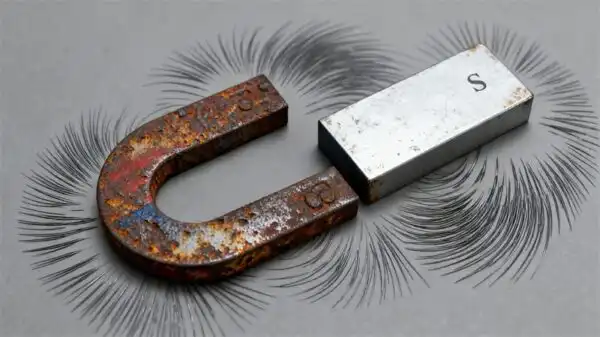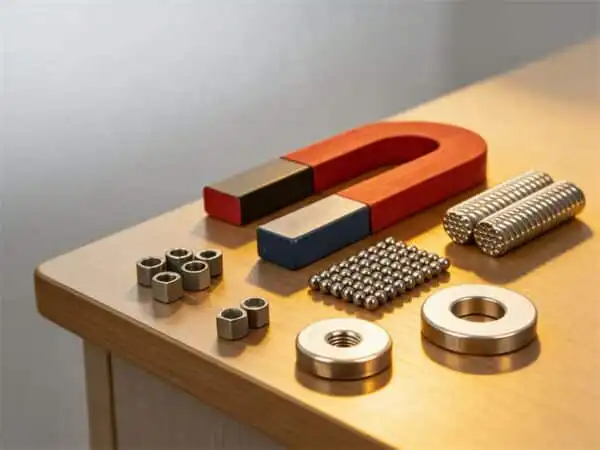
El número N describe un grado de material, no una fuerza de desprendimiento garantizada. Si la geometría, la magnetización, el entrehierro, el circuito de acero y la temperatura de funcionamiento son comparables, un material de grado superior puede proporcionar una mayor salida magnética en el mismo volumen. Sin embargo, en un conjunto real, la distancia de trabajo, la coercitividad, la temperatura y el circuito magnético pueden ser más determinantes que pasar de N52 a N54, N55 o N56.
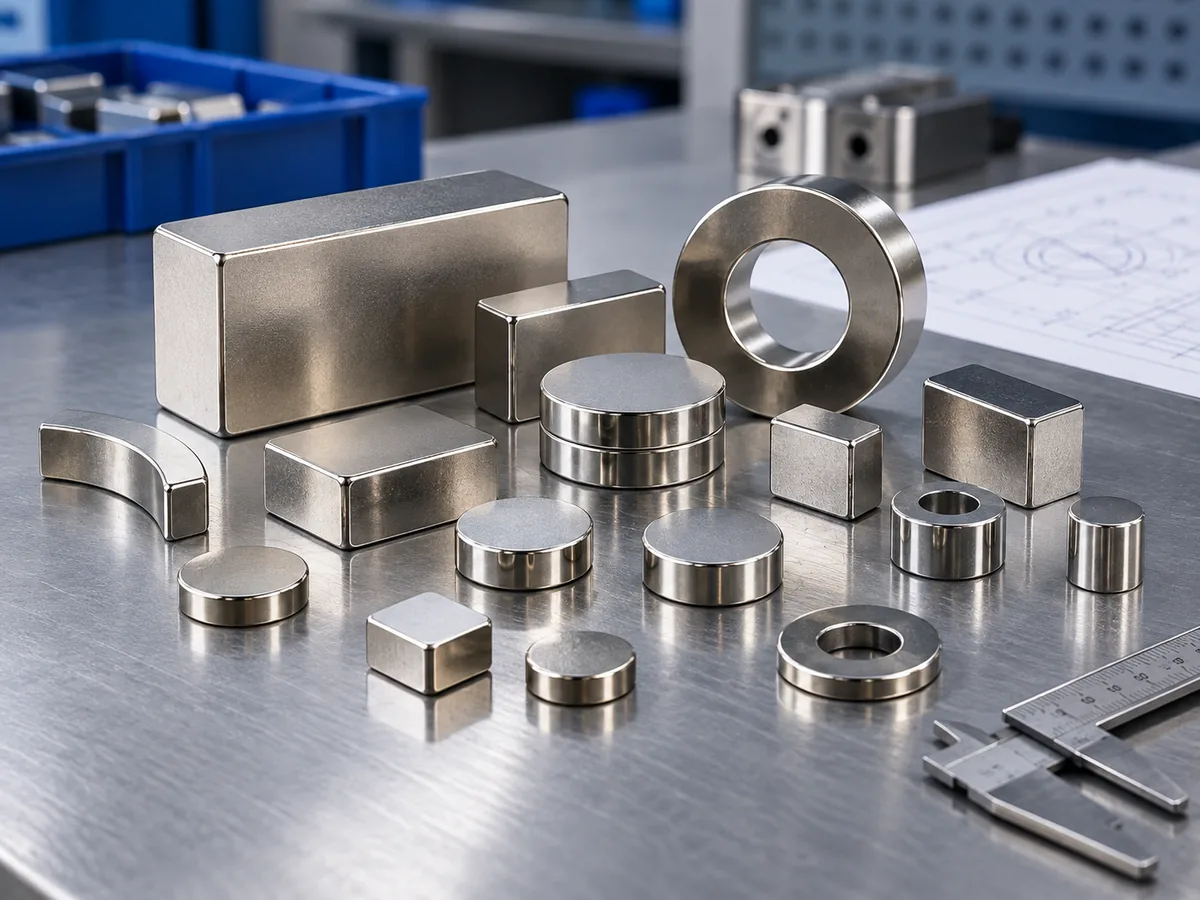
N52 frente a N54 frente a N55 frente a N56: ¿cuál es el más potente?
En cuanto al potencial de densidad energética del material, el orden suele ser N56 > N55 > N54 > N52. Esta afirmación es útil, pero solo constituye el primer nivel de la decisión de ingeniería.
Un grado superior normalmente combina una mayor remanencia and/or un producto energético máximo más elevado dentro del sistema de grados de ese fabricante. Esto puede ser útil cuando el volumen disponible del imán es fijo y el diseño necesita más campo, par o fuerza en el mismo espacio.
Sí no Sí significa que un imán acabado de grado N56 proporcionará un porcentaje fijo más de fuerza de desprendimiento que un imán de grado N52. La fuerza de desprendimiento es un resultado del conjunto. Varía en función del área de la cara polar, el espesor del imán, el acero objetivo, el espesor del acero, el estado de la superficie, el entrehierro, la dirección de magnetización y el camino de retorno del circuito magnético.
Por eso, la pregunta útil no es simplemente “¿Qué número es el más alto?”, sino “¿Qué grado ofrece un margen de rendimiento suficiente en mi geometría real y en mis condiciones de funcionamiento?”

¿Qué significan realmente N52, N54, N55 y N56?
La letra N identifica una familia de grados de imanes de neodimio-hierro-boro. El número está asociado al producto energético máximo del material, expresado habitualmente en MGOe. Es una forma compacta de describir cuánta energía magnética puede proporcionar potencialmente el material por unidad de volumen.
Para una explicación más detallada de la nomenclatura de los grados, consulte la información de OSENC sobre Guía de calidades de imanes.
No reduzca toda la especificación a ese número. Una comparación responsable también debe comprobar:
- Br (remanencia): relacionada con la densidad de flujo que conserva el material magnetizado.
- Hcb: campo coercitivo en la curva B-H normal.
- Hcj: coercitividad intrínseca y un indicador importante cuando existe riesgo de desmagnetización.
- BHmax: producto energético máximo, la propiedad más estrechamente asociada al número N.
- Curva de desmagnetización: necesarios para comprender el punto de trabajo a la temperatura de servicio y con la línea de carga magnética real.
El número de grado y la clase de coercitividad son ejes de selección diferentes
El número N y el sufijo de coercitividad responden a preguntas de ingeniería diferentes. El número sitúa principalmente el material en un intervalo de producto energético; los sufijos como M, H, SH o UH son utilizados por los fabricantes de imanes para distinguir familias de materiales con distintos requisitos de coercitividad intrínseca. La nomenclatura exacta y los límites dependen del proveedor.
| Elemento de la especificación | Pregunta principal de ingeniería | Útil para | No garantiza |
|---|---|---|---|
| N52 / N54 / N55 / N56 | ¿Cuál es el potencial de densidad de energía magnética del material? | Comparar el potencial de salida dentro de un volumen de imán limitado | Fuerza de atracción del producto terminado, campo a la distancia de trabajo o margen de desmagnetización |
| Sufijos M / H / SH / UH y otros sufijos del proveedor | ¿Qué coercitividad intrínseca se especifica para esa familia de materiales? | Evaluar el riesgo de desmagnetización irreversible con el punto de trabajo real | Una temperatura de servicio universalmente segura para todas las geometrías y circuitos magnéticos |
Por qué es importante esta distinción: Shin-Etsu publica actualmente N52-F, N52M-MF y N52H-MF con los mismos rangos indicados de Br y BHmax, pero con requisitos progresivamente superiores de Hcj; Arnold también publica las familias M, H, SH y UH, con mínimos de coercitividad intrínseca más altos. Consulte los datos de la serie N de Shin-Etsu y el Datos de grados de Arnold NdFeB.
Los ejemplos publicados de propiedades magnéticas muestran por qué la comparación necesita contexto
No existe una tabla universal responsable que convierta todos los imanes de N52, N54, N55 y N56 en un único conjunto fijo de valores. Los rangos publicados dependen del sistema de materiales y de la familia de grados del fabricante.
Los ejemplos siguientes utilizan datos públicos actuales de Arnold Magnetic Technologies y Shin-Etsu Chemical. Se muestran para ilustrar el comportamiento de los grados, no para crear una especificación de producto de OSENC.
| Ejemplo de grado | Br publicado | Hcj publicado | BHmax publicado | Contexto de la fuente |
|---|---|---|---|---|
| N52 | 1.45 T típico | ≥ 876 kA/m | 51 MGOe típico | Tabla de grados de Arnold Neo |
| N54-MF | 1.43–1.49 T | ≥ 995 kA/m | 50–55 MGOe | Serie N de Shin-Etsu |
| N55 | 1.49 T típica | ≥ 876 kA/m | 54 MGOe típico | Tabla de grados de Arnold Neo |
| N56-F | 1.45–1.51 T | ≥ 995 kA/m | 51–57 MGOe | Serie N de Shin-Etsu |
Comprobación de la fuente: Datos de grados de NdFeB de Arnold Magnetic Technologies y el Datos de la serie N de imanes de tierras raras de Shin-Etsu. Los valores de distintos fabricantes no deben tratarse como una especificación de compra directamente comparable.
La superposición es la parte importante. “N56” no significa que el material de todos los proveedores tenga un único Br, Hcj o BHmax exacto. Para la compra, utilice la ficha técnica real del proveedor y la curva de desmagnetización del material propuesto.

Por qué la ganancia de rendimiento se reduce por encima de N52
En el extremo superior de los grados comerciales de NdFeB, los rangos publicados de propiedades aumentan en incrementos relativamente pequeños. La designación del grado sigue siendo importante, pero no implica un salto drástico en todas las propiedades magnéticas ni en el conjunto terminado.
Por ejemplo, la tabla actual de Arnold indica N52 con 1.45 T Br y 51 MGOe BHmax típicos, mientras que N55 figura con 1.49 T y 54 MGOe típicos. En la serie N actual de Shin-Etsu, N54-MF figura con 1.43–1.49 T y 50–55 MGOe, mientras que N56-F presenta 1.45–1.51 T y 51–57 MGOe. Se trata de mejoras significativas del material, pero los incrementos son mucho menores de lo que pueden hacer parecer los números de grado.
- Si el diseño ofrece suficiente libertad geométrica, aumentar el volumen del imán o mejorar el circuito magnético puede proporcionar un margen más útil que perseguir el número N más alto.
- Si la envolvente del imán es fija, la densidad energética adicional del material adquiere más valor porque la geometría no puede compensar el déficit.
- Si solo falta un pequeño margen de rendimiento, N54, N55 o N56 pueden merecer una evaluación después de haber comprobado ya el entrehierro, el circuito de acero y la temperatura.
Por qué pueden solaparse los rangos de propiedades de N52, N54, N55 y N56
Un grado de imán es un rango de especificación, no un único valor exacto de Br, Hcj o BHmax. Por eso los materiales de grados altos adyacentes pueden solaparse, aunque el grado superior amplíe hacia arriba el rango alcanzable.
La serie N actual de Shin-Etsu ilustra claramente este punto: N52-F figura con 48–53 MGOe, N54-MF con 50–55 MGOe y N56-F con 51–57 MGOe. Por tanto, un comprador no debe asumir que cada pieza con un número N superior se encuentra muy por encima de todas las piezas del grado anterior.
Qué indica la designación del grado
El material debe encontrarse dentro de un rango de especificación definido por el proveedor para sus propiedades magnéticas.
Qué debe verificarse aún durante la compra
La designación de material propuesta, los valores mínimos garantizados, Hcj, la curva de desmagnetización pertinente, las limitaciones de tamaño y forma y el resultado de aceptación del conjunto.
El ejemplo de solapamiento anterior procede de la gama actual de Shin-Etsu N Series. Shin-Etsu también señala que las propiedades magnéticas pueden variar en función del tamaño y la forma en algunas familias de materiales, otra razón para no comprar basándose únicamente en la designación del grado.
¿Cuánto más potentes son N54, N55 y N56 que N52?
No existe un porcentaje fijo que pueda aplicarse a la fuerza de un imán terminado. El grado del material aumenta el potencial de densidad de energía, pero el resultado final depende de cómo se utilice el imán.
Si dos imanes tienen dimensiones, magnetización, temperatura y circuito magnético idénticos, un material de mayor Br/mayor BHmax normalmente puede producir una mayor salida magnética. Sin embargo, esa ventaja puede reducirse o perder relevancia cuando la aplicación está limitada por otro componente del sistema.
Entre los factores limitantes habituales se incluyen:
- un entrehierro entre el imán y la pieza objetivo;
- un material objetivo de poco espesor o baja permeabilidad;
- un camino de retorno de acero saturado;
- una distancia de trabajo muy superior a las dimensiones de la cara polar;
- una relación de aspecto desfavorable del imán o un punto de funcionamiento desfavorable;
- una temperatura elevada o un campo magnético opuesto;
- una dirección de magnetización incorrecta para el conjunto.
Si su búsqueda se refiere realmente a la “fuerza de los imanes N52”, la “fuerza de los imanes N55” o la “fuerza de los imanes N56”, el dato que necesita no es únicamente BHmax. Defina el campo o la fuerza en las condiciones de trabajo reales. La guía de OSENC sobre la fuerza de los imanes de neodimio explica por qué son importantes las dimensiones de los imanes y las condiciones de ensayo.

Un grado magnético superior no implica automáticamente mejores prestaciones térmicas
Este es uno de los errores más costosos al seleccionar NdFeB de grado alto. A veces, los compradores pasan de N52 a N54, N55 o N56 porque buscan «más fuerza» y luego dan por supuesto que el número más alto también proporciona mayor resistencia al calor o a la desmagnetización. Esa suposición es errónea.
El comportamiento a temperatura elevada depende de la familia de materiales específica, de la coercitividad intrínseca, de la geometría del imán y del punto de funcionamiento. Una curva de desmagnetización resulta más útil que una cifra aislada de temperatura máxima cuando el diseño se aproxima a su límite.
K&J Magnetics’ explicación técnica del comportamiento térmico del neodimio muestra que la temperatura máxima utilizable puede cambiar según la forma del imán, ya que el coeficiente de permeancia modifica el punto de trabajo. En otras palabras, una designación de temperatura nunca debe tratarse como el ajuste universal de un termostato.
Para un motor, actuador o conjunto compacto sometido a altas temperaturas, la secuencia de selección correcta suele ser:
- definir la temperatura real del imán, incluidos los picos transitorios;
- definir la geometría y la recta de carga magnética;
- comprobar Hcj y la curva de desmagnetización a esa temperatura;
- y comparar después los grados de energía disponibles.
OSENC también aborda este tema en cómo influye la temperatura en la fuerza magnética.
Por qué el entrehierro y el circuito magnético pueden ser más importantes que el salto de grado
Imagine un imán N52 y un imán N56 con las mismas dimensiones exteriores. En un circuito magnético estrictamente controlado, el material de mayor grado puede aportar un margen adicional útil. Si se añade un entrehierro físico, un sistema de recubrimientos, una capa adhesiva, una pared de plástico o una trayectoria de acero mal diseñada, el sistema puede perder un campo útil muy superior al que aporta la mejora de grado.
Este es el mecanismo: el entrehierro aumenta la reluctancia magnética, lo que modifica la distribución del flujo y la condición de trabajo del imán. Las fugas y la saturación del acero pueden limitar entonces la ganancia útil. El comprador observa una menor fuerza de retención o un campo inferior en el punto de trabajo, aunque el grado del material sea superior.

Acción de verificación: especifique la distancia de trabajo y el material objetivo, no solo un valor de Gauss superficial deseado. Si la fuerza de atracción es el criterio de aceptación, defina el material y el espesor del acero, la condición de contacto, la orientación y el método de ensayo.
Para consultar la terminología de campo, vea la guía de OSENC sobre Gauss de los imanes.
¿Cuándo merece realmente la pena pasar de N52 a N54, N55 o N56?
Un grado superior aporta más valor cuando el diseño presenta un déficit magnético identificado que no puede resolverse de forma más eficiente modificando la geometría, el entrehierro o el circuito magnético de acero circundante. Empiece por el factor limitante y, a continuación, decida si debe aumentarse el grado.
| Condición de diseño | Primera acción de ingeniería | Prioridad de un grado superior | Por qué |
|---|---|---|---|
| Sigue habiendo mucho espacio disponible | Optimizar las dimensiones del imán y el área polar | Baja | La geometría puede generar un margen útil mayor que un pequeño aumento de las propiedades del material. |
| Entrehierro físico o funcional grande | Reduzca el entrehierro o mejore el circuito magnético si es posible | Bajo–medio | La reluctancia y las fugas pueden consumir más campo magnético del que aporta la mejora del grado. |
| El acero objetivo o la vía de retorno está saturándose | Corrija primero el camino magnético de acero | Baja | Un grado superior no puede forzar el paso de un flujo útil ilimitado por una vía de retorno saturada. |
| La envolvente del imán está fijada | Comparar los Br/BHmax específicos del proveedor y el resultado del conjunto | Alto | Una mayor densidad de energía puede ser importante cuando no es posible aumentar el volumen del imán. |
| Temperatura elevada o campo opuesto intenso | Consulte Hcj y la curva de desmagnetización antes de seleccionar el número N | Condicional | La resistencia a la desmagnetización puede ser la verdadera limitación, en lugar del producto energético a temperatura ambiente. |
| El circuito y la geometría ya están optimizados, pero la salida sigue siendo insuficiente | Evalúe N54/N55/N56 mediante simulación o ensayos con muestras | Alto | La mejora del material aborda ahora una brecha de rendimiento restante claramente definida. |
¿Qué grado debería elegir?
El mejor grado es el material de menor riesgo que cumple el margen de prestaciones requerido una vez incluidas las restricciones de temperatura, geometría, circuito magnético y fabricación. Eso no siempre significa el grado más bajo y, desde luego, no siempre significa N56. Utilice la comprobación del cuello de botella anterior para decidir si el grado siguiente está resolviendo la limitación real.
Elija N52 cuando el diseño ya tenga un margen suficiente
N52 sigue siendo un grado de NdFeB de alta energía. Si el volumen disponible es suficiente y la simulación o los ensayos con muestras cumplen el objetivo de campo/fuerza, subir de grado aporta poco valor desde el punto de vista de la ingeniería.
Considere N54 cuando el espacio se esté convirtiendo en la limitación
N54 puede ser útil cuando resulte difícil aumentar las dimensiones y un pequeño incremento de la densidad energética del material pueda recuperar el margen requerido. Verifíquelo con la curva del proveedor real en lugar de suponer una ganancia fija.
Considere N55 cuando el circuito magnético ya esté optimizado
N55 tiene más sentido cuando ya se han abordado la geometría, el entrehierro y el recorrido del acero, y el diseño aún necesita un rendimiento adicional prácticamente con el mismo volumen de imán.
Considere N56 para diseños validados con restricciones de espacio extremas
El material de clase N56 figura en gamas comerciales de materiales publicadas, pero debe tratarse como una opción de ingeniería, no como una mejora universal. Deben confirmarse para el proyecto concreto la disponibilidad, los datos del material, el comportamiento frente a la temperatura y la validación con muestras.
| Condición de diseño | Lo más importante | Orientación sobre el grado | Qué verificar antes de realizar el pedido |
|---|---|---|---|
| Espacio suficiente, objetivo de campo/fuerza moderado | Margen de prestaciones y coste | Empiece validando N52 | Geometría, campo/fuerza a la distancia de trabajo, curva del proveedor |
| Envolvente del imán fija, rendimiento ligeramente insuficiente | Densidad energética en el mismo volumen | Compare N54/N55 con N52 | Br/BHmax reales, saturación del circuito, resultado de la muestra |
| Restricción de espacio extrema, cada incremento cuenta | Máxima densidad energética viable | Evalúe N55/N56 | Disponibilidad, Hcj, curva de desmagnetización, margen térmico, validación de producción |
| Temperatura elevada o campo opuesto intenso | Resistencia a la desmagnetización | No elija basándose únicamente en el número N | Hcj, curva de temperatura, geometría/línea de carga, condiciones transitorias |
| Entrehierro grande o camino de retorno deficiente | Eficiencia del circuito magnético | Optimice el circuito antes de dar por hecho que una mejora del grado lo resolverá | Entrehierro, acero thickness/material, fugas, FEA o ensayo de prototipo |
¿Existe realmente N56 o es solo una etiqueta de marketing?
El material de NdFeB de clase N56 no es meramente hipotético. Shin-Etsu Chemical enumera públicamente un grado N56-F y un grado de difusión en los límites de grano N56AS-HGF en los datos de producto de su serie N.
Esto no establece una especificación universal de N56 para todo el mercado de imanes. La cuestión de compras responsable es si el proveedor puede proporcionar una especificación documentada del material correspondiente a la familia exacta de grados ofertada, junto con los límites de las propiedades magnéticas y el método de validación necesarios para su diseño.
OSENC mantiene una página específica sobre N56 imanes de neodimio. Para una decisión específica del proyecto, la página del grado debe considerarse un punto de partida; el plano y las condiciones de aplicación siguen determinando la selección final.
Cómo verificar N52 frente a N54 frente a N55 frente a N56 antes de la producción
La comparación de grados es útil para acotar el material candidato. La selección final debe verificarse con el imán y el conjunto reales.
- Fije la geometría. Defina las dimensiones del imán, las tolerancias y el espacio disponible.
- Defina la magnetización. La magnetización axial, diametral, radial o multipolar puede modificar la distribución del campo útil.
- Defina el circuito magnético. Registre el entrehierro, el material objetivo, el espesor del acero y cualquier camino de retorno.
- Defina las condiciones de temperatura. Incluya la temperatura normal de funcionamiento y los picos previsibles.
- Defina el criterio de aceptación. Campo superficial, campo a una distancia especificada, fuerza de desprendimiento con un dispositivo de ensayo definido, par u otro resultado a nivel del conjunto.
- Compare los datos específicos de cada proveedor. Compruebe Br, Hcb, Hcj, BHmax y la curva de desmagnetización correspondiente.
- Valide una muestra o un conjunto. Utilice el mismo útil y método de aceptación que se emplearán en producción.
El recubrimiento debe decidirse por separado. N52, N54, N55 y N56 siguen siendo materiales de NdFeB, y la protección contra la corrosión debe seleccionarse en función del entorno real. Consulte la guía de recubrimientos para imanes de neodimio cuando la humedad, la sal, la abrasión o la unión adhesiva formen parte del diseño.
Antes de pasar a un grado superior, compruebe estos aspectos
Utilice esta lista de comprobación antes de pasar de N52 a N54, N55 o N56. Si alguno de estos aspectos aún no está definido, es posible que el proyecto todavía no disponga de información suficiente para justificar el cambio a un material superior.
- ¿Se puede reducir el entrehierro? Incluya los recubrimientos, las capas de adhesivo, las carcasas y la distancia de trabajo prevista.
- ¿Se pueden modificar el espesor del imán, la superficie polar o la geometría general? Un cambio de geometría puede alterar tanto el punto de funcionamiento como la cantidad de material magnético.
- ¿Se puede mejorar el acero de la pieza objetivo o el yugo de retorno? Compruebe la permeabilidad, la sección transversal y el riesgo de saturación.
- ¿Es correcta la dirección de magnetización para el conjunto? Las configuraciones axial, diametral, radial y multipolar no son intercambiables.
- ¿El verdadero factor limitante es la temperatura o un campo opuesto? En ese caso, la Hcj y la curva de desmagnetización pueden ser más importantes que un número N superior.
- ¿Está definida la condición de aceptación? Especifique el campo o la fuerza en las condiciones reales de trabajo, no un valor superficial aislado.
Un grado superior también cambia la cuestión del aprovisionamiento
Para N54, N55 o N56, la especificación de compra debe identificar algo más que el grado principal. Solicite al proveedor propuesto que defina la designación real del material y los datos utilizados para cualificarlo para la aplicación.
- ¿Qué valores mínimos de Br, Hcb, Hcj y BHmax se especifican?
- ¿Tiene el grado propuesto limitaciones que dependan del tamaño, la forma o el proceso?
- ¿Está prevista la misma especificación del material para las muestras y la producción?
- ¿Se dispone de una curva de desmagnetización relevante para revisar la temperatura de servicio?
- ¿Qué cambios de grado, geometría, recubrimiento o magnetización exigirían una nueva validación?
Envíe los datos que realmente condicionan la elección del grado
OSENC puede evaluar proyectos adecuados de imanes de neodimio personalizados a partir del plano técnico y de las condiciones de la aplicación. Para una comparación N52/N54/N55/N56, incluya:
- plano técnico, forma y espacio disponible para el imán;
- dimensiones y tolerancias críticas;
- campo o fuerza de desprendimiento requeridos y condiciones exactas del ensayo;
- distancia de trabajo o entrehierro;
- temperatura de funcionamiento y temperatura máxima;
- acero objetivo o material de contacto;
- dirección de magnetización o disposición de los polos;
- requisitos de coating/environment;
- requisito de validación de muestras o de aceptación de la producción.
Utilice OSENC’s servicio de imanes de neodimio a medida como referencia sobre sus capacidades y, a continuación, envíe los datos del proyecto para su revisión.
Preguntas frecuentes
¿Es N56 más potente que N52?
Como grado del material, N56 generalmente ofrece un mayor potencial de densidad de energía magnética que N52. Esto no garantiza un aumento fijo de la fuerza de desprendimiento, ya que el rendimiento final también depende de la geometría, el entrehierro, el material de destino, la magnetización y la temperatura.
¿Es el N52 el imán de neodimio más potente?
No. N52 es un grado de NdFeB de alta energía, pero también existen materiales publicados de las clases N54, N55 y N56. El grado máximo disponible de un proveedor determinado también puede variar en función de la línea de materiales, el tamaño y la ruta de producción.
¿En qué medida ofrece el N55 mayor rendimiento magnético que el N52?
No existe un porcentaje universal para un imán acabado. N55 suele ofrecer un potencial superior de Br/BHmax, pero el cambio real en el campo a la distancia de trabajo o en la fuerza de desprendimiento debe calcularse o ensayarse con la misma geometría y el mismo circuito magnético.
¿Qué significa N52 en un imán?
La “N” identifica el material del imán de neodimio, y el número está relacionado con el producto energético máximo del material en MGOe. Es una designación de grado, no una indicación directa de la fuerza de tracción.
¿Un grado N superior soporta más calor?
No. No se debe deducir la resistencia a la temperatura únicamente a partir de N52, N54, N55 o N56. Compare el Hcj, la clase de temperatura, la curva de desmagnetización, la geometría y el punto de funcionamiento del material específico.
¿Puedo sustituir N52 por N56 sin cambiar el tamaño del imán?
En ocasiones, un grado superior puede aumentar la salida magnética en la misma envolvente, pero no debe considerarse una sustitución directa hasta haber comprobado el circuito magnético, el margen térmico, la coercitividad, la magnetización, la tolerancia y los requisitos de validación.