






Guía comparativa de ingeniería
Imán permanente frente a electroimán: ¿qué fuente de campo magnético se adapta mejor a su diseño?
Si está comparando un imán permanente con un electroimán, la diferencia básica es la siguiente: un imán permanente genera un campo magnético sin alimentación eléctrica continua, mientras que un electroimán convencional genera su campo magnético cuando circula corriente por una bobina. Para el diseño de un producto real, la pregunta más adecuada es si se necesita un campo constante, un campo con conmutación eléctrica, una fuerza ajustable o un estado de sujeción definido cuando se interrumpe la alimentación.
Imán permanente frente a electroimán: comparación rápida
En un proyecto de ingeniería, la comparación debe incluir tres opciones: imán permanente, electroimán convencional e imán electropermanente. Cualquiera de ellas puede ser adecuada si se ajusta a la distancia de trabajo, los requisitos de control, las condiciones de alimentación, el material objetivo y el estado de seguridad.
| Factor | Imán permanente | Electroimán convencional | Imán electropermanente |
|---|---|---|---|
| Alimentación necesaria para mantener la fuerza magnética | No requiere alimentación continua | Normalmente requiere alimentación continua | Por lo general, la alimentación se utiliza principalmente para la conmutación o la liberación, según el diseño |
| Control del campo magnético | No se puede ajustar eléctricamente durante el uso normal | Se puede activar y desactivar y, a menudo, ajustar mediante la corriente | Se puede conmutar, pero el método de control depende de la estructura |
| Comportamiento al cortar la alimentación | Mantiene el campo magnético | Normalmente pierde la fuerza de sujeción al interrumpirse la alimentación | Puede mantener la fuerza de sujeción tras la conmutación, según el diseño |
| Riesgo de calentamiento | Sin calentamiento de bobina | Deben comprobarse el calentamiento de la bobina y el ciclo de trabajo | En muchos diseños genera menos calor durante la sujeción, pero el sistema de conmutación también debe revisarse |
| Más adecuado para | Sujeción continua, detección, conjuntos compactos y aplicaciones sin alimentación eléctrica | Agarre con activación y desactivación, liberación, clasificación y control de automatización | Sujeción con menor demanda de alimentación continua o liberación controlada |
| Riesgo principal | Grado, forma, recubrimiento, entrehierro o dirección de magnetización incorrectos | Sobrecalentamiento, potencia insuficiente o comportamiento inseguro en caso de pérdida de alimentación | Interpretación incorrecta de la lógica de conmutación o del estado de liberación |
¿Qué es un imán permanente?
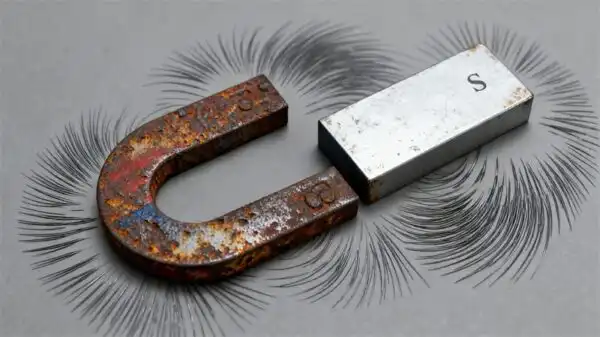
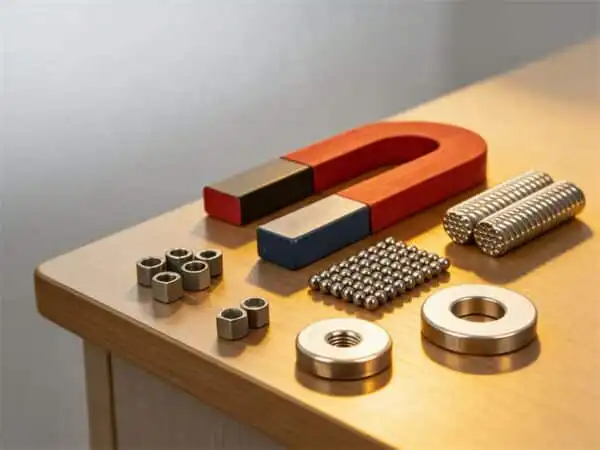
Un imán permanente es un material magnético capaz de mantener un campo magnético sin alimentación eléctrica continua. Entre los materiales habituales para imanes permanentes se encuentran el neodimio, la ferrita, el SmCo y el Alnico.
En los proyectos B2B habituales de Osenc, el foco más común está en imanes de neodimio personalizados y los conjuntos magnéticos. Estos pueden incluir microimanes, imanes de gran tamaño, imanes de grados magnéticos altos, formas irregulares, rotores de motor, acoplamientos magnéticos, configuraciones Halbach y otros conjuntos desarrollados a medida.
Un imán permanente suele ser un mejor punto de partida cuando el diseño requiere una fuerza magnética estable en un espacio compacto y no necesita conmutación eléctrica.
¿Qué es un electroimán?
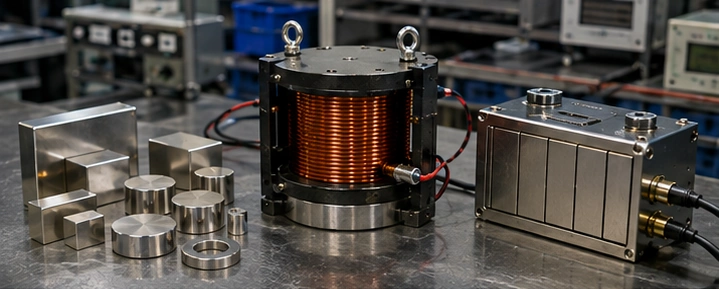
Un electroimán convencional utiliza la corriente eléctrica que circula por una bobina para generar un campo magnético. En muchos diseños, la fuerza magnética puede activarse o desactivarse mediante el control de la corriente.
Esto hace que el electroimán resulte útil cuando la aplicación requiere liberación, control de tiempos, clasificación, elevación, agarre o lógica de automatización.
Como contrapartida, deben evaluarse la bobina, la fuente de alimentación y el calor generado. El ciclo de trabajo es importante, ya que la alimentación continua puede generar calor y reducir el rendimiento si el diseño no está correctamente dimensionado.

¿Qué es un imán electropermanente?
Un imán electropermanente se diferencia de un electroimán convencional. En muchos diseños, combina elementos de imán permanente con un sistema de conmutación eléctrica.
Esto significa que la energía eléctrica puede utilizarse principalmente para conmutar el estado magnético o liberar la pieza, en lugar de alimentar continuamente la fuerza de sujeción. El comportamiento exacto depende del diseño del producto.

¿En qué se diferencia el campo magnético?
Un imán permanente genera un campo magnético debido a su material y magnetización. Su campo útil depende del grado, el tamaño, la forma, la dirección de magnetización, la disposición de los polos, el espesor del recubrimiento, el entrehierro de trabajo y el circuito magnético circundante.
Un electroimán genera su campo magnético a partir de la corriente. Este campo depende del diseño de la bobina, la corriente, el número de espiras, el material del núcleo, la superficie polar, el calor y la fuente de alimentación disponible.
Por este motivo, la comparación del campo magnético no debe basarse únicamente en el “tipo de imán”. Un imán permanente pequeño en contacto directo puede rendir mejor que un electroimán mal adaptado. Un electroimán bien diseñado puede ser más adecuado cuando el campo debe conmutarse, ajustarse o anularse.

¿Cuándo conviene elegir un imán permanente?
Elija un imán permanente cuando el campo magnético deba estar siempre disponible sin alimentación eléctrica.
Esto es habitual en sensores, encóderes, motores, acoplamientos magnéticos, útiles de sujeción, dispositivos compactos, conjuntos de rotor y numerosos conjuntos magnéticos a medida.
| Requisito | Por qué puede ser adecuado un imán permanente |
|---|---|
| No se dispone de alimentación eléctrica continua | El imán funciona sin alimentación eléctrica. |
| Diseño compacto | El NdFeB puede ofrecer altas prestaciones magnéticas en un espacio limitado. |
| Se necesita un campo estable | Resulta útil para detección, posicionamiento y sujeción. |
| Menor riesgo de calentamiento | La bobina no genera calor durante la sujeción normal. |
| Montaje sencillo | Un menor número de componentes eléctricos puede reducir la complejidad del sistema. |
Si el diseño requiere liberación frecuente, fuerza ajustable, conmutación remota o un estado desmagnetizado controlado, puede ser más adecuada otra solución.
¿Cuándo es preferible un electroimán?
Un electroimán suele ser más adecuado cuando el campo magnético debe controlarse mediante una máquina, un circuito o un operador.
Puede resultar útil en sistemas de recogida y colocación, separadores, cerraduras, sistemas de sujeción automatizada, mecanismos de liberación, útiles de ensayo y aplicaciones en las que el campo deba cambiar durante el funcionamiento.
| Requisito | Por qué puede ser adecuado un electroimán |
|---|---|
| Se requiere control de encendido y apagado | La corriente permite controlar la activación magnética. |
| Resulta útil disponer de una fuerza ajustable | La corriente puede ajustarse dentro del límite de diseño. |
| La liberación forma parte del proceso | En muchos diseños, el sistema puede desenergizarse para liberar. |
| La temporización de la automatización es importante | La actuación magnética puede vincularse a sensores y controles. |
| Es necesario controlar la polaridad | El sentido de arrollamiento de la bobina puede afectar a la dirección del campo en los diseños adecuados. |
La tensión, la corriente, la estabilidad de la fuente de alimentación, la temperatura de la bobina, el ciclo de trabajo, el espacio de instalación y el estado en caso de fallo son factores importantes.
¿Cuándo conviene utilizar un imán electropermanente?
Un imán electropermanente puede ser adecuado cuando el proyecto requiere sujeción magnética sin alimentación continua durante la sujeción.
Puede resultar útil en determinadas aplicaciones de sujeción de piezas, fijación, automatización o manipulación. También puede ser útil cuando el comportamiento ante una pérdida de alimentación es importante.
| Pregunta | Por qué es importante |
|---|---|
| ¿Funciona mediante conmutación por impulsos, con excitación para mantener la sujeción o con excitación para liberar? | Determina la lógica de control. |
| ¿Qué ocurre si se pierde la alimentación? | Es fundamental para la seguridad y el diseño del proceso. |
| ¿Cómo se controla la liberación? | Afecta a la temporización de la automatización y a la planificación de medidas de respaldo. |
| ¿Qué material debe tener la pieza objetivo? | La fuerza magnética depende del circuito magnético. |
| ¿Qué entrehierro se admite? | Incluso los entrehierros pequeños pueden reducir la fuerza de sujeción útil. |
Sin estos datos, el comprador puede elegir un sistema magnético incorrecto, aunque la fuerza nominal parezca atractiva.
¿Qué factores de ingeniería determinan la elección?
La decisión práctica depende del sistema magnético completo, no solo del nombre del imán.
| Factor de ingeniería | Por qué es importante | Qué debe confirmarse |
|---|---|---|
| Función requerida | La sujeción, la detección, la transmisión de par, la liberación y el agarre requieren diseños diferentes. | ¿Qué debe hacer realmente el imán? |
| Entrehierro de trabajo | La fuerza magnética varía considerablemente con la distancia y los espacios no magnéticos. | Entrehierro y espesor del recubrimiento, adhesivo, cubierta, pintura o separador. |
| Material objetivo | El grado del acero, su espesor y el estado de la superficie afectan a la fuerza. | Material, espesor, planitud, recubrimiento, óxido o pintura. |
| Condiciones de alimentación | Los electroimanes requieren una alimentación y un control adecuados. | Tensión, corriente, ciclo de trabajo y límite térmico. |
| Estado sin alimentación | Esto puede determinar la seguridad y la lógica de la máquina. | Mantener la sujeción, liberar o conservar el estado de conmutación tras perder la alimentación. |
| Método de ensayo | La fuerza de desprendimiento y las lecturas de campo dependen de las condiciones de ensayo. | Placa de ensayo, entrehierro, dirección, utillaje y valor objetivo de aceptación. |

Por qué hablar solo de “fuerza del imán” puede llevar a error
Muchos compradores preguntan cuál es más potente: un electroimán o un imán permanente. Esa pregunta está incompleta.
Un diseño magnético útil debe definir la fuerza necesaria a la distancia de trabajo real. También debe especificar la dirección de la fuerza, el material objetivo, el área de contacto, el ciclo de trabajo y el factor de seguridad.
Por ejemplo, un imán que parece tener mucha fuerza en contacto directo con acero grueso y limpio puede ofrecer un rendimiento muy distinto a través de una cubierta de plástico, una superficie pintada, una capa de adhesivo o una pieza curva.
Por este motivo, Osenc suele solicitar planos técnicos, muestras o las condiciones de aplicación antes de recomendar un imán o un conjunto magnético.
¿Podría ser más adecuado un conjunto magnético que un solo imán?
Sí. En muchos proyectos B2B, la solución real no consiste en un único imán.
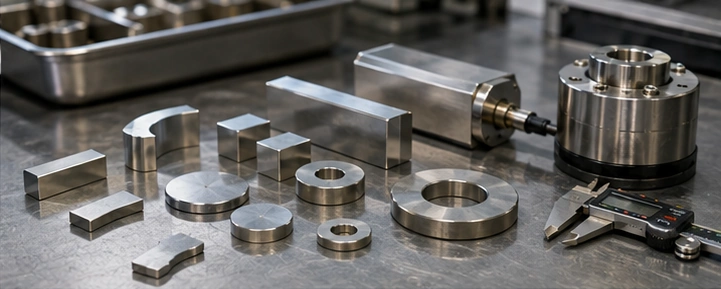
Un conjunto magnético puede incluir imanes, yugos de acero, piezas polares, carcasas, ejes, adhesivos, recubrimientos, elementos de fijación o una estructura de control. Estos componentes pueden guiar el campo magnético y facilitar la instalación del producto.
Osenc puede ayudar a revisar imán de neodimio requisitos, microimán limitaciones y estructuras magnéticas a escala de conjunto cuando una única pieza de catálogo no es suficiente.

Lista de comprobación para la RFQ: ¿qué debe enviar antes de elegir?
Una buena RFQ debe describir las condiciones de funcionamiento, no solo el tamaño del imán.
| Información para la RFQ | Por qué es útil |
|---|---|
| Función en la aplicación | Sujeción, detección, transmisión de par, agarre, fijación, liberación o separación. |
| Material objetivo | Tipo y espesor del acero, estado de la superficie y recubrimiento. |
| Entrehierro de trabajo | Entrehierro, espesor de la cubierta, capa de adhesivo o pintura. |
| Fuerza o campo requeridos | Fuerza de desprendimiento, fuerza de sujeción, par o valor objetivo del campo magnético. |
| Condiciones de alimentación | Tensión y corriente disponibles, método de control y ciclo de trabajo. |
| Estado sin alimentación | Si el sistema debe sujetar, liberar o permanecer bloqueado. |
| Entorno | Exposición a humedad, corrosión, aceite, polvo o a la intemperie. |
| Requisito de ensayo | Ensayo de fuerza de desprendimiento, comprobación de Gauss, ensayo del conjunto o revisión de la simulación. |
Si no se conoce la fuerza exacta, envíe el plano técnico de la aplicación y describa el resultado que debe obtenerse. Osenc puede ayudar a evaluar si el proyecto es más adecuado para un imán permanente, un electroimán, un imán electropermanente o un conjunto magnético a medida.

Errores frecuentes al comparar imanes permanentes y electroimanes
La fuerza depende del material de la pieza atraída, del área de contacto, del entrehierro y de la dirección de tracción.
Un electroimán convencional y un sistema electropermanente pueden comportarse de forma muy distinta cuando se interrumpe la alimentación eléctrica.
Un mayor rendimiento magnético puede aumentar el coste, la fragilidad, la sensibilidad a la temperatura o el riesgo durante el montaje.
Cómo ayuda Osenc a seleccionar imanes a medida
Osenc se centra en imanes de neodimio y conjuntos magnéticos a medida, incluidos microimanes, imanes de gran tamaño, imanes de alto grado, formas irregulares, rotores de motor, acoplamientos magnéticos, matrices de Halbach y otros productos magnéticos de ingeniería.
En proyectos que incluyen electroimanes o imanes electropermanentes, Osenc puede ayudar a evaluar la estructura magnética, los requisitos de la aplicación y si resulta más adecuada una solución con imanes permanentes, electroimanes o una solución híbrida.
Según el proyecto, Osenc puede prestar apoyo en la revisión del circuito magnético, el FEA, el análisis del montaje y ensayos como la inspección dimensional, la comprobación de Gauss, el ensayo de fuerza de desprendimiento, la inspección del recubrimiento u otras comprobaciones acordadas. Los valores específicos del producto, los parámetros eléctricos, la fuerza de sujeción y los resultados de los ensayos deben confirmarse a partir del plano técnico correspondiente, la condición de ensayo y la revisión de ingeniería.
Ante dudas sobre las condiciones ambientales o dimensionales, los compradores también pueden consultar recubrimiento para imanes de neodimio las opciones y la información de Osenc gestión de la calidad antes de enviar una solicitud de presupuesto.
Fuentes técnicas y limitaciones
Este artículo utiliza fuentes externas para exponer los principios electromagnéticos básicos, los límites de diseño de los imanes permanentes, las precauciones relativas al entrehierro y al estado de las superficies, y el comportamiento de los imanes electropermanentes. No publica datos específicos de Osenc sobre tensión, corriente, ciclo de trabajo, fuerza de sujeción, tiempo de liberación o casos de clientes, ya que esos datos no se facilitaron para uso público.
- OpenStax / LibreTexts: Fuentes de campos magnéticos
- Departamento de Energía de EE. UU.: La fuerza electromagnética
- Directrices sobre imanes / guía de diseño de imanes permanentes de la MMPA
- Manual de funcionamiento de imanes de elevación de Industrial Magnetics
- Magbat Europe: comparación de imanes electropermanentes
Preguntas frecuentes
¿Es más fuerte un electroimán que un imán permanente?
No necesariamente. Un electroimán convencional puede diseñarse para generar una fuerza elevada y controlada, pero la fuerza útil depende del diseño de la bobina, la alimentación eléctrica, el calor, el área de los polos, el entrehierro y el material objetivo. Un imán permanente puede ofrecer más fuerza en un diseño compacto sin alimentación si la geometría y el circuito magnético son adecuados.
¿Un imán permanente necesita electricidad?
No. Un imán permanente no necesita electricidad de forma continua para mantener su campo magnético.
¿Un electroimán funciona sin alimentación eléctrica?
Un electroimán convencional suele necesitar corriente para generar su campo magnético. Si se interrumpe la alimentación, la fuerza de sujeción suele disminuir. Los imanes electropermanentes funcionan de manera diferente y deben evaluarse según su diseño específico de conmutación.
¿Cuál es la principal ventaja de un imán permanente?
La principal ventaja es que proporciona una fuerza magnética estable sin alimentación eléctrica continua. Esto puede reducir el cableado, el calor y la complejidad del sistema de alimentación.
¿Cuál es la principal ventaja de un electroimán?
La principal ventaja es el control. A menudo, el campo magnético puede activarse y desactivarse, temporizarse o ajustarse mediante control eléctrico.
¿Cuál es la principal ventaja de un imán electropermanente?
La principal ventaja es que muchos diseños pueden mantener la fuerza magnética sin alimentación continua después de la conmutación. Sin embargo, deben confirmarse el método de conmutación, el estado de liberación y el comportamiento ante una pérdida de alimentación.
¿Qué opción es la más adecuada para automatización?
Depende de si la automatización requiere sujeción constante, liberación controlada, fuerza ajustable, baja generación de calor o un estado definido sin alimentación. Los imanes permanentes, los electroimanes y los imanes electropermanentes pueden ser adecuados para distintos sistemas.
¿Qué información debo enviar a Osenc para su revisión?
Envíe los planos técnicos, el material objetivo, el entrehierro de trabajo, la fuerza requerida, la temperatura, el espacio disponible, las condiciones de alimentación, el comportamiento sin alimentación, el volumen de producción y cualquier requisito de ensayo. Si no tiene claro qué tipo de imán es el más adecuado, Osenc puede ayudarle a comparar las opciones antes de preparar las muestras.
¿Necesita ayuda para elegir una fuente de campo magnético?
Envíe a Osenc su plano técnico, el material objetivo, el entrehierro de trabajo, la fuerza requerida, las condiciones de alimentación eléctrica y el comportamiento necesario al desconectar la alimentación. Podemos ayudarle a evaluar si el mejor punto de partida es un imán permanente, un electroimán, un imán electropermanente o un conjunto magnético a medida.
Solicitar una revisión de ingeniería